Sunday, September 29, 2013

7 Ways To Integrate Your Writing & Your Day Job


The author Steven O'Connor
Sci-fi and YA author Steven O'Connor provides practical tips for self-published authors to maximise their writing time without giving up the day job.
Very few writers earn enough from their endeavors to write full time. We all know that. Yet we write on anyway! Because we love creating new worlds and immersing ourselves in them. Because we love exploring the characters who might inhabit those worlds — exploring their minds, their emotions, their relationships and the challenges they face. Writers write, regardless of payment. Most of us have to earn our living elsewhere.


We also know that writing is best done in an ongoing way. Plus there's the unrelenting promotional demands that accompany it these days. So that leads us to the question: how can we go about integrating our writing work and our paid work? Below are some of the ways I go about it.

1. Go part time!
Not all of us can afford to do this, but if you’re committed to your writing, you really should think about it. I have been four days a week in my paid job for years now. Three days is what I would prefer (try love), but as a parent in a busy family, I simply can’t afford that. And there aren't that many jobs like that around either.
Also, I never regard my day away as my day off. It’s my writing day. The nexus of my writing week. And it’s a Wednesday, to avoid the notion of a long weekend — which I fear could happen if I made it a Friday or a Monday.

2. Write in a continuous way — and daily
Don’t fall into the black-and-white routine of only writing on days off or weekends. Seizing random moments is critical to my writing flow. Cultivating a practice of writing whenever, even if it’s just a short burst, significantly saves me time — it means there's no time and energy wasted when it comes to one of my longer writing sessions. If you’ve ever left a sizable gap between your writing sessions, you’ll know exactly what I mean. It can be a struggle to re-establish your precious rhythm. And think about getting up an hour or so earlier than the rest of the house to touch base with your writing and going to bed an hour or so later. (After all, who needs sleep?)

3. Keep in touch with fellow writers and potential readers during commuting time
I get so many email notifications from subscriptions it's ridiculous. That’s all part of the modern writer’s life, I guess. Picture this: wintry morning at a bus stop, my breath in the frosty air and my trusty iPhone in my hands as I check out the latest blog post from a fellow writer. Brrr, freezing hands! And the typo risk is high. But I really do need to do this kind of thing if I’m going to stay in touch with what’s happening and maintain at least some visibility. (Obviously do not do this if you drive to work. Hands-free Twitter and blogging has still to come.)

- See more at: http://selfpublishingadvice.org/blog/7-ways-to-integrate-your-writing-your-day-job/#sthash.sjHYML6e.dpuf

Leaning Out à la Francaise

When French Elle editor Sophie Fontanel recently argued, by way of her sensual but anti-carnal book The Art of Sleeping Alone, that the French make better celibates, it seemed as if we may have skimmed the outer reaches of the French ideal. For decades, books about how to master the French way of living, or, quite simply, being—living implying an ungainly dose of effort—have boasted that the French cook better, eat better, dress better, and love better than you and I do. More recently, the genre has managed to outdo itself by also claiming to raise children better and, as Fontanel showed us, abstain better.

But lest one think the depths of French superiority have been fully plumbed, the latest addition to the incessant genre, Ann Mah’s Mastering the Art of French Eating, shows us it’s bottomless. When her diplomat husband is called away to Iraq at the start of their three-year post in Paris, Mah, a journalist, decides to dedicate herself to French cuisine. Gleaning inspiration from another diplomatic wife, American chef and author Julia Child, she goes on a culinary field trip across France, sharing stories and recipes she finds along the way. Brewing beneath Mah’s mouthwatering descriptions of boeuf bourguignon and soupe au pistou is the same insinuation propping up this entire genre: that the French not only live well but better: “And yet, there was something else, a European exoticism that captivated me—a cheese course before dessert, shops shuttered in the afternoon heat, a game of boules playing in the dust of the village square,” she writes of a weekend trip to Provence.

haglage french
Gueorgui Pinkhassov/Magnum

The answer to why we idolize French women lies in the pages of the books themselves, which are chic and refined and which titillate and seduce—an antidote to our harried American obsession to “having it all.”
Rather than shrink from these implications of inferiority, American women, more than anyone else, it seems, have bought into it. It’s a belief that has spawned an endless genre of literature—and mini-economy, as evidenced by the dominance of these books on The New York Times bestseller lists. There’s the classic French Women Don’t Get Fat, which has sold more than 3 million copies worldwide; French Women Don’t Get FaceliftsOoh La La!: French Women’s Secrets to Feeling Beautiful Every DayEntre Nous: A Woman’s Guide to Finding Her Inner French GirlFrench Women Don’t Sleep AloneWhat French Women Know: About Love, Sex, and Other Matters of the Heart and MindBringing Up Bébé; and Lessons From Madame Chic—just to name a fraction.
More

10 Bizarre Literary Landmarks Everyone Should Visit


Everyone knows about the Important Literary Places, and authors’ graves and childhood homes abound in guidebooks and popular knowledge. But what about the slightly weirder literary landmarks?
They’re worth a visit, too, and perhaps even more so — after all, at least one of them can cure your illness if you give it a good rub. From road signs to impossibly smug sculptures, find ten bizarre literary landmarks worth a visit after the jump — and add your own favorites to the list in the comments.

Self-published writers get online resource


Writers & Artists has launched a new service aimed at self-published writers.
The Bloomsbury brand runs a website alongside the annual Writers' & Artists' Yearbook, offering multiple resources for aspiring writers. Now the website has opened a self-publishing section, with a comparison service which sizes up different self-publishing providers alongside articles from experts.

Eela Devani, digital development director at Bloomsbury (pictured), said: "There is a big need out there for a service like this—a lot of writers thinking about self-publishing don't know what kind of service will suit them, or even what terms that we take for granted mean, like 'ISBN'. We wanted to have somewhere they could come to that would help guide them through it."

Writers & Artists is also holding a conference on 2nd November called "Self-Publishing in the Digital Age", aimed at writers who want to know more about self-publishing. In addition it is partnering with NaNoWriMo (National Novel Writing Month), a project that encourages people to write a 50,000-word novel during November. Writers & Artists will follow five aspiring writers, asking them to blog on their experiences and interact with the website community, and rewarding them with free access to the "How Strong is Your Book Idea?" service, where agents and editors appraise the work and provide feedback for improvement.
Devani said: "We are really seeing the brand grow. The Yearbook is well known in the UK, but now the website is drawing people from the US, Australia and elsewhere."

North Carolina Students Will Get Free Copies of Banned 'Invisible Man'

Associated Press - The Atlantic Wire
 Sept 24, 2013
Ban or no ban, high school students in Randolph County, North Carolina, will have easy access to Invisible Man. Thanks to a former resident, the novel's publishers will be giving away copies for free.
After the county's board of education banned Ralph Ellison's 1952 classic on black identity from school libraries, former Randolf County resident — and current New York-based Poets & Writers editor — Evan Smith Rakoff arranged for Vintage Books to donate copies of the novel, which local high schoolers can pick up for free starting September 25.

Rakoff, a culture and literature journalist based in New York, said he was "deeply ashamed" when he heard about the ban. "I follow news really closely and I often encounter these kinds of stories," he told The Atlantic Wire. But in this case he found the news on Facebook, where an old classmate had linked to the news reported by the local Courier-Tribune.
"This saddens me beyond measure. All should be ashamed," Rakoff tweeted on September 18. The next day Laura Miller of Salon suggested organizing a giveaway at an indie bookstore. "All we had to do was ask and Vintage Books was eager to help," said Miller of the novel's publishers.
More

Saturday, September 28, 2013

2013 Ubud Writers & Readers Festival


Dear Friends,

The 2013 Ubud Writers & Readers Festival is drawing ever closer, with only 2 weeks until the festivities begin in Ubud on 11 October.

The arrival this week of our printed programs brought home how soon this is - and also how many wonderful things to look forward to there are! With 92 pages of events, writers and performers, workshops, films, book launches and so much more, we suggest you have a look at the online magazine of the program if you can't get your hands on the real thing. We thank the team at Phoenix Communications for supporting the programs this year.

With so many highlights to choose from, we have pulled together a few special picks for you below.

We've also received our first batch of 10-year anniversary Festival t-shirts! These tees will be on sale during the Festival, but you can pre-order here for the discounted price of AU $15 each. Unfortunately, at this stage we are unable to post them, but they will be available to collect from our Box Office after 3 October.

Also - a reminder that Women of Letters will be touring Jakarta and Yogyakarta next week. A line-up of truly remarkable women will be reading their letters - Olin Monteiro, Okky Madasari, Khairani Barokka, Laura Jean McKay, Emilie Zoey Baker, Debra Yatim and Lisa Febriyanti - so make sure you register for these free events and go along if you can.

Women of Letters


Jakarta - Thursday 3 October 
7:00pm  - 9:00pm
Komunitas Salihara, as part of the Salihara Literary Biennale

Jl.Salihara No.16, Pasar Minggu, Jakarta Selatan, Jakarta
Register here!


Yogyakarta - Saturday 5 October 
4:00pm - 6:00pm
Langgeng Art Foundation

Jl. Suryodiningratan 37, Yogyakarta - Yogyakarta


Register here!

We hope to be seeing you in Ubud shortly!


Bahasa Breakfast @ Rumah Baca
UWRF workshops
This year, for the first time, we offer a fun and simple introduction to the Indonesian language. From 8:00- 8:45am, every morning of the Festival (12-15 Oct), kickstart your day with our Bahasa Breakfast. Over Balinese sweet treats & coffee, Festival partners Cinta Bahasa will teach you the basic greetings, do’s & dont’s, plus other fun and useful Indonesian phrases to help you get around Ubud and the Festival. The Bahasa Breakfasts can be booked here (AU $14 per session), or at our Box Office during the Festival.


Lydia cacho: Living dangerously mexican lunch
Our popular lunch at Maya Ubud is back - with a Mexican theme and the fearless and wonderful investigative journalist, Lydia Cacho.

Lydia is one of Mexico’s most famous investigative journalists & human rights advocates. She is the recipient of many prestigious international awards & has courageously reported on corruption, drug violence & sex trafficking in her home country for several decades. Meet Lydia Cacho in-conversation with Lily Yulianti Farid, as she describes her dangerous life over a chilled margarita & Mexican-inspired lunch from the cantina of Maya Ubud Resort & Spa.

Sat 12 Oct
12:00 PM - 3:00 PM
Tickets AU $82 / Rp. 700,000.
Book here!


Finding the voice: A workshop with Robin de Crespigny
In this half-day workshop, writer Robin de Crespigny reveals the complex issues surrounding writing biographies - using the knowledge she gained through writing and researching her acclaimed biography, The People Smuggler. Writing the life-story of an Arabic Muslim man in first person and in an authentic way had its challenges, and Robin will share her tips and advice on how you too can find ‘the voice’ of your subject. She'll also speak on the role and responsibility of a biographer, and the road to publication with a controversial subject.

Tues 15 Oct
10:00 AM - 1.00 PM
Int'l: AU $58 / Rp. 500,000
Kitas: AU $42 / Rp. 350,000
Indonesian: AU $18 / Rp. 150,000
Book here!


National Women Build Week Volunteers needed
We need your help! The UWRF and Women Build – Habitat for Humanity Indonesia are calling for volunteers to help build houses during National Women Build Week, 16-20 October 2013. 
The campaign will support local Balinese women and families through the construction of 50 houses with proper sanitation and roofing in a poor region of Bali after the Festival. No prior knowledge of home building is required, just a reasonable level of fitness and lots of enthusiasm.
To be involved in this great initiative, please contact: womenbuild@habitatindonesia.org.
More information is available here or on the Habitat for Humanity website. An information booth will also be set up at Taman Baca during the Ubud Writers & Readers Festival.

Ten of the worst publishing moments

Friday 27 September 2013

A televised scuffle on the Brighton seafront made a laughing-stock of editor Iain Dale this week - but that's nothing compared with the humiliation of the publishers who turned down Harry Potter
Iain Dale
Publishing biteback … Iain Dale. Photograph: Chris Ison/PA

Iain Dale's scuffle this week at Brighton, as the burly head of Biteback wrestled with a small elderly protester while his author Damian McBride was being interviewed for breakfast TV, led to what was probably the most public humiliation ever undergone by a publisher: the clip went viral, TV news channels and news­papers gleefully showed the images, and comments (in the press and on Dale's blog) were largely hostile. It deserves a place in a top 10 of publishers' worst experiences, which otherwise merci­fully took place away from the public eye...


1933: Thomas Wolfe submits a lengthy manu­script to Max Perkins at Scribner's. Having made Wolfe's Look Homeward, Angel a hit by cutting out 90,000 words, Perkins (played by Colin Firth in the forthcoming film Genius) buckles down, groaning, and turns it into the still-vast but single volume Of Time and the River. Yet Wolfe stuns him again by leaving Scribner's.

1960: Mrs Max Schuster, a discrimina­ting reader, peruses Harold Robbins's raunchy novel The Carpetbaggers and asks Max: "Is this the kind of dreck you want to publish at Simon & Schuster?" Afraid of her scorn, he lets the book (total sales more than 8m copies) and Robbins (best-selling writer of the 1960s and 70s) go elsewhere.

1972: Reclusive tycoon Howard Hughes gives a press conference by phone to denounce Clifford Irving's fake Hughes autobio­graphy. Panic at McGraw Hill, which had paid $765,000 to Irving, most of it intended for Hughes but channelled back to Irving via a dodgy Swiss bank account.

1980. Buccaneering Roger Straus and bookish Robert Giroux, the odd couple who had made Farrar, Straus and Giroux America's most illustrious literary publisher, fall out over what Giroux says about Straus in his introduction to an anthology marking his 25 years at FSG. Their relationship never recovers from the tiff and the firm's heyday is over.


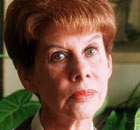
Britain's most admired novelist, Anita Brookner.1984: Anita Brookner's glum hymn to spinsterhood Hotel du Lac is the shock winner of the Booker prize, leaving the publishers of the rival favourites, JG Ballard's Empire of the Sun (Gollancz) and Julian Barnes's Flaubert's Parrot (Cape), open-mouthed at the prizegiving banquet.

More

Walker to launch media imprint


Walker Books is to launch an imprint for its media-related publishing, called Walker Entertainment in the UK and Candlewick Entertainment in the US. The imprint, launching next spring, will include TV and film tie-in titles and celebrity publishing.

The imprint will report to Helen McAleer, head of Walker's global rights and development division, in London. Group editorial director Joan Powers, based at Candlewick, will take editorial responsibility. The Walker Entertainment and Candlewick Entertainment lists will be separate, but with some publishing crossover, with Australia carrying titles from both lists.

McAleer said the new imprint would open up new commercial channels and strengthen Walker's opportunities for brand management in-house. She told The Bookseller: "It's a Walker imprint so will always have the mark of Walker—the quality, a uniqueness . . . we are not going to suddenly move away from the ethos of the company. Our view here at Walker is that great content comes from anywhere. We are open-minded about new ideas—for us not to have a close eye on what is coming from digital and TV doesn't make sense. If we are accessing children, and they are in all these spaces, we need to be there."
She added: "We have real ambitions, and now we are able to say to the industry and the trade, 'we are looking for new projects and partners to work with, in the UK and internationally.'"

The first new addition to the imprint is a fiction series based on the Aardman animated character Shaun the Sheep, who features on CBBC. The Mossy Bottom Farm series will feature new stories and characters from Shaun's world in a range of young fiction titles aimed at children aged seven-plus.
McAleer promised it would contain all of Aardman's "wit, sharpness and irony". Further "very positive" announcements about sign-ups should be expected "fairly quickly", she added.Walker's existing media-related brands, such as Abney and Teal, will migrate to Walker Entertainment, as will Walker Production projects including the Tilly and Friends tie-in books based on the CBeebies series.

Away in a manger........

delanceyplace header


In today's selection - in his controversial and best-selling new book, Zealot, Reza Aslan relates that there is no separate historical evidence for either the census that brought Mary and Joseph to Bethlehem (which was important since the Old Testament had prophesied that the Messiah would be born in Bethlehem), nor Herod's massacre of all the sons born in and around Bethlehem in a fruitless search for the baby Jesus:
"As interest in the person of Jesus increased after his death, an urgent need arose among some in the early Christian community to fill in the gaps of Jesus's early years and, in particular, to address the matter of his birth in Nazareth, which seems to have been used by his Jewish detractors to prove that Jesus could not possibly have been the messiah, at least not according to the prophecies. Some kind of creative solution was required to push back against this criticism, some means to get Jesus's parents to Bethlehem so that he could be born [there].

"For Luke [in his gospel], the answer lies in a census. 'In those days,' he writes, 'there came a decree from Caesar Augustus that the entire Roman world should be registered. This was the first registration to take place while Quirinius was governor of Syria. Everyone went to his own town to be registered. Joseph also went up from the town of Nazareth in Galilee to Judea, to Bethlehem, the city of David.' Then, in case his readers may have missed the point, Luke adds, 'because Joseph belonged to the house and the lineage of David' (Luke 2:1-4).

Depiction of The Virgin and St. Joseph registering for the census
Depiction of The Virgin and St. Joseph registering for the census before Governor Quirnius. Byzantine mosaic c. 1315

"Luke is right about one thing and one thing only. Ten years after the death of Herod the Great, in the year 6 C.E., when Judea officially became a Roman province, the Syrian governor, Quirinius, did call for a census to be taken of all the people, property, and slaves in Judea, Samaria, and Idumea -- not 'the entire Roman world,' as Luke claims, and definitely not Galilee, where Jesus's family lived (Luke is also wrong to associate Quirinius's census in 6 C.E. with the birth of Jesus, which most scholars place closer to 4 B.C.E., the year given in the gospel of Matthew). However, be­cause the sole purpose of a census was taxation, Roman law as­sessed an individual's property in the place of residence, not in the place of one's birth. There is nothing written in any Roman docu­ment of the time (and the Romans were quite adept at documen­tation, particularly when it came to taxation) to indicate otherwise. Luke's suggestion that the entire Roman economy would periodi­cally be placed on hold as every Roman subject was forced to uproot himself and his entire family in order to travel great dis­tances to the place of his father's birth, and then wait there pa­tiently, perhaps for months, for an official to take stock of his family and his possessions, which, in any case, he would have left behind in his place of residence, is, in a word, preposterous. ... 

"The readers of Luke's gospel, like most people in the ancient world, did not make a sharp distinction between myth and reality; the two were intimately tied together in their spiritual experience. That is to say, they were less interested in what actually happened than in what it meant. It would have been perfectly normal -- indeed, expected -- for a writer in the ancient world to tell tales of gods and heroes whose fundamental facts would have been recog­nized as false but whose underlying message would be seen as true.

"Hence, [the Gospel of] Matthew's equally fanciful account of Jesus's flight into Egypt, ostensibly to escape Herod's massacre of all the sons born in and around Bethlehem in a fruitless search for the baby Jesus, an event for which there exists not a shred of corroborating evidence in any chronicle or history of the time whether Jewish, Christian, or Roman -- a remarkable fact considering the many chronicles and narratives written about Herod the Great, who was, after all, the most famous Jew in the whole of the Roman Empire."

Author: Reza Aslan
Title: Zealot
Publisher: Random House
Date: Copyright 2013 by Aslan Media, Inc.
Pages: 29-31
Zealot: The Life and Times of Jesus of Nazareth
by Reza Aslan by Random House


Fascinating Mug Shots Of Characters From Banned Books

HuffPost Books


Banned Books Week is well underway -- we hope you're celebrating accordingly by reading Ralph Ellison's "Invisible Man," J.D. Salinger's "Catcher in the Rye," or another literary classic that has been, for one reason or another, challenged by school districts or libraries.

Earlier this week, we examined the top reasons why books are banned, the foremost being sexually explicit language. Violence, drugs, and "religious viewpoint" are other frequently cited reasons.
 Continue reading...

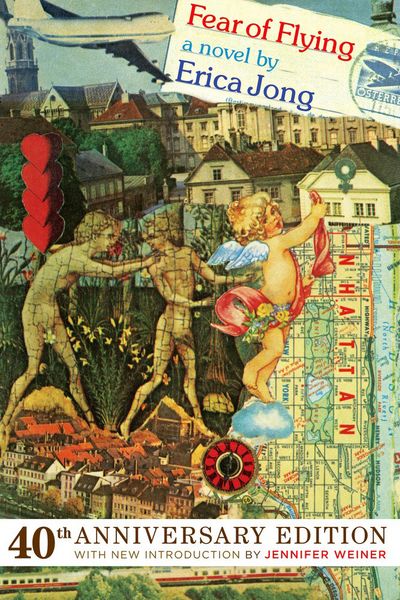
40 Years Later, Does Fear of Flying Hold Up?


This year marks the 40th anniversary of feminist classic Fear of Flying. How has Erica Jong’s tale of Isadora Wing's trip to Europe in search of the ultimate sexual encounter — "free of ulterior motives," "no power game," "zippers fall away like rose petals"— withstood the years? Three Cut staffers re-read the book, and one experienced it for the first time. Join our discussion of "chick lit," narcissism, and literary LOLs.
Maureen O’Connor: To kick this off, I think the most central question is, how does Isadora Wing hold up at 40?
Kat Stoeffel: The only thing that was distractingly dated to me was the word prick to describe a penis, not a man who acts like a penis. Oh, and the casual racial fetishism/tokenism. And the drunk driving!
Charlotte Cowles: To me, the most outdated part was the psychotherapy jargon, but it was also fascinating — to think people were still analyzing dreams and Freudian penis envy! How exhausting, but also fascinating to operate under the assumption that all human behavior could be explained and diagnosed in such a fantastical manner. No wonder she's so neurotic.
Kat: But even if the psychoanalysis is no longer fashionable or credible, the self-absorption and anxiety still felt very relevant to me. I guess what's changed are the socially acceptable ways to talk about yourself: pop psychology, Gchat, astrology ("Whoreoscopes" to Isadora), molly, and Twitter. Not to be the person who brings it all back to social media.
More

RANDELL COTTAGE OPEN DAY AND HISTORY TALK TULIP SUNDAY SEPTEMBER 29


Rain or shine, Randell Cottage will have its Open Day tomorrow Sunday 29 September. The writer residency for NZ and French writers opens its doors at 11 am with a history talk by writer and trustee Beverley Randell on the life of the 1867 cottage which she and her family renovated and gifted to the Trust. Her history talks last year were a hit and promise to be the same this year. 
Email info@randellcottage.co.nz to book. 

Visitors can mill around the heritage cottage and garden from 12.30-4pm. 
14 St Mary Street Thorndon. Free. Koha to re-roof the cottage. 


What would Allen Lane make of Amazon?

The history of publishing is packed with pioneering entrepreneurs who would have revelled in the opportunities of the digital revolution

Allen Lane Penguin
Eureka moment … Allen Lane, founder of Penguin publishers, holding a copy of Lady Chatterley's Lover. Photograph: Hulton Getty

These are disturbing times for booksellers, publishers and writers. The last 20 years have seen a transformation in the world of letters unequalled since the days of William Caxton. In 1993, we were in limbo between hot metal and cool word processing. Neither Amazon nor Google had been invented. The ebook was for science fiction. Today, however, the world of books has become a kind of IT laboratory. On this new frontier, publishers face a future whose shape is a mystery. In a confusing present, traditionally, it's the past that can often supply a quantum of solace. I've just completed a Radio 4 series about five great independent publishers – John Murray, Macmillan, Penguin, Weidenfeld and Faber – and have discovered in the stories of the Victorian and 20th-century book world some intriguing clues to the future prospects for editing and writing.

Probably the most prominent ogre in the contemporary book trade is Amazon. By one crude analysis, the recent Penguin-Random House merger is a defensive alliance motivated by "the threat of Amazon". However, for an 18th-century bookseller, say John Murray, whose imprint came to publish Byron, Austen and Darwin, the service offered by Amazon could seem a natural progression – state-of-the-art book distribution. The "threat" comes from Amazon's intentions, its extraordinary grip on the market share of the big conglomerates.

The first John Murray's answer to the book-selling trade wars of late 18th‑century London was simple: he quit the shop floor and became a publisher – just as Amazon has begun to explore the possibilities of publishing. Murray was an innovative entrepreneur, but he was typical of his trade. He was a Tory (in stark contrast to the Whig radicalism of his fiery poet Lord Byron) and the British book trade has always been inherently conservative. Its grandees tend to resist change. Usually, it has been maverick outsiders whose impact on the book world has been the most profound.

Allen Lane, the publisher who created Penguin and became the father of the paperback revolution, was another classic outsider. Born in Bristol in 1902, he left school at 16 and learned the book business on the shop floor, stacking shelves. In the 1920s, Lane was among the first to understand that the impact of the first world war, successive education acts and votes for women had created a potentially huge mass market for cheap books in soft covers. But it wasn't until he took a frustrating train journey to the West Country to stay with his friend, the young crime writer Agatha Christie, that he stumbled on his opportunity.

The story goes that, waiting for his connection at Exeter, Lane could find nothing worth reading on the station bookstall – still an all-too familiar experience. Whereupon Allen Lane had his eureka moment: inexpensive books, in paper covers, at sixpence apiece – the price of a packet of cigarettes. Cheap, attractive paperback editions for a new generation of readers. Bingo! The old guard in London's clubland was horrified. "Far too risky. Far too popular. This fellow threatens the heart and soul of the hardback business." But Lane forged ahead. In 1935 he set up Penguin to produce nothing but paperbacks. He also pioneered the idea of a brand. A uniform type-face. Those famous colour codes: orange for fiction, green for crime, and black for classics. Lane's brainwave was the biggest single book innovation of the 20th century, and in its day the equal of the ebook. For a while, his idea dominated the market. Households across Britain began sprouting those colour-coded spines. A format that at the outset seemed to threaten vested interests became an object of veneration.

Another timely lesson from the Penguin story is Lane's confidence in the taste of the ordinary reader. It has become commonplace, in culturally nervous times, to disparage the mass market. See, for instance, virtually any review of Dan Brown's Inferno or the critical indifference shown towards a popular writer such as Bernard Cornwell.
More

DARREN SHAN REVIEWS DOCTOR SLEEP by Stephen King

From We Love This Book

In the world of books, I am married to Stephen King. I read Salem’s Lot more than 30 years ago, and he is the author I have turned to most in the decades since. I’ve indulged in many affairs along the way – there have been times when,
 if I was asked for the name of my favourite author, I would answer with Jonathan Carroll or Clive Barker – but King is the one I keep returning to. I wasn’t sure what to make of the news that King was writing a sequel to The Shining. It was one of my favourite books of his, and I wasn’t convinced that a sequel would compare favourably with it. Would he give us another haunted hotel? Would Danny Torrance spiral off into the realms of madness as his father had before him? The answer, thankfully, is no. 
This isn’t a sequel in the usual sense, where we get more of what we were given first time round. King is not attempting to start his own Saw-like franchise. Instead we get a very different beast of a book, where the links to The Shining are important but not all-defining.

MORE >