Wednesday, April 07, 2010

OH TO BE IN NYC NOW THAT SPRING IS THERE !


APRIL at LIVE from the NYPL


DAVID REMNICK
in conversation with TA-NEHISI COATES
THE BRIDGE: The Life and Rise of BARACK OBAMA
Tuesday, April 6th at 7PM in the Celeste Bartos Forum of the NYPL

Obama's election as the first African-American President came at the end of a personal journey that intersected with the history of race in American politics.
- What does it mean for America, 150 years since the commencement of the Civil War to have a black president?
- What was it about Obama that allowed him to break this barrier?
- Is Obama a symbol of how much the country has changed, or is he changing the country himself.
- What separated him, historically and personally, from generations of civil-rights leaders and other black politicians?
- How, as a writer and as a politician, did he go about making his personal story emblematic of the American story?

These are just some of the questions examined in The Bridge: The Life and Rise of Barack Obama that will be explored in a discussion between David Remnick and Ta-Nehisi Coates.  

 GEORGE PROCHNIK
in conversation with PAUL HOLDENGRÄBER.
Joined by Wendy Jacob, Sheila Patek, Robert Sirvage, Caitlin O'Connell Rodwell & Hansel Bayman
Tactile Sound & The Pursuit of Silence in a Noisy World
Friday, April 9th at 7PM in the Celeste Bartos Forum of the NYPL

Through his book, In Pursuit of Silence : Listening for Meaning in a World of Noise, George Prochnik explores the benefits of decluttering our sonic world. Speaking with doctors, neuroscientists, acoustical engineers, monks, activists, educators, marketers, and citizens, Prochnik examines what gets lost when we can no longer find quiet. Celebrating the great tradition of adaption, transformation and remixology inspired by this little powder keg of a tome.


Voltaire's Candide: A Bibliographic Laboratory
ADAM GOPNIK (left) in conversation with JAMES MORROW & STANTON WOOD
Thursday, April 15th at 7PM in the Berger Forum of the NYPL

To cap off its celebration of the 250th anniversary of the publication of Candide, the Library invites you to step into a bibliographic laboratory where Voltaire's text will shape shift before your eyes and ears. Take a tour through the Library's experiments with the book in cyberspace, electrifying its pages with the thrum of social networks and blog commentaries. Allow the mind's eye to open as actors read selections of the text, inserting fragments of web commentary, bouncing scholarly footnotes like ping pong balls, and enjoy a discussion of these passages by guest scholars, authors and artists.

PETER CAREY
in conversation with CLAIRE MESSUD & EDMUND WHITE
Parrot and Olivier
Tuesday, April 20th at 7PM in the South Court Auditorium of the NYPL

Parrot and Olivier is Peter Carey's most recent novel, set in early-nineteenth-century America. Olivier—an improvisation on the life of Alexis de Tocqueville—is the traumatized child of aristocratic survivors of the French Revolution. Parrot is the motherless son of an itinerant English engraver. They are born on different sides of history, but their lives are joined by an enigmatic one-armed marquis.

As the narrative shifts between Parrot and Olivier—their adventures in love and politics, prisons and finance, homelands and brave new lands—a most unlikely friendship begins to take hold. Through Parrot and Olivier, Peter Carey explores the adventure of American democracy.
 
PATTI SMITH
in conversation with PAUL HOLDENGRÄBER..
Just Kids
Thursday, April 29th at 7PM in the Celeste Bartos Forum of The NYPL
TICKETS ON SALE APRIL 9th at 11AM

In Just Kids, Patti Smith's first book of prose, the legendary American artist offers a never-before-seen glimpse of her remarkable relationship with photographer Robert Mapplethorpe in the epochal days of New York City and the Chelsea Hotel in the late sixties and seventies. An honest story of youth and friendship, Smith brings the same unique, lyrical quality to Just Kids as she has to the rest of her formidable body of work—from her influential 1975 album Horses to her visual art and poetry.


LIVE from the NYPL programs are presented at:
The New York Public Library
42nd Street and 5th Avenue (Enter on 42nd Street)

MORE INFO: 212 930 0855 or LIVE@NYPL.org

TICKETS: http://www.showclix.com
1 888 71 TICKETS


Footnote:
As my artist photogreapher friend Harvey Benge comments, a few good reasons to be in NYC !
People of the Land
by Hirini Moko Mead and June Te Rina Mead
Huia Publishers

116 pages, 180 x 180 mm, hard cover with dust jacket  
RRP:    $35
   
People of the Land is a collection of poignant pēpeha (Māori proverbs) and memorable images of Māori from around Aotearoa.
With explanations in English, this book opens doors to a Māori world for everyone who is interested in the wisdom, values and advice of past generations.Conveniently-sized, it is ideal for visitors and for those seeking unique insights into the indigenous culture of Aotearoa New Zealand.
 
About he Authors
Dr Hirini Moko Mead (Ngāti Awa, Ngati Tūwharetoa, Tūhourangi) is a prominent writer and commentator. Author of over seventy books, papers and articles, he was foundation professor of Māori studies at Victoria University of Wellington and was closely involved in establishing the Māori university Te Whare Wānanga o Awanuiārangi in Whakatane. A scholar of rare expertise in Māori language and culture, Dr Mead was made a Distinguished Companion of the New Zealand Order of Merit in 2007 for his services to Māori and to education.

June Mead (Ngāti Porou) is a former primary, secondary and tertiary teacher and public servant. June was closely involved in organising the ‘Te Māori’ exhibition of Māori art and in the successful bid to have Māori become an official New Zealand language.
Unsung Heroes: Super Nova uses op shops to stock school library
By Phoebe Falconer in New Zealand Herald
Wednesday Apr 7, 2010

Nova Gibson snaps up children's books for Robertson Road school in Mangere. Photo / Natalie Slade

Combing op shops for books is a common enough pastime, but for Nova Gibson it's a mission.
The librarian at Summerland Primary School in Henderson spends her free time driving around looking for suitable books to stock the library at Robertson Road School in Mangere.
The connection started when Robertson Road's librarian, Kimberley Atkinson, bought some books from Mrs Gibson on Trade Me.
The decile one school had no money to stock its library so Mrs Gibson knew she had just found a new project.
"Because it was a purpose-built library, I knew the books would be used and promoted, so it seemed to be a good cause. And Summerland is decile seven, so it doesn't need the help," she says.
She has sourced and donated hundreds of books to the Robertson Road library since the start of the school year.
Last week she turned up with yet more boxes of books, and plastic to cover them - all at no cost to the school.
Full story at NZH.
Bookshops: Don't treat us like babysitters
By Wayne Thompson in New Zealand Herald
 Wednesday Apr 7, 2010


Photo / Gisborne Herald

A children's bookshop is working with security staff of a nearby tavern and casino over the growing problem of parents leaving children to read while they gamble.
"If a child becomes distressed we will find out where the parent is and return the child to them," said Mary Sangster, who is office manager of The Children's Bookshop Christchurch, which also owns Dorothy Butler Children's Bookshop in Ponsonby, Auckland.
"We work with security people where kids have been left in the shop.
"We will do our utmost for it not to happen because we are not a baby-sitting service."
The stores have a playpen and a train table.
"So children are left playing while they whip out next door or to the hairdresser, bank or the post office. We have seen them come in and say 'you just play here and I'll be back in a minute'.
"Our primary concern is for the good of the child; it's illegal to leave a child unsupervised and we would have liability if anything happens to the child."
Some Auckland booksellers contacted yesterday agreed with a complaint in the Side Swipe column in Monday's Herald from a worker at a suburban mall bookshop, who had found children as young as 4 or 5 years old left in the store, on their own.
Full story at NZH.
Bits, Bands and Books
By Paul Krugman, Op-Ed Columnist
Published: June 6, 2008, New York Times


Do you remember what it was like back in the old days when we had a New Economy? In the 1990s, jobs were abundant, oil was cheap and information technology was about to change everything.

Then the technology bubble popped. Many highly touted New Economy companies, it turned out, were better at promoting their images than at making money — although some of them did pioneer new forms of accounting fraud. After that came the oil shock and the food shock, grim reminders that we’re still living in a material world.

So much, then, for the digital revolution? Not so fast. The predictions of ’90s technology gurus are coming true more slowly than enthusiasts expected — but the future they envisioned is still on the march.

In 1994, one of those gurus, Esther Dyson, made a striking prediction: that the ease with which digital content can be copied and disseminated would eventually force businesses to sell the results of creative activity cheaply, or even give it away. Whatever the product — software, books, music, movies — the cost of creation would have to be recouped indirectly: businesses would have to “distribute intellectual property free in order to sell services and relationships.”

For example, she described how some software companies gave their product away but earned fees for installation and servicing. But her most compelling illustration of how you can make money by giving stuff away was that of the Grateful Dead, who encouraged people to tape live performances because “enough of the people who copy and listen to Grateful Dead tapes end up paying for hats, T-shirts and performance tickets. In the new era, the ancillary market is the market.”

Indeed, it turns out that the Dead were business pioneers. Rolling Stone recently published an article titled “Rock’s New Economy: Making Money When CDs Don’t Sell.” Downloads are steadily undermining record sales — but today’s rock bands, the magazine reports, are finding other sources of income. Even if record sales are modest, bands can convert airplay and YouTube views into financial success indirectly, making money through “publishing, touring, merchandising and licensing.”

What other creative activities will become mainly ways to promote side businesses? How about writing books?
Paul Krugman's full story at NYT.
Paul Krugman photo above -
Fred R. Conrad/The New York Times
iBooks the winner as iPad gains positive feedback

06.04.10 | Catherine Neilan in The Bookseller

The iPad has received widely positive reviews since its launch on 3rd April, with e-reading being singled out as one of the best aspects of the device.
However, a number of newspapers and blogs are now reporting that several users have experienced technical problems.

At the Financial Times, the reviewer gave the device "a solid four out of seven", applauding the user experience - particularly for reading.

"As an eReader, it has the most elegant page-turning of any device as the page follows the finger in curling gracefully over to the next leaf," Chris Nuttall said. "However, its iBooks store is well behind the Amazon Kindle in content available."

The review given at Times Online said: "The one application that you should download straight away is the iBook app," - although it points out that the UK Apple website "does not yet have the same guide to what the iBook store contains as the US website".

He added: "A lot of people will be buying the iPad to read books on it. The download experience (and payment) could not be simpler and the processing behind the simple swipe to turn the page is impressive. Prices are generally higher than Amazon's rock bottom $9.99 (£6.60) but not too high to put keen readers off... Amazon should be seriously worried right about now for their hardware Kindle business."
The full report at The Bookseller.
From The Sunday Times
April 4, 2010
It’s only books ’n’ shelves but I like it
John Harlow

SHHH! Keith Richards, the grizzled veteran of rock’n’roll excess, has confessed to a secret longing: to be a librarian. After decades spent partying in a haze of alcohol and drugs, Richards will tell in his forthcoming autobiography that he has been quietly nurturing his inner bookworm.

He has even considered “professional training” to manage thousands of books at his homes in Sussex and Connecticut, according to publishing sources familiar with the outline of Richards’s autobiography, which is due out this autumn. He has received a reported advance of $7.3m (£4.8m) for it.

The guitarist started to arrange the volumes, including rare histories of early American rock music and the second world war, by the librarian’s standard Dewey Decimal classification system but gave up on that as “too much hassle.” He has opted instead for keeping favoured volumes close to hand and the rest languishing on dusty shelves.
Full piece at The Times.
Former ‘PW' Publisher George Slowik Buys Magazine
Publishers Weekly Staff -- Publishers Weekly, 4/5/2010

Publishers Weekly has been acquired by PWxyz, LLC, a newly formed company headed by one-time PW publisher George Slowik. The acquisition includes the Web site publishersweekly.com and Publishers Weekly Show Daily.
The new company will retain all of PW's editorial, art, and advertising employees and the magazine will remain headquartered in New York City. Cevin Bryerman will stay as publisher with Jim Milliot and Michael Coffey serving as co-editors.
Slowik ran PW in the late 1980s and early 1990s, leading the publication to record profits despite a poor economy. John Poulin, CEO of PW's former owner Reed Business Information, said, "Given George's history with Publishers Weekly, we believe this will be a great match."
NYT story.

Tuesday, April 06, 2010

AUTHOR JULES OLDER IS BOTH HAPPY AND UNHAPPY WITH REVIEW COMMENTS

WRITER’S LIFEGUARD

I was having such a good time. After checking sales for the fourteenth time in fourteen days, I sat there basking in the glow of reviews for our iPhone app, San Francisco Restaurants.

“Marvelous,” said the first reviewer.
“Just what I need,” said the second.
“Finally, an honest account,” said the third; in truth, another writer and friend.
I should have stopped while I was ahead. But no, I had to read just one more.

“What a lazy little app,” Poison Girl announced to the world. “You're better off saving your money and sticking with Yelp.”

I'm not sure of her precise pseudonym or her exact quote. I've never been able to force myself to go back for a second look. What I am sure of is that she ruined my day, ruined my digestion and totally ruined my good mood. Though I knew better, I let Poison Girl’s venom seep into my bloodstream. Now, months later, it’s still there.

But my mood improved considerably when I came across Mark Morford’s column on SFGate, the San Francisco Chronicle’s online presence. Here's how he opens…
 
Hi, I find you totally offensive
     Did that headline offend you? How about starting a column with a question?
      Or three? Are you sure?
      I'm very glad to hear it. But what about grammar? Syntax? Are you right now intently scanning this paragraph for the slightest typo or eror or miztake, ready in an instant to drop me a terse note and tell me all about it, right along with how much you cannot stand people who write long, overwrought sentences that flaunt punctuation laws and are full of delightful but somehow also infuriating adjectival clauses and/or split infinitives that leave you breathless and gasping for meaning and totally annoyed because, Jesus Christ, who the hell told me it was OK to write like this or that anyone in the miserable godforsaken Obamafied world would, for that matter, want to read it?
       I would not be surprised if you were. Offended, that is. To be so is, apparently, the latest craze. It is what we do best. It is who we have become. In fact, for millions, to not be offended by every little interpersonal glitch, intellectual speed bump or global policy shift now appears to be the exception to the way we routinely navigate the hellbound world.

You can read the whole entertaining, familiar, reassuring thing at
http://www.sfgate.com/cgi-bin/article.cgi?file=/g/a/2009/12/23/notes122309.DTL


Maybe it will brighten your mood, too.
jules
NOTED AUTHOR/HISTORIAN DON STAFFORD DIES IN ROTORUA

The Bookmnan was very sorry to read in the New Zealand Herald online this afternoon that Don Stafford died in Rororua yesterday afetr a brief illness.

Here in part is the New Zealnd report:

Rotorua's official historian dies aged 82
By Abigail Hartevelt
Tuesday Apr 6, 2010


Photo left  / Daily Post

Dr Stafford died in Rotorua Hospital at 12.15pm yesterday surrounded by his family.
His daughter Jenny Barlow said her father had been in hospital for two weeks but had been unwell for three months.
Family members gathered at his Whakaue St home yesterday afternoon.
Mrs Barlow described her father as the "most wonderful non-judgmental, kind gentleman whose manners were impeccable".
"He still opened doors for people and took off his hat for females. He was a true gentleman in every sense of the word."
Even though his work in preserving Rotorua was important to him, it was his family who came first, Mrs Barlow said.
His last words were about how much he loved his family - something he would often tell his children, grandchildren and great grandchildren.

 The Maori Party today paid tribute to Dr Staffrod saying Te Arawa history would "never fade" because of his work.
Dr Stafford was a "storyteller, a keeper and sharer of knowledge", Maori Party MP Te Ururoa Flavell said.
"Thanks to Don a lot of Te Arawa history will never fade among the generations and this is one of the greatest legacies he has left for Te Arawa.

Dr Stafford was awarded an MBE, a CBE and an honorary doctorate from Waikato University. He was regarded as Rotorua's Pakeha kaumatua.
He was the author of 23 books and was Rotorua Museum's founding curator.
The full report at NZH online.
MY COOKBOOK OBSESSION !

Yesterday while driving back from Newcastle, NSW to Sydney Airport we stopped off at the chic Sydney suburb of Woollahra. After lunch at a favourite cafe, Zigolinis, I crossed the road to the wonderful Lesley McKay's Bookshop where I couldn't resist buying MATT MORAN - When I Get Home - Lantern A$49.95.
Matt Moran is co-owner and head chef at Aria restaurant in Sydney's Circular Quay area.
In his interesting introduction Moran talks of how much he likes cooking at home where he likes to keep it simple and work around what is in season. The book includes  school-night dinners, long Sunday lunches and big weekend breakfasts.He shows how to make simple food special by adding that extra ingredient, and discover how home cooking can benefit adopting the odd restaurant technique.
Tonight I'm going to make his iceberg, egg, pea and fetta salad.
Footnote:
With our lunch at Zigolinis we greatly enjoyed a bottle of Jeanneret Big Fine Girl Reisling from the Clare Valley, recommended by the maitre'd.
I was most taken by the copy on the back label:
Reisling, the biggest and finest of all white wines and probably, if wines were gender specific, a girl - a big, fine girl. Always gorgeous in her youth and divine in maturity.
This big fine girl is made predominantly from fruit grown at the northern end of the Clare Valley, all handpicked from hand pruned vines.
UK/ANZ Rights Deal for Christchurch Author

Christchurch based Helen Lowe, who is represented by the international literary agency Writers House, has just sold the UK and Australia/New Zealand rights to her 4-book Fantasy series, THE WALL OF NIGHT, to Little Brown & Co in the UK. The agent who made the deal was Writers House's British Rights Director, Angharad Kowal.

The North American rights to THE WALL OF NIGHT series were sold to HarperCollins USA in 2008 and the first book, The Heir of Night, is scheduled for publication in the United States and Canada in October.

When asked how she felt about the deal, Lowe said: "Very happy! Selling the books into the UK and Australia/New Zealand markets, as well as being published in the USA/Canada, is a pretty big deal for a new author."
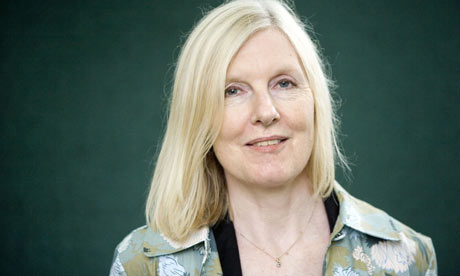
Congratulations Helen, great news indeed.
Author wins publishing deal after leaving manuscript on Richard and Judy's doorstep
A struggling author landed a major publishing deal for her first novel after leaving a draft copy on the doorstep of television presenters Richard and Judy.

Published: The Telegraph, 02 Apr 2010

Ruth Saberton, 37, composed her romantic comedy "Katy Carter Wants a Hero" (Orion) after moving from London to the countryside.
She based the story and characters on the people she met in the fishing village of Polperro, Cornwall.
 The college tutor sent the manuscript to several publishing houses but had no reply and was on the verge of giving up.
But when her mother-in-law mentioned that Richard Madeley and Judy Finnigan had a country retreat nearby she decided to take them a rough copy.
Mrs Saberton drove to their secluded house and placed a 400 page manuscript on the doormat and a note through the letterbox asking them to read it.
She was then stunned when Richard – who along with his wife hosted a regular book club on their TV show – phoned her and said he loved the novel.

Richard, 53, offered to write a foreword and allowed her to use their name when approaching potential publishers – and she soon secured her first deal.
Mrs Saberton, whose book was published yesterday, said: ''I was tearing my hair out trying to get a deal and was getting no luck anywhere. I'd nearly had enough.
''But then my mother-in-law told me Richard and Judy lived along the coast. I knew they're big book fans so I thought I'd drop them a copy.
''I felt a bit cheeky posting it through their door, and hoped they wouldn't mind too much. It was my last hope really.
''I couldn't believe it when Richard called. It was so exciting. I thought he would have just chucked it away.
"He arranged to come to my house and talk to me. He was in my living room and I had to do a reality check it was so surreal.
''It made all the difference and I got a publishing deal. It was a long shot but it certainly paid off.''
The full story at The Telegraph.

Fledgling Māori writers needed for incubator programme

The Māori Literature Trust is calling for submissions from writers who are serious about creating a best-seller. The submissions will be judged and the best six writers will be offered a living allowance to work full-time on their writing for six months in an incubator programme. With the help of a mentor, you will have the chance to develop your writing into a solid piece of literature, with the possibility of getting published.

The competition closes Friday, 14 May at 5 p.m., less than two months away. You may already have examples of writing that you’ve started and never quite finished, or some short stories that have sparks of potential.

Entries are invited from Māori writers who meet the conditions of this incubator programme – from those who have completed creative writing courses to those who write stories for their tamariki or mokopuna. We are looking for people who have a drive and passion to write.

Those of Māori descent living in Aotearoa New Zealand are invited to submit their work in either English or te reo Māori under the following categories:

·    Novel
·    Short Stories
·    Non-fiction
·    Children’s novel/chapter book
·    Children’s picture book
Submitted work should be 5,000–50,000 words and may be a finished piece or a working manuscript.

Six winners will be chosen to go onto the incubator programme. For more details about the competition and the incubator programme visit www.huia.co.nz.

Entries for the incubator programme must include the application form found on the Huia Publishers website. Entries close 5pm, Friday 14 May 2010.
Seeking Identity, Shaping a Nation’s
By Michiko Kakutani
Published: April 5, 2010, New York Times

 THE BRIDGE
The Life and Rise of Barack Obama
By David Remnick
Illustrated. 656 pages. Alfred A. Knopf. $29.95.


“The Bridge,” the title of David Remnick’s incisive new book on Barack Obama, refers to the bridge in Selma, Ala., where civil rights demonstrators were violently attacked by state troopers on March 7, 1965, in a bloody clash that would galvanize the nation and help lead to the passage of the Voting Rights Act. It refers to the observation made by one of the leaders of that march, John Lewis, that “Barack Obama is what comes at the end of that bridge in Selma” — an observation Congressman Lewis made nearly 44 years later, on the eve of Mr. Obama’s inauguration. And it refers to the hope voiced by many of the president’s supporters that he would be a bridge between the races, between red states and blue states, between conservatives and liberals, between the generations who remember the bitter days of segregation and those who have grown up in a new, increasingly multicultural America.

Left - A young Barack Obama with his mother, Ann Dunham, who died in 1995.

By now, Mr. Obama’s story has been told many times — by journalists and the authors of several biographies and campaign books, and most memorably by the president himself, who in the days before he became a politician wrote a remarkably eloquent and searching memoir (“Dreams From My Father”) about his youth, his struggle to come to terms with his absent father, and his groping efforts to forge an identity of his own.

But if the outlines of the story told in “The Bridge” are highly familiar, Mr. Remnick — the editor of The New Yorker and the author of a thoughtful 2008 article in that magazine, “The Joshua Generation: Race and the Campaign of Barack Obama,” from which this book apparently springs — has filled in those broad outlines with insight and nuance. He’s used interviews with many of the formative figures in the president’s life to add details to the narrative of his political and sentimental education — in particular, his relationships with his self-destructive father and his romantic, sometimes naïve mother. Writing with emotional precision and a sure knowledge of politics, Mr. Remnick situates Mr. Obama’s career firmly within a historical context. He puts Mr. Obama’s life and political philosophy in perspective with the civil rights movement that shaped his imagination, as well as the power politics of Chicago, and the politics of race as it has been played out, often nastily, on the state and national stages.

Like many reporters, Mr. Remnick describes Mr. Obama in these pages as cool, charismatic, slightly detached: an autodidact with a lawyer’s analytical intelligence and a novelist’s empathetic temperament; an idealist who is also a pragmatist; a politician inclined to be methodical and cautious in his decision making. Like Ryan Lizza (in a 2007 article in The New Republic) and Richard Wolffe (in his 2009 book, “Renegade”), Mr. Remnick also places considerable emphasis on the role that community organizing had in shaping Mr. Obama’s approach to politics — experience that ratified the future president’s inclination to listen and engage other people. It’s an inclination that would be reinforced further by his time at Harvard Law School and the University of Chicago, politically diverse, often contentious places, where his impulse was to try to reconcile or synthesize opposing views. Perhaps it’s also an inclination that explains why he made such a concerted effort last year to try to get Republican support on a health care bill.
Read the full review at NYT.
NEWS FROM PUBLISHERS LUNCH
Tablet Days: Apple Says Over 250k eBooks On First Day 

Apple resolved some of the guessing (and overheated estimates) by announcing this morning that they sold "over 300,000 iPads" on Saturday--including pre-orders and "deliveries" to partners like Best Buy. They say that "over 250,000 ebooks" were downloaded from the iBookstore on day one (presumably including free titles) along with over one million apps.

Among third-party book apps, the Kindle and Kobo apps were indeed live and working on the iPad, though Barnes & Noble's app is not yet available. Going by ceo William Lynch's quote to WSJ, it's not clear whether it's the bookseller's fault or Apple's: "We don't have an exact date, but it will be there within the next two weeks. Apple certifies all apps, so it's not totally in our control."

The Kindle app works fine for reading, and like the other Kindle apps it gives you immediate access to books you've already bought. But the buying experience is effectively crippled since you cannot purchase from within the app; you have to go through the Safari browser, so one-click buying quickly turns into multi-click buying. By at least one online account, Apple would not allow buying from within the Kindle app. The Kobo app, on the other hand, does let you buy directly from within the app. (There were, however, initial problems with some book files themselves, according to multiple online reports.)

You are prompted to download the iBooks app when you launch the App Store, and the presentation is elegant--both in ease of purchase and in the way it displays your bookshelf (and your books; I preferred their default leading and fonts over the the other apps). Pricing is comparable, as we expected, so you can see how customers would naturally gravitate towards using iBooks unless they want to sync books across other Kindle devices and apps. Or if they want a bigger store to shop from.

By most reports the iBookstore launched with 60,000 titles paid titles and 30,000 free titles, in contrast to Kindle's claimed 450,000 titles. (When Kindle launched in late 2007, they had just under 90,000 titles.) The iBookstore selection feels a little thin as you start to browse and it's hard to find books from any publishers except for the Agency Five. (Among other publishers with titles in the iBookstore are Sourcebooks and F+W Media.) Of course we know that it has been a rolling start for the iBookstore, and that title count is going to rise quite quickly. But the store is clearly lacking in metadata--Apple has not licensed any reviews or other collateral editorial to go with the book listings.

Customers scared of price hikes under the agency model may find themselves relieved. Of the top 15 NYT fiction bestsellers listed, under the new pricing model 9 titles are still at $9.99, with one book at $10.99, two at $11.99, and three at $12.99. Meanwhile, Amazon has flagged books from the Agency Five with a new note saying "this price was set by the publisher." As expected, Hachette Book Group's ebooks were live again at Amazon as of Saturday, and there is no sign of any new limitations on Penguin books through site. While hardcover pricing under agency continues to look aggressive (driven, in part, by Apple's strictly negotiated price baskets), pricing on mass-market paperbacks is closer to parity with print editions.

A lot of first opinions rest on the experience with the backlit (and high-gloss glass) screen. The screen suffers the most in bright sunlight, naturally (just like laptops, which people and read and work on all the time), which is exactly where eInk screens excel. So the promo for Kindle on Amazon's home page now highlights that it's "easy to read, even in bright sunlight." But the screen is great in all other lighting conditions, including low and no (e.g. in bed) light. Personally, I read half of GAME CHANGE over the weekend on the iPad and enjoyed the reading experience--after I got over the neck ache in the first hours of figuring out where and how to hold the device when I use it.

As for other reading matter, newspapers and magazines are vastly superior on the iPad to the crippled Kindle versions, and for some people will be vastly better than paper versions. (I prefer the WSJ iPad app to both the paper version and the web version, for example.)

And of course, the iPad is lot more than "just" a reader. Which for the bulk of the world's population is going to be part of its appeal. People who want a purpose-built device for reading books and nothing else are still likely to favor eInk machines. But particularly now that the specious price incentive to justify a book-only device has been degraded, that may remain a small, if core, group of people. That true "e-reading" capability may also take some of the pricing attention away from book publishers in particular. The latest wave of Kindle customer anger is directed at the New York Times, which raised the subscription price for their Kindle edition to $20 a month.
Apple Release

Monday, April 05, 2010

Publishers & Librarians: Two Cultures, One Goal
Both aim to put books and readers together
By Barbara Fister -- Library Journal, 5/1/2009


For two professions so committed to meeting the needs of readers, publishers and librarians have distinct cultures. Put simply, one culture is all about developing and selling books; the other is about sharing them and fostering a culture of reading. But there's another basic difference, too. Publishers work closely with authors and use sales figures to tell them what readers want, interpreting those figures like tea leaves. Librarians work closely with readers, using them as informants to help them select books that will satisfy the diverse tastes of a community.

Though sharing may seem contrary to the imperative to sell books, many publishers have recognized the importance of the library market. Traditionally, children's book houses have been especially aware of libraries as a catalyst for the industry (libraries represent about 40 percent of the children's book market), and libraries are critical for some small publishers. On the adult side, larger publishers often have library marketing departments that actively network with librarians. Talia Ross of Macmillan, Virginia Stanley at HarperCollins, and Erica Melnichok, Jen Childs, and Marcia Purcell (who heads academic and library marketing) at Random House, for example, are thoroughly plugged-in to the library scene and well known among public librarians. However, for many publishing professionals working in the trenches, the library market is just a number on a P&L (profit-and-loss statement), and for many librarians, the ways of publishers are a complete mystery. [For more on marketing to libraries, see the web exclusive at the end of this article.]

Libraries are a major market for books. Their purchases account for over ten percent of the $27 billion industry (excluding print textbooks for K–12 and higher ed). In contrast to consumer buying, which relies on discretionary dollars, the library market remains a consistent sales channel for publishers.
Read the rest at Library Journal.
Host of books appear as angels become theme of new teenage reading cult
They're heavenly, or hellish, but tales about angels are joining vampire sagas on the bestseller shelves
Vanessa Thorpe, arts and media correspondent
The Observer, Sunday 4 April 2010 


Robert Pattinson and Kristen Stewart in the film Twilight, a 2008 vampire movie. Photograph: Summit Entertainment/LMK

"Angels are all around us," reads the publisher's blurb for Angel, the first of a British trilogy of books for teenagers. "Their beauty is intoxicating, their presence awe-inspiring, their energy irresistible. Angel fever is spreading."

And this spring an angelic host does seem to have taken over a key sector of the book industry, with at least seven new literary series about angels targeted at young adults published here and in America, and two further bestselling titles dominating the European market.
The publication of Angel, written by L.A. Weatherly, an established children's writer from Hampshire, will be followed next year by two sequels, Angel Heat and Angel Burn. They imagine a world where the "potent magnetism" of these "stunning beings" is not what it seems. Far from benevolent forces, Weatherly's angels are "despicable creatures" who must be destroyed by the book's hero, Alex, to stop them "feasting lustily on the energy of innocent victims". For Alex, "the only good angel is a dead angel".
Comparisons with the vogue for teenage stories about vampires are obvious. Just like their blood-sucking supernatural cousins, angels are half-human visitors who can both fly and usefully suggest the mysterious adult world of sexuality that lies beyond. It is a thought that appears to have simultaneously occurred to authors and publishers searching for a new cult reading trend. "I had this idea that I thought was really original," said Weatherly, "and then it seems that everyone else had the same idea at the same time, although hopefully not with angels being evil."
Full story at The Guardian online.
Crime writing is in Jesse Kellerman's blood
Lucy Clark
From: The Sunday Mail (Qld)
April 03, 2010

IN COMMERCIAL crime fiction circles, the name Kellerman brings with it a fair amount of baggage.
Not that that's a bad thing for Jesse, son of the bestselling authors Faye and Jonathan Kellerman. Clearly there's some sort of cachet being a writer so named, and it can't be bad for sales.
On the other hand, the Kellerman parents write undemanding, quick reads to formula, but you can expect more with Kellerman Jr. He has distinguished himself as a man of originality, a writer with his own style in a genre of interchangeable styles.

His fourth novel, The Executor (Sphere, A$32.99), proves this once again – it's no formulaic crime thriller but an intriguing psychological drama, clever and well written.
It's the story of a young man, Joseph Geist, a professional philosophy student who at the age of 30 has just been kicked out of the doctorate program at Harvard because for too long he's been going nowhere with his thesis on the subject of Free Will.
About the same time, his girlfriend kicks him out of her flat and he answers a strange ad in the local Boston paper: "Conversationalist wanted".
In a big old house Joseph encounters Alma Spielmann, a wealthy, lonely and elderly Austrian woman who seeks lively and meaningful conversation about the big questions of life and in Joseph, student philosopher, she finds a worthy debating companion.
Alma pays Joseph to engage in lively conversation on a daily basis, and the slacker philosopher can't believe his luck.
The two become friends, and soon Alma invites Joseph to move into a spare bedroom and life is sweet until the arrival of Alma's manipulative drifter of a nephew Eric, who Joseph immediately dislikes and distrusts.
Kellerman excels in the descent-into-hell narrative, and he surely plots Joseph's loss of his grasp on the cushy life he has been handed.
The author neatly integrates Joseph's childhood into the story as he shows him to be a man of inaction for most of his life. It's fascinating to see what drives this man to action and what sort of action he eventually takes (to reveal more would be to spoil the story, but it's shocking and compelling, and there will be blood).
On the way Kellerman threads in matters philosophical. Alma herself is an intriguing character with her own murky past, which includes interaction with some of Europe's great philosophers, and her own unpublished dissertation on the subject of Free Will.
The full review at the Brisbane Courier Mail online.

Sunday, April 04, 2010

INDIE BOOKSHOPS IN NEWCASTLE, NSW


Staying in Newcastle, NSW over the Easter holiday weekend I have found two excellent Indie booksellers - MacLean's Booksellers (pic left) at 69 Beaumont Street - www.macleansbooks.com.au - and Book Hog at 194 Union Street.

  At the former I bought Reading by Moonlight by Breanda Walker Hamish Hamilton and at the latter I picked up TOSSED - 200 fast, fresh and fabulous salads from leading Aussie cookbook specialist publisher Murdoch Books.


Reading by Moonlight: How books saved a life
Author: Brenda Walker
A memoir of reading and healing


The first time Brenda Walker packed her bag to go into hospital, she wondered which book to take with her. As a novelist and professor of literature, her life had been built around reading and writing. Now she was also a patient, being treated for breast cancer, fighting for her life and afraid for herself and her family. But turning to medicine didn't mean she turned away from fiction. Books had always been her solace and sustenance, and now choosing the right one was the most important thing she could do for herself.

In Reading by Moonlight, Brenda describes the five stages of her treatment and how different books and authors helped her through the tumultuous process of recovery. As well as offering wonderful introductions and insights into the work of writers like Dante, Tolstoy, Nabokov, Beckett and Dickens, Brenda shows how the very process of reading – surrendering and then regathering yourself – echoes the process of healing.
About the author:
Brenda Walker is the author of the novels Crush, One More River, Poe's Cat and The Wing of Night. She is also a critic, essayist and editor and teaches at the University of Western Australia.


TOSSED - 200 fast, fresh and fabulous salads

I had recently decided that it was time I started becoming more varied and bolder in the salads I make and when I came across this book I thought to myself here is the inspiration I need to achieve that. Recipes and text by the staff at the Murdoch Books test kitchen with stunning photography by Tim Robinson and styling by Sarah DeNardi.


The Book Hog was a bookshop with a difference offering a wide range including titles on Art, Architecture & Design, Complementary Health, Buddhism, Esoteric, Psychology, Philosophy, History, Science & Nature
New Age and more. Almost an "alternative" bookshop I guess but at the same timne having a wide range of main stream titles including latest fiction and a most impressive cookery section. At the rear of the store was a large section featuring non-book product from India, Vietnam, Thailand and other Asian countries.
From The Sunday Times
April 4, 2010

The Good Man Jesus and the Scoundrel Christ by Philip Pullman
The Sunday Times review by Nick Rennison 


“This is a story,” proclaims the back cover of Philip Pullman’s new book in large capital letters, as if already warding off potential complaints about it. And yet stories have got Pullman into trouble before. His Dark Materials, his wonderful fantasy trilogy, was interpreted by many fundamentalist Christians, particularly in America, as an assault on organised religion. There seems every likelihood that The Good Man Jesus and the Scoundrel Christ, his retelling of the gospels, will land him in even hotter water. Talk of blasphemy has already been heard.

The difficulty, of course, lies with those people who insist that their stories sit still and behave themselves. Pullman, by contrast, prefers his to be livelier and more demanding. His version of the life of Jesus often follows the gospel story closely, but at its heart is a duality that the four Evangelists never recognised. When Mary is exiled from the inn to the stable and gives birth amid the beasts, she produces twins. One grows up to be the Jesus familiar from the Bible, a charismatic preacher proclaiming the imminence of the Kingdom of God who is eventually taken by the authorities and crucified. The other becomes Christ, a neurotic self-doubter who watches his brother’s career with fearful admiration and is tempted by a mysterious stranger to play his own significant part in the unfolding drama. Skulking in the background, tablet and stylus in hand to note down what is said and done, Christ becomes his brother’s biographer. And, like many biographers, he ends by inventing the life that he studies almost as much as he records it.
The full review at The Times online.

The Good Man Jesus and the Scoundrel Christ 
by Philip Pullman
Canongate in UK, Text Publishing in NZ & Australia
From the margins: Hermione Lee on Penelope Fitzgerald

Since her death ten years ago this month, Penelope Fitzgerald's reputation has grown steadily. Once dismissed as a minor lady writer, she is now recognised as one of the finest British novelists of the last century. Her biographer Hermione Lee has been granted access to her manuscripts, letters and, best of all, her library of books with their many personal annotations


Hermione Lee, The Guardian, Saturday 3 April 2010
 
 Penelope Fitzgerald, that quiet genius of late-20th-century English fiction, who was born during the Great War at the end of 1916, began to publish in 1975. Over the next quarter of a century, she wrote the nine novels, three biographies (of Edward Burne-Jones, Charlotte Mew and the Knox brothers, her father and uncles), and the many essays and reviews that brought her such critical acclaim and a devoted following. In 1995, her haunting masterpiece, The Blue Flower, made her famous in her 80s. Since her death in 2000, the publication of her stories (The Means of Escape), essays (A House of Air) and selected letters (So I Have Thought of You), brought out by her executor and son-in-law, Terence Dooley, and by HarperCollins, have sustained her posthumous reputation.
And that reputation has shifted, during and after her lifetime. When Offshore, her novel about 1960s life on the Thames river-boats, won the Booker prize in 1979, she was treated dismissively as a minor lady writer with quirky, poignant comic talents – a kind of lesser Barbara Pym – who had unaccountably won out over VS Naipaul. It took some time for readers to recognise the power, the subtlety, the absolute originality, the strangeness, the wisdom and the depth of Fitzgerald's work.

I am writing Penelope Fitzgerald's biography, and her family has trustingly let me loose on those materials of hers that they still possess. (An incalculable slice of her life's record went down with Grace, the Thames barge which inspired Offshore, when it sank in the early 1960s. Much of her written archive is in the Harry Ransom Center for the Humanities in Austin, Texas, some of it sold by Fitzgerald in 1989, some later.) What I am looking at is a biographer's dream. There are boxes, shelves and drawers-full of photograph albums, family documents, fragments of early drafts much crossed out and scribbled over, fascinating plot summaries and sketches for stories and novels that never came to fruition, research notes for an unwritten biography of her friend LP Hartley and everything from birthday cards and bills to invitations and vaccination certificates.
The family's archive – which offers the delight, and the challenge, of not having been immaculately sorted and catalogued, as it is in Texas – suggests to me a person at once harum-scarum and duty-bound, distractable and resolute. Rather as in Virginia Woolf's archives (which has dog-prints on some of the manuscript pages, or sketches for improvements to Monk's House on the back of notes for an essay on Henry James), there are signs of improvisation everywhere. Check-lists of possible speakers for a lecture programme Fitzgerald is organising are kept on the outside flap of a dog-eared manila file; notes for a review are scribbled sideways on an official notice from BT; the year's appointments are put in, with many loops and arrows and squiggles, all over a series of small wall calendars. Women writers, as she often used to say in interviews, are always being interrupted.
The full piece by Hermione Leet at The Guardian online.

Saturday, April 03, 2010

HOW DO YOU TURN IT ON?

Alan Moir is a brilliant cartoonist with the Sydney Morning Herald. Orginally from New Zealand, (I knew his photographer broither Rex in my  Napier bookselling days), Alan has lived in Australia for many years and has established himself as one of the great Aussie cartoonists.
Reading this morning's edition (April 2-4, 2010) of the SMH I came across this marvellous cartoon which will resonate with many parents and librarians, booksellers and publishers, indeed all concerned about the future of the book in this electronic age.
Thanks Alan Moir for this absolute gem. You are a genius.
Looking at the iPad From Two Angles
By David Pogue
Published: March 31, 2010


In 10 years of reviewing tech products for The New York Times, I’ve never seen a product as polarizing as Apple’s iPad, which arrives in stores on Saturday.

“This device is laughably absurd,” goes a typical remark on a tech blog’s comments board. “How can they expect anyone to get serious computer work done without a mouse?”
“This truly is a magical revolution,” goes another. “I can’t imagine why anyone will want to go back to using a mouse and keyboard once they’ve experienced Apple’s visionary user interface!”
Those are some pretty confident critiques of the iPad — considering that their authors have never even tried it.
In any case, there’s a pattern to these assessments.
The haters tend to be techies; the fans tend to be regular people.
Therefore, no single write-up can serve both readerships adequately. There’s but one solution: Write separate reviews for these two audiences.

Read the first one if you’re a techie.
(How do you know? Take this simple test. Do you use BitTorrent? Do you run Linux? Do you have more e-mail addresses than pants? You’re a techie.)
Read the second review if you’re anyone else.
Link here to read either or both reviews.
China's Rising Readership, Emerging Authors Offer Opportunities for Western Publishers
By Wen Huang - Publishing Perpectives

The market for serious books in China now numbers between 10 to 15 million people. The country imports 10,000 titles per year for translation. And there are scores of Chinese authors unknown outside the country who are waiting to be mined for their commercial potential. Does this all add up an opportunity for Western publishers? Certainly, but there are limitations, as Wen Huang explains in the second part of his profile of Big Apple literary agency.
Read the article ...
  
   
Is Literature Useful as an Instrument of "Soft Power?"
By Edward Nawotka


Dr. Luc Kwanten of the Big Apple literary agency says that in recent years China has been promoting the export of its literature -- either by supporting translations or participating in book fairs -- as an exercise in soft power. The US does it too, as do other countries. But is literature really suited to exercising "soft power" or is it too unfettered and unpredictable to be of much use?

Read the article...
  

Friday, April 02, 2010

Free flash fiction competition launched

As a thank you to all the people who have supported  them over the past two and a half years, the team behind the Global Short Story Competition has launched a free flash fiction competition.

They  are seeking stories of no more than 500 words to be submitted by June 30, 2010, and to be judged by the team at Certys Limited with a £100 first prize and a runner-up prize for the highly commended story. More by registering free at www.globalwriters.net
NEWS FROM TEXT PUBLISHING

BEATRICE AND VIRGIL, Yann Martel

Published 14 April
Yann Martel’s first novel since the Booker Prize-winning Life of Pi, Beatrice and Virgil is a magical, fable-like story that addresses big themes through the relationship between humans and animals.

ISBN 9781921656255 • hardcover • AU$32.95

THE SECRET RIVER, Kate Grenville

A new edition of the worldwide bestselling Australian classic, loved by critics and readers alike and shortlisted for the 2006 Man Booker Prize.
ISBN 9781921520341 • paperback • AU$24.95
Saturday Morning with Kim Hill 3 April 2010

Full details at www/radionz.co.nz/saturday

Book related guests

8:15 Bryan Bruce
Bryan Bruce is the presenter and producer of TV show The Investigator, and author of the food history book A Taste of History, and true crime book Hard Cases. He travelled to the Middle East and talked to historical experts and archaeologists in six countries to investigate who killed Jesus, for his new book, Jesus: the Cold Case (Random House) and an upcoming TV documentary of the same name.
www.redsky.tv/

9:05 Barbara Ehrenreich
Barbara Ehrenreich is the author of 14 books including Nickel and Dimed, and Bait ), was conceived when she became ill with breast cancer, and explores the tyranny of positive thinking.
www.barbaraehrenreich.com/

11:05 Angela Lassig

Angela Lassig is former Senior Curator of History at the Museum of New Zealand Te Papa Tongarewa. She is the author of a new illustrated book that profiles 25 contemporary New Zealand designers: New Zealand Fashion Design (Te Papa Press).
SYDNEY MORNING HERALD - BESTSELLER LIST
APRIL 2-4, 2010


The Bookman is in NSW for the Easter holidays and was interested to read the Top 10 Bestseller list for Australia this past week as reported in the SMH.

61 HOURS by Lee Child is riding the number one possie while the Stieg Larsson trilogy occupies numbers 2-5 positions (three titles occupying four positons comes about because at #5 is the film tie-in edition) with numbers  6 -10 being Big Girl by Danielle Steel, Solar by Ian McEwan, The Silent Sea by Clive Cussler, Tusscan Rose by Belinda Alexandra, and The Last Song by Nicholas Sparks.
C&W serves up next ‘feel-good’ Nigella

01.04.10 | Catherine Neilan in The Bookseller

The long-term publisher of Nigella Lawson, Chatto & Windus, is bringing out the eighth recipe book by the self-styled domestic goddess this autumn, accompanied by a 13-part BBC Two series.

Dubbed “feel-good food from the most important room in the house” Kitchen: Recipes from the Heart of the Home will be published in hardback this September, priced £25.

It features 180 recipes, from express recipes “for the time-strapped” and weekend recipes “to help unwind, either alone or with family or friends”. The title will be illustrated with photographs by Lis Parsons, as well as step-by-step pictures, ingredient portraits and kitchen snapshots, “some of them taken by Nigella in the course of writing the book”.

The publisher added: “In typical Nigella style she will be helping to solve ‘kitchen quandaries’ while doling out ‘kitchen comfort’ in ladles.”

Gail Rebuck, chief executive of Random House, said the title was “a particular joy”. She added: “Expansive, delicious, gloriously illustrated, the perfect companion volume to her unique How To Eat (1999), [it is] a book that will quickly become a classic in every kitchen.”

According to BookScan, Lawson’s previous seven titles have sold nearly 2.7 million copies, worth more than £40m, with Nigella Express (2007) the top title, having sold more than 810,000 copies.
Helen DunmoreHelen Dunmore wins National Poetry Competition

Writer best known for her novels, who submitted work at the last minute 'on impulse', takes £5,000 award for single poem 'The Malarkey'


'I've written very few poems over the last four years' ... Helen Dunmore. Photograph: Murdo Macleod

Story by Alison Flood,  guardian.co.uk, Tuesday 30 March 2010

Picking through the 10,467 anonymous entries for this year's National Poetry Competition, judges and poets Ruth Padel, Daljit Nagra and Neil Rollinson were sure of their winner, "The Malarkey", which Padel described as "completely arresting in its quietness [and] hidden strength". When they discovered it was by Orange prize-winning novelist and poet Helen Dunmore, "we all threw our hats in the air", said Padel.

The haunting, carefully structured poem about loss sees an unidentified narrator asking "Why did you tell them to be quiet / and sit up straight until you came back? / The malarkey would have led you to them ... You looked away just once / as you leaned on the chip-shop counter, / and forty years were gone." Dunmore, whose novel about an incestuous sibling relationship during the 1930s, A Spell of Winter, won the inaugural Orange prize, is best-known for her fiction, but has published nine collections of poetry. She hadn't entered the National Poetry Competition "for many, many years", and submitted "The Malarkey" at the last minute, just before the deadline closed, "on an impulse".
Read Alison Flood's full report at The Guardian online.
INTERESTING STATS PROVIDED BY THE BOOKSELLER


 Most reviewed this week  
  
1. 61 Hours by Lee Child (Bantam Press, 9780593057063, £18.99, 18th March)
2. The Dead Republic by Roddy Doyle (Jonathan Cape, 9780224090094, £14.99, 25th March)
3. Zeitoun by Dave Eggers (Hamish Hamilton, 9780241144848, £14.99, 15th March)
4. The Eerie Silence  by Paul Davies (Allen Lane, 9781846141423, £16, 4th March)

5. The World That Never Was by Alex Butterworth (The Bodley Head, 9780224078078, £25, 4th March)
6. Peoplequake by Fred Pearce (Eden Project Books, 9781905811342, £12.99, 5th February)
7. Burying the Bones by Hilary Spurling (Profile, 9781861978288, £12, 25th March)
8. Pirates of Barbary by Adrian Tinniswood (Jonathan Cape, 9780224085267, £20, 18th March)
9. Ill Fares the Land by Tony Judt (Allen Lane, 9781846143595, £20, 25th March)
10. So Much for That by Lionel Shriver (HarperCollins, 9780007271078, £12, 18th March)   

Thursday, April 01, 2010

SWIFT SKY
New Zealand’s Military Aviation History
Errol W. Martyn with the Air Force Museum


RELEASE DATE 1 APRIL 2010
73rd ANNIVERSARY OF THE
ROYAL NEW ZEALAND AIR FORCE
RRP $65.00 | Hardback | 232pp | Penguin Books
Full colour and b&w photographs throughout


New Zealanders were among the world’s first aviators, with our geography and location making the prospect of flight an attractive one for our people and our nation. It comes as no surprise then that tens of thousands have served in not only the Royal New Zealand Air Force but in numerous air forces in peace, and in war around the world. Those New Zealanders were among the first to take to the air like a ‘swift to the sky’. Told through the collections of the Air Force Museum of New Zealand, this book is highly illustrated with ephemera, personal accounts, aircraft and previously unpublished photographs. The text follows the development of our military aviation’s pre-WW1 origins to today’s mobile defence force support backbone. This is the ultimate New Zealand Air Force book, timely published to coincide with the 73rd Anniversary of the Royal New Zealand Air Force.

Swift to the Sky
tells the story of the Air Force and provides an important account of the role of the RNZAF in New Zealand’s history. As Chief of Air Force it is an honour to provide a foreword to this portrayal of those who have courageously served our country as airmen and women over the years. While the Air Force is the youngest of the three services, the role of the RNZAF has become increasingly important in the preservation of security in our region, search and rescue, humanitarian assistance, and disaster relief. This book is a fantastic tribute to those who have assisted in these roles: past, present and future.
Chief of Air Force, Air Vice-Marshal
Graham Lintott, ONZM, FRAeS


THE AIR FORCE MUSEUM OF NEW ZEALAND
With the help of a small, enthusiastic community of volunteers, the ‘RNZAF Historical Centre’, as it was then known, was established in 1978 at RNZAF Base Wigram, Christchurch. The Centre’s collections of artifacts grew quickly thanks to generous donations of funds, aircraft and other objects. In 1981, the RNZAF Museum Trust Board decided to create a proper public museum at Base Wigram. The Air Force Museum was opened on 1 April 1987, the date marking the fiftieth anniversary of the establishment of the RNZAF as a separate service. In 1993 the Minister of Defence announced that RNZAF Base Wigram would close and this duly occurred on 31 December 1995. The historical significance of Wigram and the role of the base in the
RNZAF’s history, however, were not forgotten. The Museum remained at Wigram and today serves as a memorial to New Zealand’s past airmen and airwomen. It also provides the public with entertaining and informative displays and offers a wide variety of educational and public programmes to visitors.

ERROL W. MARTYN
Errol Martyn was born in Invercargill in 1946. From 1963 he spent 32 years in the airline industry with the local branch of the National Airways Corporation, later Air New Zealand. On leaving the airline and moving to Christchurch in 1996, he became a full-time researcher and writer, specializing in New Zealand aviation personnel from earliest times to 1950.
Errol has been an honorary consultant to the RNZAF Museum since the 1980s and an active member of the Aviation Historical Society of New Zealand for 40 years. He is also the author of the highly acclaimed 1400-page trilogy, For Your Tomorrow – a record of New Zealanders who have died while serving with the RNZAF and Allied Air Services since 1915
Arthur C Clarke Award Shortlist

The annual award celebrates the best science fiction novel of the year, selected from novels published in the UK in previous year. The winner of the £2010 award will be announced on 28th April at an awards ceremony held on the opening night of the Sci-Fi London Film Festival.

The  shortlisted books are:


 Spirit - Gwyneth Jones (Gollancz)

 The City & The City - China Miéville (Macmillan)


 Yellow Blue Tibia - Adam Roberts (Gollancz)


 Galileo's Dream - Kim Stanley Robinson (HarperCollins)


 Far North - Marcel Theroux (Faber & Faber)


 Retribution Falls - Chris Wooding (Gollancz)
Bloomsbury hopes new book covers will recapture the Harry Potter magic
• Absence of Harry Potter release sees profits fall 35% last year
• Company plans talks with Apple about iPad

Richard Wray,  guardian.co.uk, Tuesday 30 March 2010


Left - Bloomsbury hopes a new generation of readers will fall under the Harry Potter spell. Photograph: Frank May/EPA

Harry Potter is getting a makeover. The boy wizard's seven adventures, penned by JK Rowling, are being given new covers by publisher Bloomsbury this summer as it looks to recapture just a little of its magic.

The absence of a new Potter book left the publisher out of pocket last year, with profits down 35%, but announcing the company's annual results, the chief executive, Nigel Newton, said trading had been "excellent".

He added that the company was hoping to find space for digital editions of its books on Apple's iPad, due to go on sale in the US on Saturday and in the UK a few weeks later.

"It has not come to the UK yet, so that is a piece of business yet to happen, but I can certainly say that the iPad looks like a very exciting platform indeed," he said. "Obviously it is the most important development in ebooks in recent months, so we will certainly be talking to Apple."

Media companies have become increasingly excited about the potential of the iPad to enable them to increase their digital revenues. At launch, several newspapers and magazines, including the New York Times and Newsweek, will have iPad applications which users can download for a fee. Apple is also setting up the iBookstore for digital titles and has already signed up publishers Penguin, HarperCollins, Macmillan, Simon & Schuster and Hachette. But last week Random House admitted it might not put its authors on the device because it fears the iPad could result in a sharp drop in the money it makes from ebooks.

Newton said Bloomsbury's ebook sales are soaring, although from a very low base, thanks in part to the release of Amazon's Kindle ebook reader, which came to the UK in October. Its bestselling etitle to date is My Horizontal Life: A Collection of One Night Stands, by US comedian Chelsea Handler.
The full report at The Guardian.
Oswald wins inaugural Ted Hughes prize

31.03.10 | Victoria Gallagher in The Bookseller

Nature poet Alice Oswald has won the inaugural Ted Hughes award for work in poetry.

The £5,000 prize, which was founded by poet laureate Carol Ann Duffy, aims to reward "the most exciting contribution to poetry" in the last year.

Oswald picked up the prize for Weeds and Wild Flowers (Faber) in which she imagined the characters behind common plants and flowers and is interspersed with illustrations from Jessica Greenman.

According to The Guardian the judges considered radio poems, film poems, public art inscriptions and works for the stage. Oswald managed to ward off competition from other shortlisted poets including former laureate Andrew Motion with his collection The Cinder Path (Faber), and Jackie Kay's bringing together of verse, music and theatre The Maw Broon Monologues.

Judge Jo Shapcott said Oswald's collection crossed "artistic boundaries and age boundaries and is unsettling and unsettled in every good way".
Gallimard Planning To Sue Google
Report from Book2Book

Posted at 4:38PM Tuesday 30 Mar 2010
Gallimard and two other French publishers plan to sue Google for scanning books without prior permission. The move was announced at the Paris Book Fair by Gallimard chief executive Antoine Gallimard


Huffington Post

L'Express.fr