 Why do writers write? Some of
literary history's most famous and timeless answers have come from George Orwell,
Joan Didion,
Susan Sontag,
and Charles Bukowski.
In her beautiful essay "Uncanny
Singing That Comes from Certain Husks," published in the
1991 anthology Why I Write: Thoughts on the Craft of
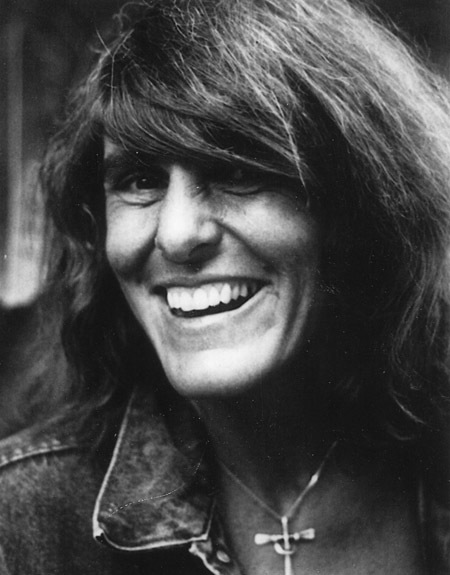
Fiction (public library), Joy Williams considers
the impetus for writing with equal parts insight, irreverence, and that blend
of anguishing ambivalence and convulsive conviction so characteristic of the writer's
mind.
Why do writers write? Some of
literary history's most famous and timeless answers have come from George Orwell,
Joan Didion,
Susan Sontag,
and Charles Bukowski.
In her beautiful essay "Uncanny
Singing That Comes from Certain Husks," published in the
1991 anthology Why I Write: Thoughts on the Craft of
Fiction (public library), Joy Williams considers
the impetus for writing with equal parts insight, irreverence, and that blend
of anguishing ambivalence and convulsive conviction so characteristic of the writer's
mind. It's become fashionable these days to say that the writer writes
because he is not whole, he has a wound, he writes to heal it, but who cares if
the writer is not whole, of course the writer is not whole, or even
particularly well. There is something unwholesome and destructive about the
entire writing process. Writers are like eremites or anchorites – natural-born
eremites or anchorites – who seem puzzled as to why they went up the pole or
into the cave in the first place. Why am I so isolate in this strange place?
Why is my sweat being sold as elixir? And how have I become so enmeshed with
works, mere works, phantoms?
It's become fashionable these days to say that the writer writes
because he is not whole, he has a wound, he writes to heal it, but who cares if
the writer is not whole, of course the writer is not whole, or even
particularly well. There is something unwholesome and destructive about the
entire writing process. Writers are like eremites or anchorites – natural-born
eremites or anchorites – who seem puzzled as to why they went up the pole or
into the cave in the first place. Why am I so isolate in this strange place?
Why is my sweat being sold as elixir? And how have I become so enmeshed with
works, mere works, phantoms?
A writer starts out, I think, wanting to be a transfiguring agent,
and ends up usually just making contact, contact with other human beings. This,
unsurprisingly, is not enough. (Making contact with the self – healing the
wound – is even less satisfactory.) Writers end up writing stories – or rather,
stories' shadows – and they're grateful if they can but it is not enough.
Nothing the writer can do is ever enough.
She considers the generative
power of awareness:
The significant story possesses more awareness than the writer
writing it. The significant story is always greater than the writer writing it.
This is the absurdity, the disorienting truth, the question that is not even a
question, this is the koan of writing.
A writer's awareness must never be inadequate. Still, it will
never be adequate to the greater awareness of the work itself, the work that
the writer is trying to write. The writer must not really know what he is
knowing, what he is learning to know when he writes, which is more than the knowing
of it. A writer loves the dark, loves it, but is always fumbling around in the
light. The writer is separate from his work but that's all the writer is – what
he writes. A writer must be smart but not too smart. He must be dumb enough to
break himself to harness.


No comments:
Post a Comment