Tuesday, December 27, 2011

David Weinberger on the future of libraries

CBC Books - December 20, 2011 

The days of the card catalogue are long over, but there are even more innovations ahead in how the information available at libraries is organized. In a recent interview on Spark, David Weinberger, author and co-director of the Harvard Library Innovation Lab, talked to host Nora Young about ShelfLife and LibraryCloud, two of the lab's ongoing projects that will transform how we use libraries.
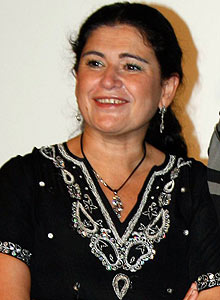
DavidWeinberger.jpgShelfLife is a new way to browse and discover library resources online that adds a contextual dimension, which is shown "by using a very traditional visual representation: a shelf. "
The image of the shelf is turned sideways so the book titles on the spines can be read, and users can scroll the shelf. "This is in some ways a very old-fashioned way of seeing a work in context. The idea is that works are always in a web of other works, they have meaning and significance because of the connections they have to other works," Weinberger said.
But ShelfLife also adds a couple of features that are not old fashioned in the least. "The first is that you can always pivot on any particular book," Weinberger said. "So you click on a book and it shows you all the categories under which it has been classified by librarians but also by users in various ways, by tags and the like. And you click on one of those classifications and it redraws so that you see all the works that are within that classification, including the original one that you're looking at."
Full piece.

Monday, December 26, 2011

Merry Christmas & Happy Holidays

Christmas Day in New York, no sign of snow..............................lots of special gifts though.
Merry Christmas to you all.

Review of the Year: Brilliant books of 2011

The best fiction proved that, when it comes to capturing the way in which time toys with us, there's no greater form than the novel says Gaby Wood.

A Visit From The Goon Squad
A Visit From The Goon Squad contains the text of the novel and an audiobook version.
This time last year, one of my favourite American authors had a book due out in the UK from a relatively small publisher. I wondered why she was not better known here – her novels had been highly praised and widely sold in the US, and this new one had had a sweeping success there.
Well, it didn’t take long for Britain to be crowded with converts. Jennifer Egan’s A Visit from the Goon Squad became possibly the most talked-about novel of the year. Quite apart from the critical plaudits and mentions on the reading lists of luminaries it received, I heard more people bring it up in conversation than I saw pulling David Nicholls’s One Day out of their handbags on the train. Egan’s new fans will be delighted to hear that Corsair have plans to publish her backlist in 2012.
Ostensibly set in and on the fringes of the music business, Goon Squad uses pop music, with its fast fading fashions, as a way of showing the effects of time. Characters look at themselves, and each other, and wonder how they got “from A to B”. In fact, one dying musician wants to call his last album A to B: “That’s the question I want to hit head-on,” he explains. “How did I go from being a rock star to being a fat f--k no one cares about?” A 13 year-old boy is obsessed with timing the pauses in pop songs, and when his exasperated father eventually shouts at him about it, his mother explains on the boy’s behalf: “The pause makes you think the song will end. And then the song isn’t really over, so you’re relieved. But then the song does actually end, because every song ends, obviously, and That. Time. The. End. Is. For. Real.”
Full piece at The Telegraph

Short stories: Margaret Drabble and Katherine Mansfield

In our special Christmas short story series, we're parcelling up two of our most popular short stories each day – one to read and one to listen to. Today …

• Listen to Margaret Drabble reading the first short story she ever read - Katherine Mansfield's The Doll's House

• Read Drabble's short story Trespassing
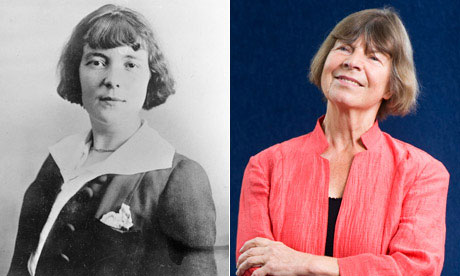
Katherine Mansfield and Margaret Drabble
Katherine Mansfield and Margaret Drabble Photograph: Hulton/Murdo Macleod
Margaret Drabble reads Katherine Mansfield's 1922 story The Doll's House - the first adult short story she ever read - in which the gift of the perfect dolls' house to the children of a wealthy family shows up the deep social divisions in their village community.

Listen to The Doll's House by Katherine Mansfield  - Link to this audio


Read Trespassing – a short story by Margaret Drabble, specially commissioned for our Autumn books season, a compulsion to explore forbidden territory leads a woman to a nuclear power station
Hinkley Point Nuclear Power Stations Photograph: Alamy

When she was a child, she kept on her bedroom mantelpiece a little oblong blue-grey leaden plate saying: "danger of death". It portrayed a rudimentary skull-shape and a symbolic zig-zag bolt of electricity and displayed these three plain words of warning. She found it in the gutter on the corner by the sweet shop in her home town of Leeds, and she was very fond of it. Her mother tolerated it, and it survived many a half-hearted spring clean and attempted clearance. Eight years later she added to it another sign which she found lying under the lichen-entrusted stone wall of a French cemetery in the Auvergne, declaring: "danger de mort". She thought of building up a collection of similar items, but she didn't. She didn't persist. And when her parents sold the house and moved to a cottage in Wharfedale, her childhood bedroom was dismantled and the danger signs, along with other more easily valued treasures, disappeared during the removal.
Read more

Jo Shapcott wins Queen's Gold Medal for Poetry

Jo Shapcott has been awarded the Queen's Gold Medal for Poetry

Royal Gold Medal award for poet Jo Shapcott is described as the 'true crowning' of Londoner's career.

Jo Shapcott has been awarded the Queen's Gold Medal for Poetry Photo: PA

The London-born writer earned more noble recognition today when she was awarded the Queen's Gold Medal for Poetry. This honour recognises her body of work including Of Mutability, which was named Costa Book of the Year.
Past recipients of the Gold Medal, which was instituted by George V in 1933 at the suggestion of poet laureate, John Masefield, have included WH Auden (1936), John Betjeman (1960), Philip Larkin (1965), Stevie Smith (1969) and Ted Hughes (1974).
Of Mutability has been described as her response to being diagnosed with breast cancer and an acknowledgement in the front of the 54-page volume says it "owes everything" to the medical team at Hereford County Hospital who treated her.
Full story at The Telegraph

Books for Christmas

Sunday, December 25, 2011

In the wake of second negative funding decision by Arts Council England, Interlitq is to go into abeyance, in terms of publishing, following publication of Issue 17

Posted December 24, 2011 - By Robert Toperter

Peter Robertson, the President of Interlitq, has announced that, in the wake of the second negative funding decision by Arts Council England, Interlitq is to go into abeyance, in terms of publishing, following publication of Issue 17 of the review.
Robertson states, “I can say little or nothing about these funding decisions, as Arts Council England’s legal department has again written to me to remind me that any information that I could release into the public domain is protected by the Data Protection Act.”
He goes on to say, “Let me say, however, that I do not accept ACE’s statement to the effect that the artistic idea of Interlitq is lacking in clarity. How, I wonder, would they begin to square that assertion with their constant reiterations, made to me in writing, to the effect that Interlitq is an ‘excellent’ publication? While Interlitq will, in terms of publishing, go into abeyance after the publication of Issue 17, I will always believe that the review, with its inclusive vision, has played its part in disseminating outstanding international literature.”

Elijah Wood: 'I was thrilled to play Frodo Baggins in The Hobbit'

Since Lord of the Rings, the actor has avoided big-budget epics. But now he's reprising his hobbit role and starring in a lavish Treasure Island adaption

 - guardian.co.uk,

Elijah Wood
Elijah Wood: 'It was weird being back'. Photograph: Victoria Will/AP

  1. The Hobbit
  2. Production year: 2011
  3. Country: Rest of the world
  4. Directors: Peter Jackson
  5. Cast: Andy Serkis, Benedict Cumberbatch, Cate Blanchett, Christopher Lee, Elijah Wood, Martin Freeman, Orlando Bloom, Sir Ian McKellen, Stephen Fry
  6. More on this film
Is that the Ring? Around the ring finger of Elijah Wood's right hand is a band of silver with strange lettering on it – probably Elvish. As a reward for his lead hobbiting services in the Lord of the Rings trilogy, director Peter Jackson reportedly gave Wood the original Ring. And he still wears it. Doesn't he?
"No. This is Hebrew, " he says, twirling the ring around his finger. "I know, it has a kind of a similar look to it."
Oh.
"I do have the Ring, but it's not inscribed, and it's gold. But I don't think it's real gold – gold-plated. But, no, I don't wear it. I keep it in a little box." Not on a chain around his neck? "I carried it for a long time," he says with mock solemnity.
It would be easy to imagine that in the years since Wood finally hurled that infernal ring into Mount Doom, he has still been burdened by it, dragging himself around an indifferent movie industry where nobody can see him as anything other than the hairy-footed little hero of a colossally successful movie trilogy. He's not at all like Frodo in real life, even if those big blue eyes still look like a special effect. He's dressed in standard hipster/skater attire – plaid shirt, skinny jeans – and he seems relaxed and chatty, often breaking into a bemused, falsetto laugh. If the fate of Star Wars' Mark Hamill ever awaited him, he seems to have avoided it, largely by doing as many un-Tolkeinesque things as possible.
"My immediate feeling after the first Rings movie came out was that I couldn't conceive of doing anything massive again," he says. "So the first thing I worked on was a movie barely anybody saw, called Ash Wednesday, and one of my reasons for doing it was because it was really tiny. I was only in makeup for four minutes a day!"
More at the Guardian.

Tidings of joy

Review by Christopher Bray -David Malouf’s limber yet learned essay ‘The Happy Life’ examines the idea of contentment and the pursuit of happiness

A happy family
The Happy Life: The Search for Contentment in the Modern World, by David Malouf, Chatto & Windus, RRP£10, 106 pages
It’s Christmas, the second most popular time for husbands and wives to start planning divorce proceedings. (The most popular is the summer family holiday.) ’Tis, we’re told, the season to be jolly, though with its short days and long, dark nights of the soul, it’s more likely the season we ask ourselves how jolly we really are. And no, that bottle of 12-year-old single malt you’ve gift-wrapped for yourself is not the solution.
So what is? That’s the question the novelist David Malouf has set himself in this limber yet learned essay. Why, he wants to know, has the vanquishing of most of the great enemies of happiness – hunger, disease, early death, poverty – failed to usher in an age of widespread contentment? His answer will not please Britain’s prime minister, who having looked at the predictions for future growth has let it be known that he thinks it’s “time we admitted that there’s more to life than money” and “focused not just on GDP but on GWB – general well-being”.

Not that Malouf is some mad materialist who thinks money is all that counts. Rather, he believes that politicians do more harm than good when they start concerning themselves with the cheeriness or otherwise of prospective voters. After acknowledging the power of the phrase-making in the US Declaration of Independence, he goes on to analyse Jefferson’s most famous clause – the one about “life, liberty and the pursuit of happiness” – and finds it, if not wanting, then at least a little wayward.
Full review at the FT Weekend.

Types With Plenty of Character

By DAVID W. DUNLAP - New York Times - December 24, 2011

Matrices for the Romain de l'Université typeface.
David W. Dunlap/The New York Times - Matrices for the Romain de l'Université typeface.
The exhibition “Printing for Kingdom, Empire & Republic” at the Grolier Club celebrates French-made typefaces that changed the look of books

The Frick Collection ~ The Best Private Art Museum In New York

On our list of places to visit.  Art News 23 Dec 2011
artwork: Konrad Witz - Pietà, c.1440, -  Tempera and oil on panel - Property of The Frick Collection, NY -  Konrad Witz was one of the first German painters to show the influence of early Netherlandish art and one of the first European artists to incorporate realistic landscapes into religious paintings.
The Frick Collection is a not-for-profit educational institution originally founded by Henry Clay Frick (1849-1919), the Pittsburgh coke and steel industrialist. In 1913, construction began on Henry Frick’s New York mansion at Seventieth Street and Fifth Avenue, designed by Carrère and Hastings to accommodate Mr. Frick’s paintings and other art objects. The house cost $5,000,000, but from its inception, took into account Mr. Frick’s intention to leave his house and his art collection to the public. Mr. Frick died in 1919 and in his will, left the house and all of the works of art in it together with the furnishings (“subject to occupancy by Mrs. Frick during her lifetime”) to become a gallery called The Frick Collection. He provided an endowment of $15,000,000 to be used for the maintenance of the Collection and for improvements and additions. 

After Mrs. Frick's death in 1931, family and trustees of The Frick Collection began the transformation of the Fifth Avenue residence into a museum and commissioned John Russell Pope to make additions to the original house, including two galleries (the Oval Room and East Gallery), a combination lecture hall and music room, and the enclosed courtyard. In December 1935 The Frick Collection opened to the public. In 1977, a garden on Seventieth Street to the east of the Collection was designed by Russell Page, to be seen from the street and from the pavilion added at the same time to accommodate increasing attendance at the museum. This new Reception Hall was designed by Harry van Dyke, John Barrington Bayley, and G. Frederick Poehler. 
Two additional galleries were opened on the lower level of the pavilion to house temporary exhibitions. The nearby Frick Art Reference Library was founded in 1920 to serve “adults with a serious interest in art,” among them scholars, art professionals, collectors, and students. The Library’s book and photograph research collections relate chiefly to paintings, drawings, sculpture, and prints from the fourth to the mid-twentieth centuries by European and American artists. Known internationally for its rich holdings of auction and exhibition catalogs, the Library is a leading site for collecting and provenance research. Archival materials and special collections augment the research collections with documents pertaining to the history of collecting art in America and of Henry Clay Frick’s collecting in particular.

The Frick Collection developed the “Art of Observation” training course, initially for medical students, but now used by police, security and defense personnel throughout the USA. Using works of art to train students in observation techniques proved so effective that enquiries were received from as far as way as London’s Metropolitan Police Force. Visit the museum’s website at … www.frick.org

Saturday, December 24, 2011

Wishing you all a book-filled merry Christmas

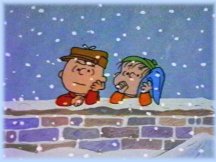
A Charlie Brown sort of Christmas

Charlie Brown felt so depressed.
"I just don’t understand Christmas. Instead of feeling happy, I feel sort of let down."

‘Salmon Fishing in the Yemen’ Trailer Released

By Maryann Yin on December 23, 2011 

CBS Films has released the trailer for film adaptation of Paul Torday‘s comic novel, Salmon Fishing in the Yemen. We’ve embedded the trailer in the video above–what do you think?
Torday won the Bollinger Everyman Wodehouse Prize for the novel in 2007. Director Lasse Hallström helmed this project. The film stars Ewan McGregor and Emily Blunt.

Here’s more from Deadline: “CBS Films picked up Salmon Fishing In The Yemen as a possible awards contender after it premiered at Toronto in the fall, but the distributor decided it was too late for the tale of Middle East politics and fly-fishing to enter this year’s Oscar race. It instead has set it for a limited-run release March 2, 2012.” (via Shelf Awareness)

The Book of Books: What Literature Owes the Bible

By MARILYNNE ROBINSON - New York Times - Published: December 22, 2011

The Bible is the model for and subject of more art and thought than those of us who live within its influence, consciously or unconsciously, will ever know.
Illustration by O.O.P.S.
Literatures are self-referential by nature, and even when references to Scripture in contemporary fiction and poetry are no more than ornamental or rhetorical — indeed, even when they are unintentional — they are still a natural consequence of the persistence of a powerful literary tradition. Biblical allusions can suggest a degree of seriousness or significance their context in a modern fiction does not always support. This is no cause for alarm. Every fiction is a leap in the dark, and a failed grasp at seriousness is to be respected for what it attempts. In any case, these references demonstrate that in the culture there is a well of special meaning to be drawn upon that can make an obscure death a martyrdom and a gesture of forgiveness an act of grace. Whatever the state of belief of a writer or reader, such resonances have meaning that is more than ornamental, since they acknowledge complexity of experience of a kind that is the substance of fiction.
Old Jonathan Edwards wrote, “It has all along been God’s manner to open new scenes, and to bring forth to view things new and wonderful.” These scenes are the narrative method of the Bible, which assumes a steady march of history, the continuous unfolding of significant event, from the primordial quarrel of two brothers in a field to supper with a stranger at Emmaus. There is a cosmic irony in the veil of insignificance that obscures the new and wonderful. Moments of the highest import pass among people who are so marginal that conventional history would not have noticed them: aliens, the enslaved, people themselves utterly unaware that their lives would have consequence. The great assumption of literary realism is that ordinary lives are invested with a kind of significance that justifies, or requires, its endless iterations of the commonplace, including, of course, crimes and passions and defeats, however minor these might seem in the world’s eyes. This assumption is by no means inevitable. Most cultures have written about demigods and kings and heroes. Whatever the deeper reasons for the realist fascination with the ordinary, it is generous even when it is cruel, simply in the fact of looking as directly as it can at people as they are and insisting that insensitivity or banality matters. The Old Testament prophets did this, too.
A number of the great works of Western literature address themselves very directly to questions that arise within Christianity. They answer to the same impulse to put flesh on Scripture and doctrine, to test them by means of dramatic imagination, that is visible in the old paintings of the Annunciation or the road to Damascus. How is the violence and corruption of a beloved city to be understood as part of an eternal cosmic order? What would be the consequences for the story of the expulsion from Eden, if the fall were understood as divine providence? What if Job’s challenge to God’s justice had not been overawed and silenced by the wild glory of creation? How would a society within (always) notional Christendom respond to the presence of a truly innocent and guileless man? Dante created his great image of divine intent, justice and grace as the architecture of time and being. Milton explored the ancient, and Calvinist, teaching that the first sin was a felix culpa, a fortunate fall, and providential because it prepared the way for the world’s ultimate reconciliation to God. So his Satan is glorious, and the hell prepared for his minions is strikingly tolerable. What to say about Melville? He transferred the great poem at the end of Job into the world of experience, and set against it a man who can only maintain the pride of his humanity until this world overwhelms him. His God, rejoicing in his catalog of the splendidly fierce and untamable, might ask, “Hast thou seen my servant Ahab?” And then there is Dostoyevsky’s “idiot” Prince Myshkin, who disrupts and antagonizes by telling the truth and meaning no harm, the Christ who says, “Blessed is he who takes no offense at me.”  
Full piece at the New York Times.     

Peter Robertson writes from London:

Dear Reader and Friend,
I hope that this finds you well, wherever you may be.
I am sorry to have to inform you that approximately one hour ago, Arts Council England wrote to me to inform me that, on reassessment, it has decided to turn down Interlitq for funding on the restated ground of the review’s “weaknesses in relation to the clarity of the artistic idea”.
I am sorry that this will be disappointing news. I am afraid that I am somewhat limited with regard to what I can say in this case, as it was ACE’s legal department that wrote to me today, once again reminding me of the purview of the Data Protection Act, and indeed with veiled legal threats, that I will in turn refer to my lawyer. But I have no doubt at all that what we must now do, and with immediate effect, is to put this difference of opinion behind us, as it is the literary path, and not the legal one, that Interlitq must continue to go down—and anything else is a distraction from the review’s real purpose.
I continue to believe that the artistic idea of Interlitq is a clear one. And I also continue to believe wholeheartedly in the review. And let me add that, furthermore, I believe that it is no accident that many of the most distinguished intellectual figures in the world have given their imprimatur to Interlitq by kindly agreeing to act as Consulting Editors for the review—I am quite sure that they did not come on board lightly.”
With my kind regards from London for a peaceful weekend,
Peter Robertson

Callow donates books to Westminster Reference Library

23.12.11 | Bookseller Staff

Actor Simon Callow has donated 1,000 of his own books to the Westminster Reference Library. Most of the books are specialist performing arts titles.
Callow told the BBC: "I can't conceive of a life without libraries", saying he had grown up alongside the Streatham public library and had been a fan even before he could read.
He added that his gesture of support for the Westminster library meant the books would have a very suitable home, "right in the heart of the West End and the theatre community".

Caitlin Moran's How To Be A Woman wins best book prize


Caitlin Moran's How To Be A Woman has won the Galaxy book of the year award.
A public vote crowned the journalist's semi-autobiographical tome the winner ahead of titles by Dawn French, Claire Tomalin and seven others.
Moran's title was named most popular non-fiction book at the National Book Awards last month.
The Times columnist said it was "a total honour and thrill" for her book to be named overall book of the year ahead of the other 10 category winners.
"Obviously Rear of the Year is the one I've always been gunning for," she said.
"But since I found out it's judged on 'form' rather than 'sheer volume', then Book of the Year... enables me to chow down on a hog roast over Christmas without worrying about fitting into my jeggings."
How To Be A Woman takes a humorous look at the way feminism and women have changed over the years.
Its success came at the expense of such other titles as French's A Tiny Bit Marvellous, winner of the fiction book of the year prize, and Emma Donoghue's Room, winner in the best paperback category.
Last year's book of the year, David Nicholls' One Day, went on to become the biggest selling paperback of 2011

What's the definition of a great book?

As the inevitable rows on prize juries testify, it's not easy to say – but well-informed argument does provide some useful pointers

 - guardian.co.uk,

Finger pointing
A finger pointing. Photograph: Phil Portus / Alamy
Martyn Goff – formerly the administrator of the Man Booker prize, a puckish and highly literate man about town, novelist and these days a rare book dealer – used to say that choosing a Booker winner was simple. "Just pick the best book," he would advise, knowing full well that that was where the problems – and the fun – started. Martyn loved problems, and had a great sense of fun, leaking judges' disagreements to the press, keeping the pot boiling, stirring merrily.

He was fully aware that prize judges have strong opinions and individual tastes – he liked picking ones that did – and that they will always come into conflict. Never, he once told me, have the judges been unanimous about the winner of the Booker, though now and again they all left the final judging room tolerably happy. But he relished the clash of ego and opinion in the judging process. The judge he had most respected was George Steiner. Why was that? "He knew how to get his own way."

Martyn was also clear, though, that it was up to individuals, and individual panels, to decide what counted as best, and would not, under any conditions, suggest the criteria that might be applied to such a choice. I think this was wise of him, and that the hoo-hah at this year's Man Booker, with Stella Rimington wanting books to read rather than to admire, and Chris Mullin favouring those that "zipped along", was caused not by the fact that these are dubious criteria, but that they are criteria at all. Better just to make one's choices, and let the world react.

I was once asked, at some festival or other during a time when I was judging the prize, what my criteria were for defining a great book. Now I must admit that, like a lot of arts people, I have an instinctive revulsion against rules. Art is by its nature often transgressive, and most of us trained in the arts do not like to be told what to do, whether by people or by formulae. We associate rules and "criteria" with busybody administrators and bureaucrats, and resist reflexively when asked to justify ourselves according to some pre-set formulation or standard. Though by no means hostile to rational discourse of more conventional kinds, we often rely on intuition, particularity, taste, and an individuated critical eye. We like to think of ourselves as free spirits, which is one of the sustaining illusions of the whole enterprise.
Full story at The Guardian.

The New Yorker Christmas Issue

Love this cover

Top Book Covers 2011

Kirkus Reviews

A Christmas Memory

In today's Delanceyplace excerpt - seven-year-old Truman Capote, abandoned by his divorced parents, is taken in by depression-poor cousins in the rural South. One of these cousins, a distant, elderly cousin, becomes his closest friend and only refuge - but she is only in his life for two more short years. As Christmas approaches, they make fruitcakes as presents for people they barely know:

"Imagine a morning in late November. A coming-of-winter morning more than twenty years ago. Consider the kitchen of a spreading old house in a country town. A great black stove is its main feature; but there is also a big round table and a fireplace with two rocking chairs placed in front of it. Just today the fireplace commenced its seasonal roar.

"A woman with shorn white hair is standing at the kitchen window. She is wearing tennis shoes and a shapeless gray sweater over a summery calico dress. She is small and sprightly, like a bantam hen; but, due to a long youthful illness, her shoulders are pitifully hunched. Her face is remarkable - not unlike Lin­coln's, craggy like that, and tinted by sun and wind; but it is delicate too, finely boned, and her eyes are sherry-colored and timid. 'Oh my,' she exclaims, her breath smoking the windowpane, 'it's fruitcake weather!'

"The person to whom she is speaking is myself. I am seven; she is sixty-something. We are cousins, very dis­tant ones, and we have lived together - well, as long as I can remember. Other people inhabit the house, rela­tives; and though they have power over us, and fre­quently make us cry, we are not, on the whole, too much aware of them. We are each other's best friend. She calls me Buddy, in memory of a boy who was for­merly her best friend. The other Buddy died in the 1880's, when she was still a child. She is still a child. ... 
  
"The black stove, stoked with coal and firewood, glows like a lighted pumpkin. Eggbeaters whirl, spoons spin round in bowls of butter and sugar, vanilla sweet­ens the air, ginger spices it; melting, nose-tingling odors saturate the kitchen, suffuse the house, drift out to the world on puffs of chimney smoke. In four days our work is done. Thirty-one cakes, dampened with whiskey, bask on window sills and shelves.

"Who are they for?

"Friends. Not necessarily neighbor friends: indeed, the larger share are intended for persons we've met maybe once, perhaps not at all. People who've struck our fancy. Like President Roosevelt. Like the Reverend and Mrs. J. C. Lucey, Baptist missionaries to Borneo who lectured here last winter. Or the little knife grinder who comes through town twice a year. Or Abner Packer, the driver of the six o'clock bus from Mobile, who exchanges waves with us every day as he passes in a dust-cloud whoosh. Or the young Wistons, a California couple whose car one afternoon broke down outside the house and who spent a pleasant hour chatting with us on the porch (young Mr. Wiston snapped our picture, the only one we've ever had taken). Is it because my friend is shy with everyone ex­cept strangers that these strangers, and merest ac­quaintances, seem to us our truest friends? I think yes. Also, the scrapbooks we keep of thank-you's on White House stationery, time-to-time communications from California and Borneo, the knife grinder's penny post cards, make us feel connected to eventful worlds be­yond the kitchen with its view of a sky that stops. ...

"[And then when Christmas morning finally comes, while the rest of the house still sleeps, a voice:] 'Buddy, are you awake?' It is my friend, calling from her room, which is next to mine; and an instant later she is sitting on my bed holding a candle. 'Well, I can't sleep a hoot,' she declares. 'My mind's jumping like a jack rabbit. Buddy, do you think Mrs. Roosevelt will serve our cake at dinner?' We huddle in the bed, and she squeezes my hand I-love-you."

Author: Truman Capote    
Title: A Christmas Memory
Publisher:  Knopf Books for Young Readers 
Date: October 10, 2006


Delanceyplace is a brief daily email with an excerpt or quote we view as interesting or noteworthy, offered with commentary to provide context.  There is no theme, except that most excerpts will come from a non-fiction work, mainly works of history, are occasionally controversial, and we hope will have a more universal relevance than simply the subject of the book from which they came. 

To visit our homepage or sign up for our daily email click here
To view previous daily emails click here.
To sign up for our daily email click here.

Summer Selections from Saturday Morning with Kim Hill - Radio New Zealand National

31 December 2011
8:12  Platon: photographing the powerful
9:05 Caldwell Esselstyn: plant-based diet
10:05 Playing Favourites with Joyce Fleming

Platon is staff photographer for The New Yorker magazine, and has contributed to a large range of international publications including TIME, Vanity Fair, Esquire, Rolling Stone and the New York Times Magazine. His book, Power Platon (PQ Blackwell/Hachette, ISBN: 978-0-73362-772-9), is a collection of portraits of over 100 presidents, prime ministers, dictators and revolutionaries from across the globe.
Interview from the programme of 11 June 2011
Dr Caldwell Esselstyn is a surgeon at the Cleveland Clinic, one of the top four hospitals in the United States, and is the author of Prevent and Reverse Heart Disease (Avery, ISBN: 978-1-583-33300-6). He treated former US President Bill Clinton, who has now embarked on a plant-based diet after undergoing a heart procedure earlier this year. Dr Esselstyn visited New Zealand in November 2010 to speak at the biennial Coronary Health Improvement Programme summit in Rotorua.
Interview from the programme of 27 Nov 2010
Joyce Fleming is the national vice-president of Free Beaches New Zealand (Inc.). She told her life story in her book, Defying Convention: the Truth About Tony and Me (Rockhaven, ISBN: 978-0-473-17142-1).
Interview from the programme of 17 Sept 2011
***********
7 January 2012
8:12 Atul Gawande: the checklist
9:05 Robert McLeod: painter
9:40 David Ifill: taxi driver
10:05 Playing Favourites with Will and Annie Crummer
Surgeon and writer Atul Gawande is a staff member of Brigham and Women's Hospital, the Dana Farber Cancer Institute, and the New Yorker magazine, and is director of the World Health Organisation's Global Challenge for Safer Surgical Care. He is the author of the 2009 best-seller The Checklist Manifesto (Profile Books, ISBN: 978-1-846683145).
Interview from the programme of 5 March 2011
Glasgow-born artist Robert McLeod has been painting and teaching in Wellington since the early 1970s. A limited-edition book of his work, Dandini Comes Clean (PAULNACHE Publishing, ISBN: 978-0-473-18553-4), features text by McLeod, editor Aaron Lister, Tim Bollinger, Ian Wedde and Christine Whybrew, with photography by Murray Lloyd.
Interview from the programme of 4 June 2011
David Ifill is a London black cab driver.
Interview from the programme of 4 June 2006
Rarotongan musician Will Crummer played a major role in Auckland's thriving live music scene of the 1960s, and recorded for the Viking label. His daughter, Annie Crummer, has sung with New Zealand artists such as Netherworld Dancing Toys, When the Cat's Away, and Herbs, as well as pursuing her own solo career. Annie and her brothers David and Pat (ukulele, guitar) were part of a group of musicians who helped Will record his first album in four decades, Shoebox Lovesongs: the Rarotongan Music of Will Crummer (Ode/Rhythmethod). Will and Annie's live studio performances were accompanied by Turia 'Dinky' Ngatipa on ukulele.
Interview from the programme of 2 April 2011
***********
14 January 2012
8:12 Rob Hamill: Brother No. 1
9:05 John Kendrick: birds
10:05 Playing Favourites with Mary Annette Hay
Marathon rowing champion Rob Hamill has won World Championship silver, Commonwealth gold and a world record on the indoor rowing machine. His book, The Naked Rower, tells how he and the late Phil Stubbs won the grueling and inaugural Atlantic Rowing Race in 41 days. He features in Brother Number One, a documentary by Annie Goldson about the torture and murder of Rob's eldest brother Kerry by the Khmer Rouge in 1978, and Rob's journey to Cambodia to find out what happened.
Interview from the programme of 2 July 2011
John Kendrick has been bird watching for 85 years. He was awarded the Forest & Bird Old Blue award in 2010 for services to conservation, especially his contribution to sound recording, and is still active in conservation in his local area of Waipu. With Geoff Moon, Lynnette Moon and Karen Baird, he is the author of New Zealand Bird Calls (New Holland, ISBN: 978-1-86966-310-0), which includes a CD of bird calls.
Interview from the programme of 13 August 2011
Mary-Annette Hay became known as the Queen of Wool while working as Promotions Officer for the New Zealand Wool Board between 1948 and 1965. A collection of her garments were displayed at Te Papa, and she is a supporter of the Campaign for Wool, a five-year global initiative that aims to bring wool back into fashion and to highlight its eco-friendly and durable benefits.
Interview from the programme of 18 June 2011
***********
21 January 2012
8:12  Suzy van der Kwast: café culture
9:05 John Waters: shock value
10:05 Playing Trombones with BonaNZa

Suzy van der Kwast immigrated to New Zealand from the Netherlands in the 1960s, and opened Suzy's Coffee Lounge in Wellington in 1964. Her story is told in Suzy: a Coffee House History by Susette Goldsmith (Quill, ISBN: 978-0-473-17318-0).
Interview from the programme of 4 December 2010
American filmmaker, actor, writer and shock auteur John Waters rose to fame in the early 1970s with a string of cult films (Pink Flamingos, Female Trouble, Desperate Living), before achieving  mainstream success. He continues to make films and write from his home city of  Baltimore, and visited New Zealand in late 2011 to perform his one man show This Filthy World, which draws on material from his most recent book, Role Models (Farrar, Strauss, Giroux, ISBN: 0374532869).
Interview from the programme of 10 September 2011
BonaNZa is New Zealand's premier trombone quartet and has given many performances in diverse places to audiences of up to 150,000 people. The collective resumes of the players (Tim Sutton, Douglas Cross, Matthew Allison, David Bremner) include memberships of the New Zealand Symphony Orchestra, Auckland Philharmonia Orchestra, The New Zealand Dominion Centenary Concert Band, Stroma, New Zealand Chamber Brass, La Orquestra de la Comunitat Valenciana, the National Youth Brass Band of NZ, and the National Brass Band of NZ, and performances and recordings with many other artists including Crowded House, Sting, Diana Krall, San Francisco Symphony, San Francisco Opera, Virginia Symphony Orchestra, Singapore Symphony Orchestra, Meatloaf, Ray Charles, Burt Bacharach, and Shirley Bassey.
Interview from the programme of 7 May 2011

Bookshops turn the page and cash in during Christmas rush

Alexandra Smith - Sydney Morning Herald - December 23, 2011

.Take it as read … shoppers peruse the shelves at Books Kinokuniya in the city - while the rest of the retail sector is having a hard time, book shops are reporting better-than-expected sales as customers pour in over the festive period. Photo: Wolter Peeters
IT'S the lunchtime rush at Books Kinokuniya in the CBD and the cash registers are working overtime. Extra staff have been called in to cope with the swelling crowds of shoppers who are madly buying presents.
While most of the retail sector is in a desperate slump this Christmas, bookshops across the country are experiencing an amazing revival and many are on track to record one of their best years in recent memory.
The head of the Australian Booksellers Association, Joel Becker, said this Christmas was proving to be a particularly strong one for independent bookshops. Early signs showed that sales would be well up on last year.
Mr Becker said the closure of Borders had reminded book lovers of the importance of supporting bookshops and many had embraced the e-book revolution rather than resisted it.
''I think that the market has become more concentrated but it has also been a wake-up call to people,'' he said.
''We are embracing the fact that bookshops sell books in various forms, whether that be a physical book or e-book readers and more and more stores now have the capacity to sell e-books, so there will be a mix of both.''
Mr Becker said there was a particularly good list of titles released this year, which had been a boon for retailers.
A spokeswoman for Kinokuniya, Eileen Chong, said there was no doubt sales this Christmas would top last year. ''We don't have exact figures yet, but sales are definitely up this year on last year,'' she said.
''Fiction and non-fiction are selling really well and so are our design titles because people love coffee table books.''
Steve Cox, the general manager of retail operations at Dymocks Bookstore, said its stores were ''trading ahead of expectations'' and sales had been ''better than we had hoped for''.
''The love of books has not diminished in any way and what we are absolutely finding is that people still love the physical book … they love that you don't have to turn it off on a plane when you take off and land,'' he said.

Read more: http://www.smh.com.au/entertainment/books/bookshops-turn-the-page-and-cash-in-during-christmas-rush-20111222-1p77c.html#ixzz1hMS9x2sM

Friday, December 23, 2011

David Bateman

From PANZ:

One of the great older generation of New Zealand publishers, David Bateman, died in Auckland this morning, Friday December 23, following a major stroke.

Outgoing, urbane and a major force in the critical growth of publishing in this country, he founded David Bateman Publishing in 1979. Though he was semi retired for the past 15 years, he remained the chairman of the company. David was well liked and highly regarded by the trade. He was a life member of PANZ.

David’s funeral will be held at Dil’s Funeral Services, 185 Schnapper Rock Rd,
Albany, on December 26 at 3.00pm.

PANZ will publish a full obituary of David Bateman in the New Year and the thoughts of the association are with the Bateman family.
Footnote:
The Bookman is greatly saddened by this news and will also comment further in the New Year. My deepest sympathy to Janet and the family.

Scholastic to Launch Book Series & Online Game

By Maryann Yin on Galley Cat, December 22, 2011 

Scholastic’s seven-book Infinity Ring series will launch alongside an interactive gaming website next year. The books and website, aimed at readers ages 8 to 12, will feature an “alternate-history time travel” storyline.
The new series will be written by six children’s authors, including zombie novelist Carrie Ryan, fantasy writer Lisa McMann, YA lit writer Matt de la Peña, historical fiction novelist Matthew J. Kirby, middle grade author Jennifer A. Nielsen and The Maze Runner trilogy author James Dashner. Dashner will write the first book (A Mutiny in Time) and the not-yet-titled final book.
Both the Infinity Ring website and A Mutiny in Time will be released simultaneously in the United States, United Kingdom, Australia, New Zealand, and Canada starting September 2012. The final book will be published in March 2014.
Here’s more from the release: “Each book in the series will be packaged with a unique ‘Hystorian’s Guide,’ a collectible map that includes a special code to unlock exclusive content on the Infinity Ring online game. The multi-dimensional game experience on www.infinityring.com (site currently under construction) will allow kids to play as the main characters from the books as they travel back in history to fix the ‘Great Breaks,’ key events that have gone wrong, altering history as we know it. The online game—available on the web, smartphones, iOS and Android tablets—features a fully realized virtual world, where players can interact with other characters, and explore key events in history alongside Christopher Columbus, Abraham Lincoln, and other figures featured in the books.”

Independent Bookstores Are Not Doomed - Here’s how they can fight back against Amazon.

By |Posted Wednesday, Dec. 21, 2011

Best Buy on Black Friday
How can brick-and-mortar stores compete with Amazon?
Photograph by Paul J. Richards/AFP/Getty Images.
I didn’t make a lot of friends in the retail and publishing industries last week when I suggested that independent bookstores were the spawn of Satan. I argued that by making it cheap and easy for people to buy a lot of books, Amazon has been a boon for the book industry and “literary culture” in a way that many bookstores can’t match.
Many defenders of bookstores countered that by focusing on dollars and cents, I’d missed the whole point of these establishments. Bookstores, it turns out, don’t primarily exist to sell books—instead, they’re more like bars for readers. “Bookstores provide a space to meet friends, cruise for a date, and hide out when you have nothing to do on a Saturday night,” Will Doig wrote at Salon. I suspect that many bookstore lovers agree with Doig, which is exactly why many of these shops are going out of business. Bars can survive because alcohol is an extremely profitable good. Books aren’t—so if you think of your favorite bookstore as a comfortable spot to find well-read potential mates rather than as a place for commerce, you’re not helping its owner.
If you want bookstores to stick around, you should root for them to improve the way they sell stuff. Booksellers won’t survive the Amazon onslaught by merely wagging their fingers at the retail giant. Their only hope is to match the commercial innovations Jeff Bezos has brought to shopping. Indeed, this applies to all retailers, not just bookstores. The Internet has revolutionized how we buy stuff, but the main beneficiaries of this revolution have been warehouse companies like Amazon rather than firms that maintain a physical presence in your neighborhood. But it doesn’t have to be this way. This month, Amazon offered customers a discount to purchase stuff online while they were shopping at local establishments. It’s time neighborhood retailers fought Kindle Fire with Kindle Fire. Indeed, tablets and smartphones could be store owners’ best weapons against Jeff Bezos—if only they’d embrace them.
Full story at Slate.

Spanish novelist Lucía Etxebarria quits writing in piracy protest

Author says more copies of her book have been downloaded illegally than sold, and claims politicians too scared to act -  in Madrid - guardian.co.uk,

Lucía Etxebarria Lucía Etxebarria won the Planeta prize in 2004. Photograph: Europa Press/Getty Images An award-winning Spanish novelist claims that the illegal downloading of ebooks has forced her to give up writing and start looking for a new job.
"Given that I have today discovered that more illegal copies of my book have been downloaded than I have sold, I am announcing officially that I will not publish another book for a long time," Lucía Etxebarria announced on her Facebook page.
Etxebarria told the Guardian that Spanish authors faced a difficult future as online piracy spreads from music and film to literature.
She pointed to Spain's position at the top of the world rankings for per capita illegal downloads. "We come after China and Russia in the total number of illegal downloads but, obviously, there are a lot more of them so we win on a per capita measure," she said.
"People are making millions out of online piracy by setting up in places like Belize, which is where the money goes," Etxebarria said. "They are a powerful lobby and our government doesn't dare legislate."
The outgoing socialist government of the prime minister, José Luis Rodríguez Zapatero, ditched a proposed anti-piracy law this month. "They were too scared," said Etxebarria.
She said she was not convinced that the new conservative People's party government of Mariano Rajoy, who became prime minister on Tuesday, would be any braver.
Etxebarria, who has won several of Spain's best-known literary prizes, said she could no longer justify devoting three years of her working life to producing a book.
Her latest novel, The Contents of Silence, was published in October and although previous books have been bestsellers, this one is ranked low down the sales list on Amazon's Spanish site.
It is not available as a legal ebook but can be downloaded in pdf format from numerous websites. The print edition costs more than €20.
"We decided against publishing it as an ebook because that is easy to pirate. It would have been like throwing it straight to the lions," Etxebarria said
Full story at The Guardian

‘The Hobbit’ Trailer Released

By Maryann Yin on Galley Cat, December 21, 2011 


Warner Bros. Pictures has released the first trailer for The Hobbit: An Unexpected Journey. We’ve embedded the trailer in the video above–what do you think?
This J.R.R. Tolkien film adaptation is the first of a two-part series directed by Peter Jackson. So far, Jackson has posted four videos from the New Zealand set of The Hobbit on his Facebook page. More than 16,000 fans have hit “like” on Facebook upon the trailer’s release ten hours ago.
Here’s more from the video description: “[The film] follows title character Bilbo Baggins, who is swept into an epic quest to reclaim the lost Dwarf Kingdom of Erebor, which was long ago conquered by the dragon Smaug. Approached out of the blue by the wizard Gandalf the Grey, Bilbo finds himself joining a company of thirteen dwarves led by the legendary warrior, Thorin Oakensheild. Their journey will take them into the Wild; through treacherous lands swarming with Goblins and Orcs, deadly Wargs and Giant Spiders, Shapeshifters and Sorcerers.”

Cultural Icons

Graham Henry signs publishing contract with HarperCollins New Zealand

The All Blacks’ triumphant coach Graham Henry may have retired, but he’s got one team talk still to deliver — to rugby followers worldwide.  It will come in the form of his biography, which is due to be published in August 2012.
The biography will focus on the many exciting turning points in Henry’s career: his time coaching the Welsh team where he became known as ‘The Great Redeemer’ for guiding his team to 11 consecutive victories; the controversial 2001 Lions tour of Australia with Henry as their coach; challenging John Mitchell for the All Blacks coaching position after their semi-final loss to Australia in the 2003 World Cup; the disappointment of the 2007 World Cup and the ultimately triumphant campaign to bring the Webb Ellis Cup back to New Zealand in 2011.
‘It’s a pleasure to be able to discuss the enormous emotional ups and downs I experienced over the last eight years as All Blacks coach,’ Graham Henry commented upon signing the contract.  ‘It’s stimulating and challenging recalling the intricacies of  your own mind, relevant to those great battles at the Rugby World Cups of 2007 and 2011, those games proving there is a very fine line between ecstasy and depression.  It’s also a great pleasure and privilege to talk about the many outstanding young men who have represented the All Blacks during that time.  I’m very keen to ensure this book is something that I’m proud of and is a stimulating read for people in all walks of life.’
Graham Henry’s new book re-unites the team who worked on his hugely successful first book, The X Factor, published in 1999.  Bob Howitt, author of 19 books on rugby, the most recent being the bestselling—Black Where it Belongs, celebrating the All Blacks’ World Cup win,  is assisting Henry in researching and writing, while Bill Honeybone, the publisher responsible for the first book, secured the as yet untitled memoir for HarperCollins New Zealand.
‘We at HarperCollins are enormously proud that Graham Henry has chosen us to publish his memoir.  His transformation of the All Blacks into the world-beating team it is today will go down in history as one of this country’s most significant coaching achievements,’ says Tony Fisk, Managing Director, HarperCollins New Zealand.   ‘We see Graham Henry’s story as being of huge interest not only to the legions of All Black fans but also to the followers of the sport of rugby around the world and those interested in outstanding leadership at the highest levels.  This book will be a landmark publication in world terms.’

Jenny Diski On The State Of Publishing

Book2Book Thursday 22 Dec 2011

The state of publishing — in particular of the kind of fiction which is politely called 'literary', meaning not 'easy reading' as in 'easy listening', or necessarily story-led, not bestselling before it is published — is dire.

Pan Mac launches e-book bundles

Pan Macmillan has launched its first e-book bundles, collections of two or three titles in a single e-book, and published a second collection of e-book Short Reads for the upcoming digital Christmas.
The e-book bundles include titles from Ken Follett, Jon Ronson, Sue Grafton and Andrew Marr, and are priced between £13.99 and £15.99. Marr's A History of Modern Britain and The Making of Modern Britain are bundled together; with Ronson's Them: Adventures with Extremists, Men Who Stare at Goats, and The Psychopath Test making another bundle. "Ken Follett's Thundering Good Thrillers" will be made up of Eye of the Needle, Hornet Flight and Jackdaws; with A is for Alibi, B is for Burglar and C is for Corpse making up the bundle of books by Grafton. Three of Alyson Noel's Immortals novels and a trio of Montalbano Mysteries by Andrea Camilleri will complete the set of bundles.
The second series of Short Reads, each priced 99p, will comprise three new titles: Christmas is for the Kids by Peter James; Three and a Half Deaths by Emma Donoghue; and Bedlam by Andrew Lane. Also going on sale will be Minette Walters' Chickenfeed; Neal Asher's Snow in the Desert; and Water from the Sun and Discovering Japan by Bret Easton Ellis.
Pan Macmillan's digital editorial director James Long said the bundles were aimed at "dedicated e-book readers", while the Short Reads were targeted instead at "readers new to e-books". He said: "We're delighted with our line-up of digital-first products for the big Christmas e-book rush—they look great and offer something exciting and good value to everyone who is looking for something to read on their new device."

Wimpy Kid author files lawsuit against Zombie Kid publisher

Jeff Kinney, author of the Diary of a Wimpy Kid series, has filed a trademark lawsuit against Antarctic Press, publisher of a series of books called Diary of a Zombie Kid, according to US press reports.
Kinney and his company Wimpy Kid Inc. filed the suit on Tuesday this week (20th December) against Antarctic Press in a US District Court in Boston for violating trademark laws by publishing books too similar in appearance to the Wimpy Kid series. The lawsuit says the books "are obviously intended to confuse the public into believing that the Defendant's books are additions to such series".
The Zombie Kid books are written by author Fred Perry and illustrator David Hutchison, with covers also featuring a sketched boy on a crumpled piece of paper.
Antarctic Publishing publisher Joe Dunn was aware of the lawsuit, but declined to comment on the case, according to the Boston Herald. 

Wednesday, December 21, 2011

Merry Christmas & Happy Holidays


The Bookman is heading off tonight to the US to join our New York- based family for the holidays. I will be blogging from there although not as frequently as I do when at home.
I will take this opportunity to wish you the happiest and most relaxing of holidays and I look forward to your regular visits to my blog in the year ahead.
Merry Christmas - Happy New Year.
Illustration at top from The Guardian and below from "Christmas Delicious".