Monday, February 04, 2013

Love is a canoe


The bones of marriage have been picked over and sucked clean by a long succession of writers over the years. There may not much that is new to say on the topic but there are still fresh ways to approach it as US author Ben Schrank proves with his tender, wry third novel Love Is A Canoe (Text, $37).
This story twines together the lives of three strangers. Widower Peter Herman is the author of a corny, decades-old self-help book called Marriage Is A Canoe, which is centred on the homilies shared by his grandfather during a childhood summer spent fishing on a lake in upstate New York.
Emily Babson is an uptight New Yorker and lifelong fan of the book whose real-life marriage to charismatic bicycle-designer Eli is failing to live up to her expectations.
And Stella Petrovic is the ambitious young publishing executive who brings the pair together when she launches a competition to help breathe new life into the old title.
The narrative is dotted with sample chapters from Peter’s deliciously clichéd book. Among the gems: “Your marriage is sacred. When you are together, be with each other”.
Still it’s clear the man himself - with wandering hands and a weakness for the bottle – has failed to live up to his own platitudes and now, as he hesitates over a chance at late-life love, is no wiser than the next-person. How can he help Emily, so desperate to have Eli be something he is not, while also fulfilling his obligations to his publishing house and its head honcho Helena who is fearsomely charming or charmingly fearsome depending on whether she likes you or not.
Shrank’s characters are mostly recognisable as “types” – publishing types, creative Brooklyn types, controlling Type A personality types – possibly intentionally so because he has a lot of fun with them. But it’s the small touches that really bring this satire to life; in particular the way people talk to each other. For instance Peter’s girlfriend, Maddie never uses any kind of contraction in her speech and somehow this tells you all you need to know about each her.
There are some gorgeously turned phrases. Schrank describes the unnerving Helena as “smelling of drycleaning and too much foundation” and her assistant Lucy as “so young that her office clothes clashed with her face.”
By day he is a book publisher so you can take it that Schrank’s skewering of the industry is spot on although I suspect most of us will miss a good few of the in-jokes. He is also emotionally literate and Love Is A Canoe functions as a cautionary tale about relationships and expectations; with Schrank adroitly mocking his characters yet still making sure we care for them.
I might have preferred a messier ending than the reader-pleaser Schrank gives us but otherwise this clear-eyed, engaging novel is a winner.

Footnote:
Nicky Pellegrino,(right), an Auckland-based author of popular fiction, is also the Books Editor of the Herald on Sunday where the above review was first published on Sunday 3 February, 2013.
Her latest novel When In Rome is set in 1950's Italy and was published in September 2012.


Interview with UK Fantasy author Elspeth Cooper


Helen Lowe has posted an indepth interview with UK Fantasy author Elspeth Cooper, including a giveaway. Elspeth was a fellow finalist in the Gemmell Morningstar Award last year.

http://helenlowe.info/blog/2013/02/04/an-interview-with-elspeth-cooper-author-of-the-wild-hunt-series-plus-a-giveaway/


THE NEW ZEALAND ART ACTIVITY BOOK: 100+ Ideas for Creative Kids

by Helen Lloyd
Not your usual colouring book –  

The New Zealand Art Activity Book: 100+ Ideas for Creative Kids by Helen Lloyd propels children headfirst into the world of New Zealand art, with activities and exercises specially designed by some of our leading artists!

This superb 184-page art activity book draws on the latest educational knowledge and results of testing by real kids and teachers at Te Papa and beyond. It encourages creativity, lateral thinking, and pure enjoyment in art for children and for all the family.

Written and developed by Helen Lloyd, Senior Education Programmer at Te Papa, in consultation with Senior Art Curator Sarah Farrar, the book is a treasure-chest of drawing activities, many of them inspired by paintings, photographs and prints from the national art collection. There are colour reproductions by artists such as Colin McCahon, Rita Angus, and Michael Smither that will motivate and engage children.

Also included are specially commissioned works from some of New Zealand’s leading contemporary artists: Darryn George, Sara Hughes, Séraphine Pick, Martin Poppelwell, John Pule, Ian Scott, Francis Upritchard and Rohan Wealleans and quotations from artists that will stimulate children to think creatively.

Activities include imaginative ideas for drawing and collage, fun ways to learn about using perspective, composition, and colour, guides for drawing portraits, landscapes, abstract art, and optical illusions ... and so much more.

The book is designed primarily for children aged 5–8 but will appeal to children of any age
who like art and are interested in drawing and being creative.

The New Zealand Art Activity Book: 100+ Ideas for Creative Kids by Helen Lloyd

 Te Papa Press mid-March 2013
RRP: $29.99, 184 pages. ISBN: 978-0-9876688-0-6


Books that changed me: Australian author L.A. Larkin

Sydney Morning Herald - February 3, 2013

Famous Five - Enid Blyton
This series enthralled me as a child. Here were books packed full of the kind of adventures I wanted to experience. I imagined I was George, the tomboy: if only I had my own mysterious island, like the character! Through Blyton, I fell in love with books and their power to transport me into a magical world. What more could a child with a vivid imagination want?

Oliver Twist - Charles Dickens
I have wept and laughed through all of Charles Dickens's books but Oliver Twist has to be my favourite because of the great characters and Dickens's biting, witty turn of phrase: "Tears were not the things to find their way to Mr Bumble's soul; his heart was waterproof.'' What I learnt from Dickens was that the novel can be both entertaining and poignant social and political commentary.
Jurassic Park - Michael Crichton
I have always been fascinated by the "what if?" of science and Jurassic Park ignited my fascination for science-based thrillers. Crichton was a master of taking his research and turning it into high-drama disaster thrillers. His stories were about topics he was passionate about. The lesson for me: thrillers are about entertainment. They can be thought-provoking, but never tell your readers what to think.

The Pelican Brief - John Grisham
The Pelican Brief blew me away, not only because it is about environmental destruction and a conspiracy that reaches all the way up to the US president, but because the hero is a clever and resourceful woman. This was groundbreaking - for once, she wasn't the damsel in distress. Most exciting of all, this was one of the early, high-profile environmental thrillers, and was part of a new sub-genre that included Crichton.

The Constant Gardener - John le Carre
In The Constant Gardener, John le Carre - the master of the spy thriller - reinvented himself and produced a powerful political thriller. This book challenged the genre, with its far-from-traditional hero and its less-than-happy ending. Le Carre demonstrated so beautifully that it's not what you say but how you say it, and I believe his mastery of language makes him one of the greatest authors of our time.

L.A. Larkin is an Australian thriller author who also teaches thriller writing. Formerly she worked for a climate change consultancy and travelled to Antarctica to research her latest novel, Thirst (Pier 9).

Read more: http://www.smh.com.au/entertainment/books/books-that-changed-me-la-larkin-20130201-2do8k.html#ixzz2JnwGv8j0

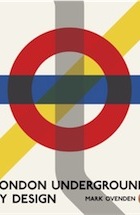
London Underground By Design by Mark Ovenden – review


Mark Ovenden offers a fascinating look at the evolution of the London underground's visual identity

The underground’s tiled stations – ‘probably inspired by the decor of public lavatories’ – were soon copied on the Paris Métro.

This year marks the 150th anniversary of the first London underground line, the Metropolitan. The Met is being celebrated mainly for its engineering, and it is commonly thought that, having heroically dug their giant trench from Paddington to Farringdon, the pioneers weren't too bothered about conceptualising the look of the thing. Illustrations do suggest that the early surface buildings were perfunctory and disparate. But in this authoritative chronicle of underground design, Mark Ovenden detects "early examples of corporate branding": for example in the consistent use of large gas globes to contain gas lights.

Some of the first pictures in this book – which bristles with photographs I've never seen before – show how London's commercial free-for-all obstructed the early fumbling after coherence and clarity. A shot from the 1870s of the facade of Victoria underground station shows what Ovenden calls a "shouty" hoarding for "TP Beattie, Specialist in Plumbing and Sanitary Engineering" as almost upstaging the station name.

Real aesthetic progress began with the advent of the deep-level lines, the tubes properly so-called, in the 1890s. To counteract claustrophobia, both the City & South London (which would later become the Bank branch of the Northern line) and the Central had bright, white-tiled stations. The idea – probably inspired by the decor of public lavatories – was copied on the Paris Métro. Other tubes were built during the Edwardian period by Charles Tyson Yerkes. He was an American fraudster and philanderer, but also a great benefactor to London, not least through his employment of architect Leslie Green, most of whose stations survive in central London. The exteriors are covered in tiles usually denoted as "oxblood" (purple-red); the ticket halls are predominantly a deep, relaxing green, with art nouveau swirls. Below ground, each station had – and has – its own colour scheme, for the benefit of illiterate passengers.
Full article

Bring back shushing librarians


Library users plead for quiet places to read, write and study — but is anybody listening?


Librarians hate to be depicted as bun- and glasses-wearing shushers, hellbent on silencing any and all noisy activities within their sacred domain. Fair enough: Librarians are highly skilled, well-educated and socially aware as a rule, and should not be reduced to a cultural stereotype ranking only a notch or two above a church lady on the hipness scale.
Nevertheless, there’s a lot to be said for that shushing. I’ve long believed that one of the most precious resources libraries offer their patrons is simple quiet. Alas, for too long I’ve been forced to confine this sentiment to bar-stool rants because for all I knew I was being hopelessly retrograde. Libraries are constantly talking up the new — and often clamorous — services and activities they have added or plan to add in order to “better serve a diverse community” (and by extension, justify their continued funding in the eyes of public officials who like to appear forward-thinking). But take heart, seekers of serenity, for now we have data!

A recent survey by the Pew Research Center, “Library Services in the Digital Age,” polled a nationally representative sample of 2,252 Americans about what they get, and want, from public libraries. Like many such studies, the Pew survey is so focused on unusual programs and activities not typically associated with libraries that it tends to overlook the mere provision of a peaceful place to read and think. Nevertheless, the parts of the report dedicated to what people really want from their libraries makes the public’s wishes clear.
The two services that patrons regard as most essential in a library are “librarians to help people find information” and “borrowing books,” each rated as “very important” by 80 percent of respondents. Next comes “free access to computers and the Internet,” rated very important by 77 percent of those surveyed. No surprises there. These three services are what nearly everyone has come to regard as a public library’s core mission.
“Quiet study spaces for adults and children” comes in fourth, and here is where the results go rogue. The percentage of people who consider quiet spaces to be a very important element in any public library is 76, only one percentage point less than the value given to computer and Internet access. A relatively silent place to read is almost exactly as valuable to these people as the Internet!

According the Pew study, quiet matters more to library patrons than special programs for kids or job-search resources or access to fancy databases or classes and events or spaces for public meetings. It matters more to them than the ability to check out e-books or engage in “more interactive learning experiences” — areas that many library experts seem to regard as top priorities for the libraries of the future.
Full article

Furore as Sylvia Plath novel branded chick lit


Redesign ... cover of classic novel raises ire. Redesign ... cover of classic novel raises ire.

Dark, witty and painful - Sylvia Plath's The Bell Jar has disturbed and enthralled readers from the moment it was published under a pseudonym in 1963. Later that year the poet and writer killed herself. Faber released an edition of the book under her name in 1967, but a new edition to mark the 50th anniversary of the novel has seen the publisher accused of portraying the book as glorified chick lit.
The anniversary edition - the cover of which features a young woman fixing her makeup in a powder compact - has been criticised for misrepresenting the work and trivialising its content.
The London Review of Books was among the first to question the cover. "You don't need to have read the novel to see what the problem is; the blurb on the back of the offending cover makes it clear enough: the narrator, we are told, 'grapples with difficult relationships and a society which refuses to take women's aspirations seriously'," wrote blogger Fatema Ahmed.
She suggested that Plath's work had become a victim of commercial pressures. "I can imagine complaining along these lines in an editorial meeting at a British publishing house, and being sighed at: 'Yes, of course the 1960s cover is beautiful - I love it - but Waterstones and Tesco won't stock it,"' she wrote. "It sounds like a reasonable point. And it may be true that paperbacks with photographs of people on them shift more copies in supermarkets. But it isn't as if The Bell Jar has to earn out its advance. And for some reason the rule doesn't apply to recent anniversary redesigns of Orwell (by David Pearson for Penguin) or BS Johnson (by La Boca for Picador). Lucky them."
Dustin Kurtz, a marketing manager at the publisher Melville House, tweeted: "How is this cover anything but a 'fuck you' to women everywhere?" (although the tweet was subsequently deleted), while Andy Pressman, a graphic designer, called it "Awesomelycomicallyhistorically inapprop". He added: "And by 'historically' I mean incorrect on a scale of which we have few historical precedents," not "that typeface didn't exist in that era."
The feminist blog Jezebel called the cover "hideous", adding: "If Sylvia Plath hadn't already killed herself, she probably would've if she saw the new cover of her only novel The Bell Jar. For a book all about a woman's clinical depression that's exacerbated by the suffocating gender stereotypes of which she's expected to adhere and the limited life choices she has as a woman, it's pretty ... stupid to feature a low-rent retro wannabe pinup applying makeup. (Also, it's ugly and the colours suck)."
Writer Tracie Egan Morrissey noted that "redesigning feminist staples and classic literary ladies to be more appealing to the larger and more lucrative chick lit audience is apparently a common practice."
A searing examination of the ravages of mental illness and the limitations of 1950s American society, The Bell Jar tells the story of college student Esther Greenwood, and the enclosing bell jar of her depression. The first edition of the novel to appear under Plath's name featured a cover designed by Shirley Tucker, with a bold type face and urgent concentric circles. Fans of the novel were outraged that a similarly bold cover has not been used to mark the 50th anniversary of its publication. Reader Sarah McAlpine wrote: "It's a lady book? About a lady? Lets make it pink and grab a stock photo of a lady with make up. Ladies love that."
Cethan Leahy commented that the novel now looked like a "tale which is possibly about the fun hi-jinks of four air stewardesses", while the children's writer Louie Stowell wrote: "I think, after that bell jar cover, my next pitch for a kids book will be The Big Pink Book of Low Expectations For Girls. Commercial gold."
The Guardian


Read more: http://www.smh.com.au/entertainment/books/furore-as-sylvia-plath-novel-branded-chick-lit-20130202-2dr86.html#ixzz2Jnvmjb3u

Anton Chekhov on the 8 Qualities of Cultured People

"In order to feel comfortable among educated people, to be at home and happy with them, one must be cultured to a certain extent."
What does it mean to be "cultured"? Is it about being a good reader, or knowing how to talk about books you haven't read, or having a general disposition of intellectual elegance? That's precisely the question beloved Russian author Anton Chekhov, born on this day in 1860, considers in a letter to his older brother Nikolai, an artist. The missive, written when Anton was 26 and Nikolai 28 and found in Letters of Anton Chekhov to his Family and Friends (public domain; public library), dispenses a hearty dose of tough love and outlines the eight qualities of cultured people – including honesty, altruism, and good habits: 
MOSCOW, 1886.
You have often complained to me that people "don't understand you"! Goethe and Newton did not complain of that…. Only Christ complained of it, but He was speaking of His doctrine and not of Himself…. People understand you perfectly well. And if you do not understand yourself, it is not their fault.
I assure you as a brother and as a friend I understand you and feel for you with all my heart. I know your good qualities as I know my five fingers; I value and deeply respect them. If you like, to prove that I understand you, I can enumerate those qualities. I think you are kind to the point of softness, magnanimous, unselfish, ready to share your last farthing; you have no envy nor hatred; you are simple-hearted, you pity men and beasts; you are trustful, without spite or guile, and do not remember evil…. You have a gift from above such as other people have not: you have talent. This talent places you above millions of men, for on earth only one out of two millions is an artist. Your talent sets you apart: if you were a toad or a tarantula, even then, people would respect you, for to talent all things are forgiven.
You have only one failing, and the falseness of your position, and your unhappiness and your catarrh of the bowels are all due to it. That is your utter lack of culture. Forgive me, please, but veritas magis amicitiae…. You see, life has its conditions. In order to feel comfortable among educated people, to be at home and happy with them, one must be cultured to a certain extent. Talent has brought you into such a circle, you belong to it, but … you are drawn away from it, and you vacillate between cultured people and the lodgers vis-a-vis.
Cultured people must, in my opinion, satisfy the following conditions:

Read the full piece at Brain Pickings Weekly

Sunday, February 03, 2013

More info is available here http://schools.natlib.govt.nz/events/exhibition-gala-opening-what-lies-beneath

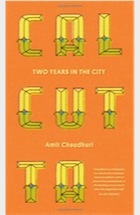
Amit Chaudhuri: my new perspective on Calcutta


To a young Amit Chaudhuri, Calcutta seemed its own strange, particular world – and thrillingly modern. Later, it lagged behind as India underwent vast change, but now it can resist no more

A Kolkata flower market in 2008
Fulfilling a childhood fantasy … Chaudhuri moved to Calcutta, later Kolkata, in 1999. Photograph: Peter Dench/Alamy

I was in Berlin at the end of 2005 when my agent called and asked me if I'd write a book on Calcutta. It was a work of non-fiction he wanted: Indian non-fiction was going to be the new Indian fiction. I declined, saying, "I'd rather write about Berlin"; but I saw where he was coming from. Suketu Mehta's compendious narrative of Bombay low-life, Maximum City, had been a critical and commercial success. It wouldn't have taken much to guess that it, and a country transformed by 15 years of economic deregulation, would unleash a stream of books on what, in journalistic shorthand, is called the "new India". I'd written three novels which had Calcutta as their setting, and my agent probably saw me as the ideal candidate for producing a non-fiction work on the city. The mid-2000s was a time of complete immersion in the present – a characteristic of free-market capitalism – so that things that had happened 15, 10, or even five years ago felt remote, and the frequent "all-time best" lists in newspapers covered a span of, at most, 20 years. From the perspective of this compressed view of eternity, my novels about Calcutta might almost have inhabited another era. Perhaps it was time to write a new book about the city.

I instinctively knew that I couldn't, and didn't want to, do a Maximum City with Calcutta. Mehta's book, which I had reviewed and admired, wasn't just about Bombay; it was a creation-myth for a new nation and its unprecedented, amoral provenance. History may not have ended, but the Nehruvian era had, with its "mixed" economy of socialist development, Five-Year Plans, idealistic hypocrisies and circumscribed private enterprise. Dams, the avowed temples of the older, industrialising nation, had given way to new temples where the rich and the aspirational classes could congregate in a kind of celebration, such as international airports (Katherine Boo's recent book, Behind the Beautiful Forevers, records the doomed theatre of a slum that festers, hidden, behind Bombay's Chhatrapati Shivaji International Airport).

I, who'd grown up in Bombay, leaving it for Britain in the early 1980s, had barely encountered the city Mehta described during my 21 years there – although the rise within it of new buildings, a new rich and underclass, the rightwing Shiv Sena and BJP, had become disconcertingly visible by the time of my departure. The Bombay I grew up in – though it had long been India's financial centre – was genteel and tame in comparison. When PV Narasimha Rao, the prime minister at the time, officially deregulated the economy in 1991, the city that was most responsive to the event was Bombay. Post-independence India had stricter, prissier demarcations – between the polite and the profane, the admissible and the inadmissible – than the India energised by the free market. .

Full article

Why We Write


Rick Moody: Why I Write

Why do writers write? George Orwell once listed ‘four great motives,’ Joan Didion said she writes so that readers listen to her, and Terry Tempest Williams said ‘I write to meet my ghost.’ In Why We Write, edited by Meredith Maran, 20 acclaimed authors answer that question, and novelist Rick Moody responds to Orwell, Didion and Tempest Williams.


I abandoned two novels when I was in sixth grade. I got maybe 10 pages into each. One was about a kid who becomes vice president. I still have the weird little blank book that I used to attempt to write it. The itch to do my job goes at least that far back.

130131-rick-moody-why-i-write-tease
‘Why We Write: 20 Acclaimed Authors On How and Why They Do What They Do’ edited by Meredith Maran. 256 pp. Plume. US$16. (Seamus Kearney)

Why do I write? To do better for myself than I am capable of doing with language, out there, in real time. To repair inabilities, to restore confidences. And, at this point, because I don’t know what else to do. I write just as I breathe and eat. Every day. Habitually.


It would be easier if I could say that one thing happens when I write, or, perhaps, that a number of predictable things happen. But the truth is that a great number of things have happened, over the years, when I have been writing, and that these things are unpredictable, hard to quantify, and mutable.

I guess I have now been writing, if I date my writing from the first time I ever rewrote anything, for about 33 years. Publishing books for about 20. Sometimes the writing is inspired or inspiring; sometimes it is destitute of anything but the need to keep working. I guess what I’m saying is that what happens to me is so variable that it would be kind of foolish to try to attach names to it. I do think, however, that just about whenever I am writing, or more accurately, whenever I have written, I feel better and more at peace as a human being. That doesn’t mean, unfortunately, that the literary product is any good

Full story

Boozy, Graphic Book Covers for Bukowski’s Italian Backlist


By Emily Temple - Flavorwire on

Boozy, Graphic Book Covers for Bukowski's Italian BacklistIn January, rock star graphic designer Emiliano Ponzi was awarded a gold medal at the Society of Illustrators New York for his book covers for the Italian language editions of Charles Bukowski’s backlist, published by Feltrinelli. The covers, which we spotted over at It’s Nice That, embody the infamous writer’s work to a T — they’re slightly garish, winkingly vulgar, uninhibited and generally awesome. Check them out after the jump, and then be sure to head on over to Ponzi’s website to see much more of his great work. … Read More

John Cheever, The Art of Fiction


Interviewed by Annette Grant - The Paris Review

The first meeting with John Cheever took place in the spring of 1969, just after his novel Bullet Park was published. Normally, Cheever leaves the country when a new book is released, but this time he had not, and as a result many interviewers on the East Coast were making their way to Ossining, New York, where the master storyteller offered them the pleasures of a day in the country—but very little conversation about his book or the art of writing.
Cheever has a reputation for being a difficult interviewee. He does not pay attention to reviews, never rereads his books or stories once published, and is often vague about their details. He dislikes talking about his work (especially into “one of those machines”) because he prefers not to look where he has been, but where he’s going.

For the interview Cheever was wearing a faded blue shirt and khakis. Everything about him was casual and easy, as though we were already old friends. The Cheevers live in a house built in 1799, so a tour of buildings and grounds was obligatory. Soon we were settled in a sunny second-floor study where we discussed his dislike of window curtains, a highway construction near Ossining that he was trying to stop, traveling in Italy, a story he was drafting about a man who lost his car keys at a nude theater performance, Hollywood, gardeners and cooks, cocktail parties, Greenwich Village in the thirties, television reception, and a number of other writers named John (especially John Updike, who is a friend).
Although Cheever talked freely about himself, he changed the subject when the conversation turned to his work. Aren’t you bored with all this talk? Would you like a drink? Perhaps lunch is ready, I’ll just go downstairs and check. A walk in the woods, and maybe a swim afterwards? Or would you rather drive to town and see my office? Do you play backgammon? Do you watch much television?

During the course of several visits we did in fact mostly eat, drink, walk, swim, play backgammon, or watch television. Cheever did not invite me to cut any wood with his chain saw, an activity to which he is rumored to be addicted. On the day of the last taping, we spent an afternoon watching the New York Mets win the World Series from the Baltimore Orioles, at the end of which the fans at Shea Stadium tore up plots of turf for souvenirs. “Isn’t that amazing,” he said repeatedly, referring both to the Mets and their fans.
Afterward we walked in the woods, and as we circled back to the house, Cheever said, “Go ahead and pack your gear, I’ll be along in a minute to drive you to the station” . . . upon which he stepped out of his clothes and jumped with a loud splash into a pond, doubtless cleansing himself with his skinny-dip from one more interview.

Interview at The Paris Review

Saturday, February 02, 2013

#HonestBlurbs: Twitter Takes On The Hidden Truths Of Book Blurbs


Posted:

Started by author and internet expert Evgeny Morozov, in reaction to the blurbs he saw on this book, the hashtag #HonestBlurbs on Twitter today kept us chuckling throughout the afternoon.

Here's just some of our favorites:

Dave Barry: By the Book


Published: January 31, 2013 - The New York Times

The author of “Insane City” spent his childhood reading “Richie Rich,” “Archie” and “Batman” comics: “pretty much anything unlikely to inspire intellectual development.”
Dave Barry - Illustration by Jillian Tamaki

What was the best book you read last year?

Doris Kearns Goodwin’s “Team of Rivals.” I’m probably the last person on the planet to read it; I loved the movie “Lincoln” and wanted more. I am awed by the amount of research that went into that book. Most of my research consists of brief Google forays in search of factoids that I can distort beyond recognition. 

When and where do you like to read?
I like to read at the beach, but the beach always turns out to be too relaxing, and I fall asleep after two pages. So I wind up doing most of my actual reading at night in bed, where I sometimes get through as many as three pages before I fall asleep.

Who are your favorite authors?
Robert Benchley and P. G. Wodehouse. Also (it goes without saying) Proust.

What’s your preferred literary genre? Any guilty pleasures?
I like nonfiction, mostly history. My guilty pleasure is tough-guy-loner action novels, like the Jack Reacher series, where the protagonist is an outwardly rugged but inwardly sensitive and thoughtful guy who, through no fault of his own, keeps having to beat the crap out of people.

If you could require the president to read one book, what would it be? 
“The Brothers Karamazov,” by Dostoyevsky. I was required to read this book in English class during my freshman year at Haverford College, but I never finished it. I seriously doubt that Dostoyevsky ever finished it. So I figure if the president read it, he could tell me what happens.

Paper or electronic? 
Definitely paper. I say this because we authors get smaller royalties on e-book sales. So I’d like to start a rumor that electronic books cause fatal diseases and sometimes explode. This must be true, because it’s printed right here in The New York Times.

GPs to prescribe self-help books for mental health problems


Patients in England with mild to moderate concerns, including anxiety and panic attacks, will borrow books from local libraries
The Books on Prescription scheme will see 30 self-help titles provided in English libraries
The Books on Prescription scheme will see 30 self-help titles provided in libraries across England. Photograph: Charles McClean/Alamy

People in England with mild to moderate mental health concerns, including panic attacks, anxiety and depression, are to be prescribed self-help books which they can borrow from their local library.
Titles such as The Feeling Good Handbook, How to Stop Worrying and Overcoming Anger and Irritability will be among the 30 prescription titles that libraries across England will stock in an attempt to improve the wellbeing of the nation.

The scheme was announced on Thursday at the British Library and has been developed over the past year by the Reading Agency charity. Its chief executive, Miranda McKearney, said of the project: "There is a growing evidence base that shows that self-help reading can help people with certain mental health conditions to get better."
She said 6 million people in the UK suffered from anxiety and depression, and around two thirds of those people were not receiving any treatment.

The Books on Prescription scheme is being rolled out across GPs' surgeries and libraries in England in May and is based on a similar scheme in Wales pioneered by the Cardiff-based clinical psychologist Professor Neil Frude.
Denmark has gone down the same road and Frude said New Zealand had just become the first country in the southern hemisphere to take it up.
"It is wonderful that it's spreading," he said. "I'm a little disappointed it has taken this long to get to England to be honest."

Frude first set up the scheme in Cardiff in 2003 and the Welsh assembly took it nationwide in 2005. It was borne out of frustration at knowing the value of the books, but knowing that so many people either weren't aware of them or could not get hold of them. It was a simple idea, he said. "The doctors are already there, the books are already there and so are the libraries. It just needed joining them up."
In Wales now, 30,000 self-help books are borrowed every year and three of the 10 most borrowed books in the country are self-help.

Full article

Templar Publishing Buys Piccadilly Press


 PW


In a notable children’s deal in the U.K., Piccadilly Press, the children’s book publisher founded by Brenda Gardner 29 years ago, has been acquired by Templar Publishing, the children’s publisher owned by Bonnier Publishing Ltd. 


Piccadilly Press will continue to publish under its own imprint and Gardner will remain publisher, reporting to managing director Mike McGrath. It will, however, use the creative, sales and administrative resources of Templar Publishing and the wider Bonnier Publishing Group. 

more »

Dan Stevens takes the helm at literary magazine


Following his Man Booker judging stint, former Downton Abbey star Dan Stevens edits an issue of The Junket.

The actor Dan Stevens
The actor Dan Stevens Photo: AP
The latest issue of the online literary magazine, The Junket, is the first to be edited by the actor Dan Stevens, its Editor-at-Large. Stevens is still most famous for playing Matthew Crawley in the ITV drama Downton Abbey. His character was controversially killed off in an episode broadcast on Christmas Day last year. This may, conceivably, have given him more time to pursue literary endeavours.
Stevens was a judge for the Man Booker Prize in 2012 after criticising the previous year’s panel for the emphasis they placed on "readability". When he understandably found it difficult to finish his Booker reading list while filming, the costume department on Downton Abbey sewed a pocket in his jacket for his Kindle.
Stevens' own contribution to the latest issue of The Junket is a rather sober examination of our relationship with technology, entitled Looking After #numbertwo. In this, someone who is unnamed but surely must be Julian Fellowes, says of Twitter, “I don't want everyone to know when I'm sitting on the toilet.” Aside from this jokey opening, it is one of the straighter essays in this issue.
In his Editor’s Note, Stevens says, “Try one piece; then try two; then offer to a friend. The Junket is delicious enjoyed alone; better shared.”
The Junket was established in October 2011. Its website features an admirable lack of bells and whistles and looks all the more confident for it. It was set up by a group of friends with no financial backing. One of the site's other four editors Thomas Marks told The Daily Telegraph, “There didn't seem to be a forum where we could publish medium-length essays on some of the subjects we'd always wanted to write about, and we soon realised that once we'd created one, there were many writers – professional and otherwise, some who didn't consider themselves writers but had something they wanted to write about – who would be keen to contribute.” 
Full Piece at The Telegraph

The Top Ten Mistakes Writers Make When Self-Publishing a Book


In twenty-five years I’ve written twelve books. The first ten were traditionally published. However, when the publisher of my book called Enchantment couldn’t fulfill an order for 500 ebook copies, I decided to self-publish my next book, What the Plus!
This experience taught me that self-publishing is a complex, idiosyncratic, and challenging endeavor—as Steve Jobs said, “There must be a better way. ” I wrote my latest book, APE: Author, Publisher, Entrepreneur—How to Publish a Book, to simplify and optimize the self-publishing process for others.
Along this journey, I’ve compiled a list of the top ten mistakes that writers, myself included, make when self-publishing a book. Here they are so that you can at least make new mistakes— if not avoid mistakes altogether.

1. Writing for the wrong reason. The most common wrong reason to write a book is to make a lot of money. Statistically, you’re heading for disappointment. Instead, you should write a book for good reasons such as you have something valuable to say, you have a cause you want to further, or you want to meet the intellectual challenge of writing a book.

2. Not hiring a professional copyeditor. When I turned in the final copy of APE, I thought there were no mistakes in it. The copyeditor found 1,400—that’s right: one thousand four hundred. Writing and copyediting are two different skills—just like the best salesman doesn’t make the best sales manager nor the best player make the best coach.

3. Designing your own cover. The cover is one of the most important marketing pieces for your book, so hiring a great graphics designer is money well spent. The beauty pageant that is Amazon web pages displays fifteen to twenty covers at a time. With a graphic the size of a postage stamp, you need to entice people to click.

4. Not building your marketing platform in advance. Self-publishing is not a serial process where you can write a book and then worry about marketing it later. You need to start building a marketing platform as soon as you start writing because the process takes a year. You should already have thousands of followers on social media on the day that you ship.

5. Using a word processor other than Microsoft Word. Admittedly, Word is a beast, and you will need to wrestle it to the ground. There are cheaper and more elegant word processors, but nothing has the paragraph styles capability of Word nor the universal acceptance from the reviewers, testers, editors, designers, and resellers that you’ll use downstream.

Full article at DBW