Influential literary agent behind some of the greats of modern fiction
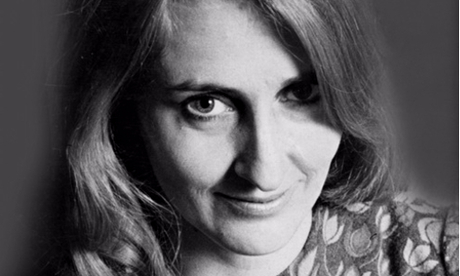
'I've done what I've loved,' said Deborah Rogers last month
Deborah Rogers, who has died aged 76, was widely considered to be one of the most influential literary agents of her generation. A month before her death, on being given the 2014 London Book Fair lifetime achievement award, which singled out her talent for identifying, developing and supporting authors, she responded, "It's been a lifetime of indulgence. I've done what I've loved."
The list of her clients reads like a history of English-language fiction from the 1970s to the present day: from Angela Carter to Bruce Chatwin, Salman Rushdie to Peter Carey, Ian McEwan to Kazuo Ishiguro, AS Byatt to Thomas Keneally, JG Farrell to Anita Desai, David Malouf to Mordecai Richler. It was her taste and judgment that helped define the writing of the era. The start of her agenting career almost exactly coincided with the launch of the Booker (now Man Booker) prize in 1969. In the four decades that followed, she witnessed her authors carry off the prize on six occasions, more winners than via any other agent.
Although she was to represent historians and biographers (among them Jenny Uglow, David Kynaston, Orlando Figes and, at the very beginning, Michael Glenny, translator of Bulgakov's The Master and Margarita), fiction was to become her calling card. Publishers on both sides of the Atlantic, notably Tom Maschler, of Jonathan Cape, and, in New York, Bob Gottlieb, later of Knopf and the New Yorker, were quick to recognise her talent for bringing only the best authors to their attention.
More
The list of her clients reads like a history of English-language fiction from the 1970s to the present day: from Angela Carter to Bruce Chatwin, Salman Rushdie to Peter Carey, Ian McEwan to Kazuo Ishiguro, AS Byatt to Thomas Keneally, JG Farrell to Anita Desai, David Malouf to Mordecai Richler. It was her taste and judgment that helped define the writing of the era. The start of her agenting career almost exactly coincided with the launch of the Booker (now Man Booker) prize in 1969. In the four decades that followed, she witnessed her authors carry off the prize on six occasions, more winners than via any other agent.
Although she was to represent historians and biographers (among them Jenny Uglow, David Kynaston, Orlando Figes and, at the very beginning, Michael Glenny, translator of Bulgakov's The Master and Margarita), fiction was to become her calling card. Publishers on both sides of the Atlantic, notably Tom Maschler, of Jonathan Cape, and, in New York, Bob Gottlieb, later of Knopf and the New Yorker, were quick to recognise her talent for bringing only the best authors to their attention.
More


1 comment:
I was one of the lesser lights on Deborah's stellar list of authors, but it was characteristic of her generosity that she never made me feel this. She was unfailingly supportive, acute in her suggestions, a good bargainer and also very funny.
Harry Ricketts
Post a Comment