
Tuesday, April 30, 2013
Raglan Readers & Writers Festival


Monday, April 29, 2013
African Books for African Readers
Dakar, Senegal's Amalion
Publishing is an up-and-coming house that only publishes books by African
authors and does so simultaneously in English and French.
|

In the short run, the limited size
of the Arabic market, particularly in ebooks, makes it a low priority for
Amazon, but as a company with global ambitions, don't count them out.
|
More News from PP:
Rufoof, an
startup in Dubai, aims to make Arabic digital content more widely available
by solving ebook formatting issues and providing an ebook app.
In the short run, the limited size
of the Arabic market, particularly in ebooks, makes it a low priority for
Amazon, but as a company with global ambitions, don't count them out.
|
From the Archives:
Lantern Books is a household name
in Nigeria for publishing children’s textbooks and story books for young
readers.
|

Chromacon -an annual independent Illustration and Comics Arts Festival to be held in Auckland

9am – 5pm -Sunday, 12th May 2013
Air NZ Foyer, Aotea Centre,Auckland, New Zealand
Free Public Entry
What is Chromacon?
Chromacon is an annual independent Illustration and Comics Arts Festival to be held in Auckland, New Zealand. It is a non-profit, community focused event that aims to connect a broad spectrum of Kiwi creatives and art-lovers together.We aim to create the best annual showcase of the latest in homegrown illustration and comic art. At Chromacon, artists from all over New Zealand will exhibit original artwork from a range of mediums, styles, and genres. Each will also be selling self-published work in the form of original artwork, prints, comics, artbooks and much more.
“Chromacon represents the next logical step for New Zealand’s illustrative and comic arts.”The intimate nature of the event offers you the chance to meet and connect with artists you may already admire or others creating new and exciting work that you weren’t aware of.
Greg Broadmore, Weta Workshop & Creator of Dr. Grordbort
Furthermore, artists will be doing drawing/painting demos, workshops and talks on a variety of subjects throughout the day.
For more info on this, check back on this site as more news are announced, or subscribe to our newsletter.
We invite everyone with an interest in art, in particular storytelling in visual mediums to come join us for an one-day celebration of Kiwi creativity. Whether you’re a fledgling artist yourself or simply curious about the amazing original artworks created right here in New Zealand, everyone’s welcome
The Day My Father Became a Bush by Joke van Leeuwen

Ages 9+ | 215 x 135mm | 104 pages |
Paperback with flaps $19.99 | ISBN: 978-1-877579-16-5 - Gecko Press
A clear-eyed and off-beat illustrated
novel about a girl surviving in a baffling world at war. From the author/
illustrator of Eep!.
Before he becomes a bush, Toda’s father
is a pastry chef. He gets up at the crack of dawn to bake twenty different
sorts of pastries and three kinds of cake. Until, one day, everything changes.
Fighting breaks out in the south and Toda’s father has to go there to defend
his country. Luckily he has a manual called ‘What every soldier needs to know’.
This tells him how to hide from the enemy by using branches and leaves to
disguise himself as a bush.
Toda remains in the city with her
grandmother but even there it’s no longer safe. She is sent to stay with her
mother who lives across the border. Toda’s journey is full of adventure and
danger. But she doesn’t give up. She has to find her mother.
“There
is more emotion and character packed into this little book than some authors
put in to 300 pages. It can stand alongside John Boyne’s The Boy in Striped Pyjamas and Ian Serraillier’s The Silver Sword as a must-read war
story.” —Zac Harding, My Best Friends Are Books blog, Christchurch City
Libraries
The author Joke van Leeuwen (1952)
studied history at the University of Brussels, performs in cabaret and theatre
shows, writes stories and poems for children, which she illustrates herself, and
writes prose and poetry for adults. She has received innumerable awards,
including the prestigious Theo Thijssen Prize, the triennial Dutch State Prize
for youth literature.
White Fungus Kadist San Francisco Residency

Beginning in Wellington in 2004, White Fungus is currently based in Taiwan but continues to feature New Zealand artists and writers. The new issue inclues an in-depth feature by Auckland writer Tessa Laird elucidating upon her love affair with bats and their remarkable qualities which have been obscured by popular misperception. The issue also includes an interview with the artist Brydee Rood by Andrew Clifford, fashion spreads by Clara Chon and Richard Orjis and a new comic by Tim Bollinger. Plus Auckland writer John Hurrell writes about the New York artist Tony Martin and Mark Amery writes about the Wellington Media Collective and the notion of media collectivism.
The new issue of White Fungus will be released with two events. The first, at Kadist, May 4, 3-5pm, will be a reading by featured author Ron Drummond from his essay / fiction hybrid “The First Woman on Mars”, a story that proposes an original Mars settlement scenario. Following the reading, Drummond will be joined by Kim Stanley Robinson, the science fiction writer and award-winning author of the Mars Trilogy and 2312. Together they will discuss the social, economic, and political implications of the human push into space and efforts to colonize Mars, as well as the ecological and sociological sustainability of life on the red planet and elsewhere in the solar system.
The second event will be held at the Lab on May 9, 8pm. To celebrate the release of its 13th issue, White Fungus is bringing the artists Wang Fujui (Taipei), Samin Son (Wellington / Seoul) and Betty Apple (Taipei) to the LAB in San Francisco for a night of sound, video, and performance art. Wang Fujui became one of the pioneers of the Taiwanese noise and digital art movement after attending the San Francisco Art Institute in the 1990’s. He will perform alongside the San Francisco Bay Area’s Scott Arford and Mason Jones.
The Kadist art magazine residency is unique among residency programs internationally. Located in San Francisco’s Mission district, the residency invites the magazine to extend their scope by investigating San Francisco-relevant people, subjects and histories; including local area content, the work of artists, writers and published texts broadly associated with the foundation and its networks and partners.
For White Fungus the residency comes on the heels of what was a breakout year for the magazine in 2012, in which the publication was selected for 17 exhibitions and art book fairs around the world. These included Millennium Magazines, MoMA, New York; Publish and Be Damned, the ICA, London; The London Art Book Fair, Whitechapel Gallery, The Library Project, PhotoIrealand Festival, Dublin, and Mag Dossier 01 in Cyprus. In November, White Fungus founders, the brothers Ron and Mark Hanson, gave a talk at Guangdong Times Musueum in Guangzhou, China on the history of the magazine.
White Fungus was also commissioned by Adam Art Gallery to produce new work for an exhibition / project The Consumers of the Future, which accompanied the exhbitions We Will Work With You!
Wellington Media Collective 1978–1998 and Martha Rosler, The Bowery in Two Inadequate Descriptive Systems.


Roger Buchanan spins a yarn

New Zealand’s wool industry has seen turbulent years and for more than 50 of them Roger Buchanan has been intimately involved – from the shearing shed on the family farm to overseeing the dismantling of the Wool Board as its final chief executive. Today Roger publishes his book Last Shepherd as an ebook, available on www.amazon.com and www.mebooks.co.nz
Last Shepherd has been written from a front seat in the industry roller coaster. It is autobiography, industry history, analysis of the industry and its politics – peppered with many fascinating anecdotes. Roger Buchanan uses his unparalleled position to frankly analyse the successes and failures of the statutory wool bodies. What happened to New Zealand wool? And where have all the sheep gone?
Roger Buchanan grew up on the family sheep farm before working for a wool merchant and a wool scour, studying then tutoring at Massey College, then setting out on a long career with successive wool industry bodies. As an expert in international market development he was among the first to forge a trade relationship with China in the 1970s. His career has since taken him to Japan, USA, India, Nepal, Russia, the Middle East and ‘traditional’ markets in Britain and Europe. He was the Wool Board’s final chief executive.
Last Shepherd: Anecdotes and observations from
five decades in the wool industry
Author: Roger Buchanan
Publisher: Mahico
Pub date: April 2013
Print ISBN: 978-0-473-22787-6
Paperback, 312pp, NZ$45
Kindle ISBN: 978-0-473-24209-1
US$11.95 from www.amazon.com
Epub ISBN: 978-0-473-24210-7
NZ$13.95 from www.mebooks.co.nz
Trade Sales: Paul Greenberg
021 722 210
The Auckland Writers & Readers Festival advise the following CHANGE TO BEN GOLDACRE SESSIONS

Festival organisers are now working on a revised Bad Science, Bad Pharma event format which will include a filmed 30 minute presentation from Ben, followed by a live Q&A via phone with chair Sean Plunket.
Once this event is confirmed, ticketholders for AWRF Event 46 Bad Science, Bad Pharma will be able to retain, exchange or claim a ticket refund as allowed under the terms of their original purchase.
AWRF Event 01 Clinical Trials is regrettably cancelled. Ticketholders for this event can exchange their tickets for any other standard Festival session, or request a refund.
All ticket enquiries should be directed to 0800 289 842, or tickets@the-edge.co.nz.
Exciting news from the Richards Literary Agency
 WITI IHIMAERA’s
stories published in Sri Lanka
WITI IHIMAERA’s
stories published in Sri Lanka
A selection of New Zealand stories from Pounamu Pounamu by Witi Ihimaera has
just been published in translation in Sri Lanka.
The edition of 1000 copies will be sold at SRL 180.00. The Auckland translator is Karu (Buddhadasa
Karasinghi Arachchi) and the publisher is Ashirwada, contracted by Richards
Literary Agency.
Copies have been sent to 30 schools in Sri Lanka and 50
copies are to be donated to children of the Sri Lankan diasporas in New
Zealand. The Auckland consulate thanked
Karu for his work as translator and organiser.
Ray Richars says that "Sri Lanka is obviously a small market for New Zealand books
in translation but it will be followed by another and another and another".
And in Canada there have been three of Maurice Gee’s junior novels published in French translations: SALT, GOOL and THE LIMPING MAN.
While here in New Zealand Maurice Gee’s THE HALFMEN OF O has been contracted for a
potential full-length movie.
Rodney Wilson R.I.P.
From The Arts Foundation
 |
 The Arts Foundation is sad to learn that Rodney
Wilson, Arts Foundation Governor from 2002 to 2010,
passed away on Saturday, 27 April. Rodney was a highly talented and
able gallery and museum director. The Arts Foundation was very grateful
to have his advice and support as a key voice during the recent re-definition
of the role of the Arts Foundation Governors and through his contribution to
many selection panels for both Icon and Laureate Awards. The Arts Foundation is sad to learn that Rodney
Wilson, Arts Foundation Governor from 2002 to 2010,
passed away on Saturday, 27 April. Rodney was a highly talented and
able gallery and museum director. The Arts Foundation was very grateful
to have his advice and support as a key voice during the recent re-definition
of the role of the Arts Foundation Governors and through his contribution to
many selection panels for both Icon and Laureate Awards.
An excellent advocate for the visual arts, Rodney provided a
confident voice for architecture, furniture design and sculpture at selection
meetings. Rodney, along with Sir Miles Warren, always made a wonderfully
handsome pair at Arts Foundation events in their splendid bow ties. We
will miss Rodney’s advice, his warm smile and laughter.
Not long ago Rodney married Maureen. The happiness this
brought Rodney filtered down from the north where they lived. Our thoughts
are with Maureen, Rodney's family and his many friends at this sad time.
|
Michael Pollan’s latest book Cooked: A Natural History Of Transformation
 If US food writer Michael Pollan’s latest book Cooked: A Natural History Of Transformation
(Penguin) were a meal it would be a lengthy one made up of delicious morsels
and bigger chunks harder to chew through but probably very good for you all the
same.
If US food writer Michael Pollan’s latest book Cooked: A Natural History Of Transformation
(Penguin) were a meal it would be a lengthy one made up of delicious morsels
and bigger chunks harder to chew through but probably very good for you all the
same.
Cooked is not a recipe book – although there are a few at the back. Rather it is
part dissertation, part culinary journey of discovery, part paean to the
virtues of food preparation.
Pollan begins with the premise that cooking is
the thing that separates us from other animal species. He quotes anthropologist
Richard Wrangham’s theory that when humans learnt to control fire it freed us
up from the effort of chewing and digesting raw food, providing faster, better
nourishment; and so we were able to get on with the business of developing a
culture.
Enthused by this idea, Pollan resolves to embark
on an education in cooking. He approaches it by dividing the whole business
into its four transformative elements: fire, water, air and earth.
Fire takes him to North Carolina where he is
introduced to the tradition of southern barbecue – not a gas grill in the
backyard Kiwi-style but fire pits where whole hogs are roasted slowly over
wood. This is the most entertaining section of Cooked partly because of the personalities Pollan encounters as he
learns to make the perfect barbecue sandwich, in particular legendary pitmaster
Ed Mitchell.
Water takes him to the kitchen where he learns
the art of one-pot slow cooking. For home cooks this is the most practical part
of the book as the chapters are constructed round a basic recipe and littered
with tips to extract maximum flavor from cheap cuts of meat.
Air is all about baking the perfect sourdough
but it also takes Pollan to a Wonder Bread factory where he sees how manufacturers
carefully remove all the good stuff from grains of wheat before mass-producing
their soft white loaves.
Earth leads us into the realm of fermented
foods, with Pollan steeping himself in sauerkraut, kimchi and healthy bacteria.
The core message in Cooked is much the same as in Pollan’s previous books. He is
concerned about the industrialisation of food, the insidious creep of the
processed and the packaged onto our dining tables, our love affair with fast
and convenient, and what it has stolen from the rhythm of our lives as well as
done to our health.
He manages to be opinionated without preaching.
What he says makes such sense he almost shouldn’t have to say it, except you
only have to walk down the aisles of your closest supermarket to see how much
we need to hear it.
Pollan is a realist. He understands all the
elements of modern life that have contributed to the decline of culinary
skills. Time in the kitchen, chopping and frying, neither hurried nor
distracted is, he says, one of the great luxuries of life at this point.
Cooked is writing to inspire and inform, to help turn the drudgery of getting
family weeknight dinners on the table into something more vital for our health
and our humanity. It’s a big feed of a book, complex and difficult to digest at
times, but nourishing to the soul as well as the brain.
About the reviewer.
Nicky Pellegrino, an Auckland-based author of popular fiction, is also the Books Editor of the Herald on Sunday where the above review was first published on Sunday 28 April 2013.
About the reviewer.
Nicky Pellegrino, an Auckland-based author of popular fiction, is also the Books Editor of the Herald on Sunday where the above review was first published on Sunday 28 April 2013.
Her latest novel When In Rome is set in 1950's Italy and was published in September 2012. Her next novel, The Food Of Love Cooking School, will be published later this year
Kobo's greatest asset? It's not Amazon
The warm welcome for Kobo's new e-reader is hardly surprising given the anti-Amazon feeling at the London Book Fair
Kobo launched a new e-reader at last week's London Book Fair: the Aura HD. Clearly taking aim at Amazon's ever-expanding Kindle lineup, the Aura comes with the highest definition screen of any e-ink device yet, and the fastest processor, meaning it can turn pages quickly and browse the web with ease. Coupled with Kobo's UK focus and its partnership with WH Smith, the lovable old stalwart of the high street, it's no surprise that it was warmly welcomed.
One of the other reasons Kobo is generally liked by the industry is that it's not Amazon. Far from the pleasantries of the Aura launch, another LBF event focused on Amazon's perceived dominance of the market, and particularly its suspected, but largely anecdotal, exploitation of the "grey market" in books. One Spanish publisher complained to Publishing Perspectives that Amazon had been selling imported versions of one of its bestsellers in Spain, thus cutting into its own sales. As a result, they're also counted as exports, meaning lower royalties for the author too.
The crux of the Spanish complaint is that Amazon always attributes such transgressions to errors of automation, which can take weeks to correct. In turn, Amazon will blame the complexity of global markets and supply chains. But the same kind of excuses can be brought to bear on even more disturbing events, such as Amazon's rapid parting of ways in February with Hensel European Security Services, a security company in Germany exposed as employing neo-Nazis and harrassing migrant workers. The network is so widespread, who really knows what's going on? A few lines of code in a near-boundless database, a stack of books in a vast warehouse, a couple of employees in a global corporation; all of these are linked by unaccountable systems, and should give readers, as well as publishers, cause for concern.
One of the other reasons Kobo is generally liked by the industry is that it's not Amazon. Far from the pleasantries of the Aura launch, another LBF event focused on Amazon's perceived dominance of the market, and particularly its suspected, but largely anecdotal, exploitation of the "grey market" in books. One Spanish publisher complained to Publishing Perspectives that Amazon had been selling imported versions of one of its bestsellers in Spain, thus cutting into its own sales. As a result, they're also counted as exports, meaning lower royalties for the author too.
The crux of the Spanish complaint is that Amazon always attributes such transgressions to errors of automation, which can take weeks to correct. In turn, Amazon will blame the complexity of global markets and supply chains. But the same kind of excuses can be brought to bear on even more disturbing events, such as Amazon's rapid parting of ways in February with Hensel European Security Services, a security company in Germany exposed as employing neo-Nazis and harrassing migrant workers. The network is so widespread, who really knows what's going on? A few lines of code in a near-boundless database, a stack of books in a vast warehouse, a couple of employees in a global corporation; all of these are linked by unaccountable systems, and should give readers, as well as publishers, cause for concern.
Young poet receives new Hippocrates Prize for Poetry and Medicine
The international
Hippocrates Prize for Young Poets is for an unpublished poem in
English on a medical theme. Entrants may be from young poets anywhere in
the world aged 14 to 18 years. The 2013 Prize attracted entries from the UK,
USA and Australia.

The
winner of the inaugural Hippocrates Young Poets Prize of £500 is Rosalind Jana from
Hereford Sixth Form College in England, for her poem ‘Posterior Instrumented
Fusion for Adolescent Scoliosis’. 17-year-old student Rosalind has already had
writing published in British Vogue
and Lionheart.
The winning entry was decided by judge and award-winning poet
Clare Pollard, who published her first collection of poetry at the age of
19.
About the Hippocrates Young Poets Prize she said: “I'm very
pleased to be judging the first Hippocrates Prize for Schools - in bringing
science and art together, I hope it will deepen students’ understanding of
both, and uncover poets of the future.” She added that the top
entries were “extraordinarily accomplished for
writers of 18 or under”.
Of
Rosalind Jana’s winning poem she commented:
“It is hard to believe that a poem with such an ugly name can be so beautiful,
but it is an incredible display of control and craft, formally brilliant and
full of striking visual imagery - the shuttered murk, the meaty spine, the
cloak of skin, the ‘morphine black blown out by light’. It is both
passionate and eerily detached - a deeply impressive piece of work.”
Hippocrates Prize founders clinical professor Donald Singer
and poet Michael Hulse said: “We are delighted that the Hippocrates Prize for
Young Poets is already having an international impact in inspiring a new
generation of poets.”
Saturday 18th May 2013: Hippocrates Awards and 4th International
Symposium on Poetry and Medicine : Wellcome Rooms, 183 Euston Rd, London
Events with author Rod Edmond
| ||||||
|

SCHOLASTIC NEW ZEALAND RELEASES FIRST LOCALLY PUBLISHED EBOOK
For the
first time, Scholastic New Zealand has released a locally published novel in
both print and electronic form.

Melinda
Szymanik’s compelling story A Winter’s Day in 1939, published in print
form in March 2013, will be available as an ebook from ANZAC Day, 25 April
2013.
The
ebook’s release date follows hot on the heels of the book’s Wellington launch
at The Children’s Bookshop on Saturday 13 April. The ebook will be available
initially for Amazon Kindle http://www.amazon.com/dp/B00CHKOQYC
and can be purchased for
$9.99.
This
debut ebook marks the beginning stages of a move to release more new Scholastic
New Zealand novels in electronic form.
About the book
A Winter’s Day in 1939 is a harrowing, compelling
story of courage and hope, based on the author’s own father’s journey across
Europe during World War Two.
Taken from their home in Poland, forced to leave their
country, put to work in Russian labour camps, frozen and starved, 12-year-old
Adam and his family doubt that they will ever make it out alive.
Even if they were to get away, they might freeze to
death, or starve, or the bears might get them.
For the Polish refugees, the whole of the USSR becomes a
prison from which there is seemingly no escape.
Recommended age: 10+ years
Reviews for
A Winter’s Day in 1939
A forgotten
piece of history that should be remembered and this telling through the eyes of
12 year old Adam is gut wrenching yet uplifting. – Bob Docherty
This has to be the best book I've read this
year. It has adventure, emotional moments and tense moments. It is
the sort of book you buy extra copies so you can give them to other people to
read because you want them to be acquainted with such an excellent book …
You'll cry, you'll stay up late to read-on, and you'll be grateful to read
about a bit of Polish history you may not have known about. – Maria Gill
About the author
Melinda Szymanik is the author of the picture books Clever
Moo and The Were-Nana, which won the
New Zealand Post Children’s Book Awards Children’s Choice
Award in 2009. Melinda has written two other novels, Jack the Viking
(Scholastic, 2008) and The Half Life of Ryan Davis (Pear Jam, 2011). She
lives in Auckland.
His Own Steam - The Work of Barry Brickell - a fine book

Every now and again a book comes along that absolutely takes my breath away . His Own Steam is such a book. It is a stunning piece of work, a truly fine piece of publishing. From the gorgeous dust jacket with its generous French folds, to the interior design, the numerous wonderful photographs,(both new and historic), the thoughtful, personal Foreword by art critic Hamish Keith, to the illuminating essays and scholarship from sociologist/academic David Craig and curator/poet/artist Gregory O'Brien, it all comes together as an appropriate tribute to the man who is one of New Zealand's truly great contemporary ceramic artists.
It is a book to hold and admire, a book to browse and read, a book to treasure, a book I feel proud and privileged to own.
I shall post more about the book later in the week.
Publication date 3 May 2013.
His Own Steam - The Work of Barry Brickell
David Craig & Gregory O'Brien
Auckland University Press - $65.00
Highest honour for children’s books renamed: ‘New Zealand Post Margaret Mahy Book of the Year’
From this year, the best children’s book will receive the New Zealand Post Margaret Mahy Book of the Year award.

Margaret Mahy’s quirky imagination captured every person who read one of her books and placed New Zealand’s childrens and young adult literature on the international stage. She passed away at the age of 76, last year.
Sam Elworthy, Chair of the Book Awards Governance Group, said renaming the top children’s book award is a way of commemorating the huge impact Margaret Mahy had as one of New Zealand’s most acclaimed literary figures.
“For over five decades, Margaret Mahy
has captured children’s imaginations at home and around the world. Her
unparalleled commitment to children’s literature will continue to live on in
our hearts and minds for many years to come.
“We felt there could be no more
appropriate name for the Book of the Year award than one that honours such an
influential and well-loved New Zealand writer.”
Her daughter, Bridget Mahy said the Mahy family was “immensely pleased” that Margaret was being recognised for her lifetime’s work.
“Margaret was a spirited and generous person who loved
supporting and celebrating fellow writers. She would be the first to stand up
and cheer for nominees who had worked so hard at successfully crafting their
work for a young audience.”
Sam Elworthy said it was great to be able to hold the Awards in Margaret
Mahy’s home town of Christchurch and to have the Mahy family able to attend in
her honour.Rick Gekoski's new title published - Lost, Stolen or Shredded - Stories of Missing Works of Art and Literature

Rick Gekoski is a London-based, high-end rare book dealer. He is an erudite and witty man, the author of three previous non-fiction titles, a regular feature writer for The Guardian, a presenter on BBC Radio 4, was Chair of the 2011 Man Booker International Prize and he has strong connections with New Zealand as he and his New Zealand-born wife have a holiday home in Hawkes Bay where they spend a month or so each year.
Among the 15 entertaining, often culturally polemical essays - think Mona Lisa, the burning of Lord Byron's Memoirs, the diaries of Philip Larkin, Graham Sutherland's Portrait of Winston Churchill- there is also a New Zealand subject - The Theft of the Urewera Mural.
I found the book a delightful, entertaining and often provocative read as Gekoski, an informed and articulate author, raises here a number of questions about our relationship with art. Questions such as what rights do authors and artists have over their work? And is it ever acceptable to destroy a work of art?
Profile Books - Hardcover - NZ$37.00
Book news from the Sydney Morning Herald

The secret life of a born storyteller
 GILES HARDIE Daily tweets, charity auctions and his biggest project yet are all part of Jeffrey Archer’s colourful world at 72.
 Book to film
Rosy film future for Rosie Project
 Jason Steger Graeme Simsion wrote The Rosie Project, a romantic comedy about a university professor with Asperger's, with one aim – to get the novel made into a film. Now he's a step closer to success.
 The Rosie Project by Graeme Simsion – review
An autistic professor makes an endearing comic hero in Graeme Simsion's entertaining novel

Graeme Simsion's 'comic approach is what makes his novel distinctive'. Photograph: James Penlidis Photography
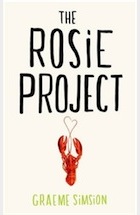 Whether we become what we are through our genes or through our experiences in life is the old chestnut that this debut novelist tackles with refreshing originality, wit and verve.
The memorable comic hero, Professor Don Tillman, a university teacher of genetics living in Melbourne, exhibits characteristics of Asperger's syndrome – although does not yet realise it – and his compulsively readable first-person narration demonstrates the gulf between his literal interpretations of human behaviour and the actuality, creating considerable dramatic tension. "Predicting the impact of actions on other people is incredibly difficult," he explains, deadpan.
The subject of autism has been tackled in fiction before, most famously in The Curious Incident of the Dog in the Night-Time by Mark Haddon, published in 2003 and currently on stage in the West End.
Whereas that novel filtered life through the perspective of 15-year-old Christopher Boone, Simsion here explores the effects of the condition upon adulthood – and his comic approach is what makes this novel distinctive. "I am an expert at being laughed at," Don acknowledges, but this is far more subtle than two-dimensional comedy, for while we laugh at him, we also come to laugh – and cry – with him, as Simsion skilfully creates empathy for Don and his struggle to empathise.
Intent on marrying, the chronically single professor embarks upon "The Wife Project", devising an obsessively detailed screening questionnaire for prospective partners, ruling out smokers, drinkers and bad time-keepers, among many others. The feisty young smoker Rosie is far from his ideal but he becomes engrossed in "The Father Project", helping her to search for her biological father, a detective puzzle that involves ingenious ways of garnering DNA samples from suspected fathers – which cleverly reveals much about Don's own identity.
What role should emotion play in life? Don's initial instinct is "to be vigilant that emotions do not cripple us". The novel excels in showing how human character is far from fixed, demonstrating Don's development as he gradually grows in emotional literacy and self-awareness through reading, observation and "educational material", devouring films from When Harry Met Sally to To Kill a Mockingbird, until he "slowly began to make sense of it all".
This entertaining romantic comedy began life as a screenplay, which is reflected in the pacy plot that takes the protagonists on a journey from Melbourne to New York, and through the fascinating terrain of human DNA, shedding insight into the science of how we are what we are. First published in Australia, the book has become a global phenomenon, with publication deals in more than 30 countries, reportedly earning the author advances of more than £1.2m.
Filled with engaging specificities of character and setting, the professor's struggle to understand the "fundamental, insurmountable problem of who I was" also becomes a poignant universal story about discovering how best to reconcile logic and emotion, head and heart, and connect our lives with others
Susan Sontag on Why Lists Appeal to Us, Plus Her Listed Likes and Dislikes
by Maria Popova - Brain Pickings
How lists confer value and guarantee existence.
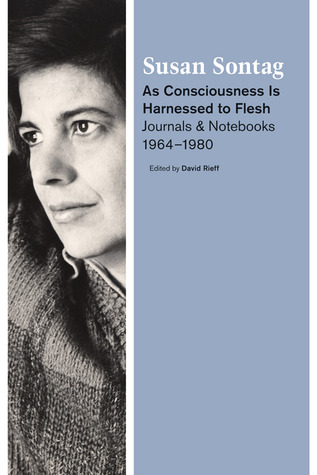 “The list is the origin of culture,” Umberto Eco famously proclaimed. Whether or not he was right about origin, the list is very much a currency of culture, today’s favorite attention-exploitation device in an information economy of countless listicles and innumerable numerical headlines. But what is it, exactly, that makes lists appeal to us so?
The recently released volume of Susan Sontag’s diaries, As Consciousness Is Harnessed to Flesh: Journals and Notebooks, 1964-1980 (public library), was among the best psychology and philosophy books of 2012 and has already given us Sontag’s wisdom on writing, boredom, censorship, and aphorisms, her radical vision for remixing education, and her illustrated insights on love and art.
In a characteristically self-reflexive entry from August 9, 1967, 34-year-old Sontag considers the allure of lists:
More
New York Arbor by Mitch Epstein – review
Mitch Epstein's photographs of New York trees are a wonderful reminder of nature's place in the metropolis
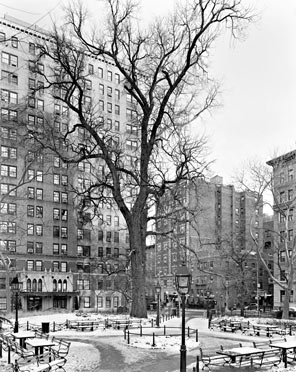
The English Elm in Washington Square park, New York, known as the Hangman’s Elm. Photograph by Mitch Epstein/Steidl
Formost of 2011 Mitch Epstein wandered the five boroughs of New York in search of trees. Following on from his epic series, American Power, which focused on the looming architecture of oil and gas, this smaller, more local project was, he writes, "about photographing something to honour, rather than mourn". It is also about looking and seeing; about the way nature, resilient, enduring, can go almost unnoticed in a big city.
New York Arbor is a book of black and white photographs of city trees, both native and imported: cottonwoods, cypresses, beeches, elms, lindens, maples, sycamores and willows. Epstein mentions two touchstones for the project: Eugène Atget, who photographed trees in Paris in the early 20th century, and Robert Adams, who has recorded the decimation of native forests in the Pacific Northwest over the past few decades.
Here, though, the tone is more reflective. Epstein makes you see, not just the trees on the streets and parks of New York, but their often unnoticed presence in the city. Many's the time I have sat under the English elm in Washington Square park without knowing that it was nicknamed the Hangman's Elm (because, legend has it, it was where revolutionary war traitors were hanged). Who knew, too, that Brooklyn can boast a caucasian wingnut, or Queens a beautiful tulip tree, or the Bronx a spreading white oak?
Epstein's gaze is democratic. He allows each tree its own space – and place – whether in a park, a street or protected in a botanic garden. He shows how they become features in an urban landscape of concrete and steel, towering above suburban house in Queens and Long Island or fighting for light amid the tall towers of Manhattan. Certain trees have become almost totemic: the ancient and colossal tulip tree in residential Queens known as the Alley Pond Giant; the leaning American elm on Eastern Parkway, Brooklyn, supported by a solid block of reinforced concrete; the ancient English elm on St Nicholas Avenue in upper Manhattan whose branches need steel cable to keep them from falling.
A bald cypress on a suburban street in Queens looks marooned and forlorn, while an eastern white pine in Owl's Head park in Brooklyn lends the setting an elemental aspect. You can see how trees – and even a single tall tree – can change the atmosphere of a neighbourhood. Drug dealers congregate by the English Elm in Washington Square, peddling their dime bags as if camouflaged by its foliage.
These New York trees are metaphorical, too. "Despite their swampy or mountainous or tropical origins," writes Epstein "these immigrant trees, alongside their native counterparts, still thrive in New York City. The trees remind me of the human immigrants who continually arrive in New York, who creatively adapt to a brutal yet tolerant city, and rarely abandon their original character."
New York Arbor is published in the UK on 1 June
New York Arbor is a book of black and white photographs of city trees, both native and imported: cottonwoods, cypresses, beeches, elms, lindens, maples, sycamores and willows. Epstein mentions two touchstones for the project: Eugène Atget, who photographed trees in Paris in the early 20th century, and Robert Adams, who has recorded the decimation of native forests in the Pacific Northwest over the past few decades.
Here, though, the tone is more reflective. Epstein makes you see, not just the trees on the streets and parks of New York, but their often unnoticed presence in the city. Many's the time I have sat under the English elm in Washington Square park without knowing that it was nicknamed the Hangman's Elm (because, legend has it, it was where revolutionary war traitors were hanged). Who knew, too, that Brooklyn can boast a caucasian wingnut, or Queens a beautiful tulip tree, or the Bronx a spreading white oak?
Epstein's gaze is democratic. He allows each tree its own space – and place – whether in a park, a street or protected in a botanic garden. He shows how they become features in an urban landscape of concrete and steel, towering above suburban house in Queens and Long Island or fighting for light amid the tall towers of Manhattan. Certain trees have become almost totemic: the ancient and colossal tulip tree in residential Queens known as the Alley Pond Giant; the leaning American elm on Eastern Parkway, Brooklyn, supported by a solid block of reinforced concrete; the ancient English elm on St Nicholas Avenue in upper Manhattan whose branches need steel cable to keep them from falling.
A bald cypress on a suburban street in Queens looks marooned and forlorn, while an eastern white pine in Owl's Head park in Brooklyn lends the setting an elemental aspect. You can see how trees – and even a single tall tree – can change the atmosphere of a neighbourhood. Drug dealers congregate by the English Elm in Washington Square, peddling their dime bags as if camouflaged by its foliage.
These New York trees are metaphorical, too. "Despite their swampy or mountainous or tropical origins," writes Epstein "these immigrant trees, alongside their native counterparts, still thrive in New York City. The trees remind me of the human immigrants who continually arrive in New York, who creatively adapt to a brutal yet tolerant city, and rarely abandon their original character."
New York Arbor is published in the UK on 1 June
Subscribe to:
Posts (Atom)