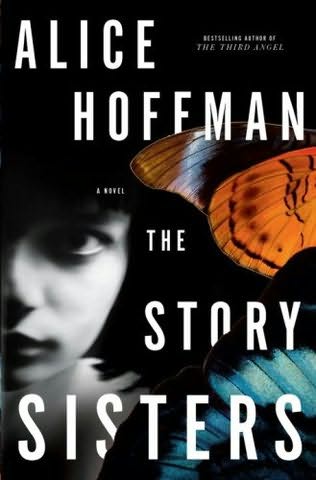
The Story Sisters
By Alice Hoffman
HarperCollins, $28.99
Reviewed by Nicky Pellegrino
Much of Hoffman’s writing is filled with symbols and rich in fairytale and her latest novel, The Story Sisters, is no exception. But if the more fanciful layers were skimmed away what would remain here is a family saga, a gritty story of teenage dysfunction, love, loss and redemption.
The three Story sisters Elv, Meg and Claire are striking girls with pale eyes and long black hair. They are diligent, beautiful, well-behaved, thoughtful and people find them charming, even their odd habit of chattering away in a private, made-up language that’s lovely to hear, rather musical, like birds.
But there is something rotten at the heart of this family. Eldest sister Elv has a secret. She is traumatised having rescued the youngest of the trio, Claire, from a paedophile teacher and been molested in her stead. As a result Elv’s faith in almost everything but magic and ritual has been destroyed.
Hoffman glosses over the harsher details of the molestation, instead showing Elv disappearing into the fairytale land she calls Arnelle, weaving stories and creating myths for her sisters, shutting out the rest of the world by speaking in their secret shared language, Arnish.
Then Elv’s rebellion begins to follow more conventional lines. She plays up at school, tattoos black stars on her skin, shoplifts and takes drugs. Desperate to stop this self-destruction, her well-meaning mother Annie incarcerates her in a brutal reform school. There Elv finds love with the enigmatic Lorry whose fatal flaw – a heroin addiction – soon becomes another of her problems. The misery only deepens…their grandfather dies, Annie develops incurable cancer, Elv retreats further into a world where no one can reach her… until the book’s central crisis is reached.
The Story Sisters ought to be an unbearably sombre book but, while it is deeply sad in parts, Hoffman writes with such delicacy and detail, she captures so much beauty in her words, that even when the story is at its bleakest there is a joy in reading it. Her take on sibling rivalry and teenage angst is startlingly original and it’s clear that Hoffman, who’s suffered breast cancer and the loss of close family members in recent years, has laced the story with her own emotional experience.
Aside from the minor annoyance of some extraneous sections littered through the story that do little apart from help create atmosphere, Hoffman pulls off this blend of fairytale and gritty realism. Fans of her work will find The Story Sisters bewitching.
Footnote:
Nicky Pellegrino, a succcesful Auckland-based author of popular fiction, (The Italian Wedding was published in May 2009 while her latest, Recipe for Life was published by Orion in April, 2010), is also the Books Editor of the Herald on Sunday where the above piece was first published on 26 September, 2010
Former leading New Zealand publisher and bookseller, and widely experienced judge of both the Commonwealth Writers Prize and the Montana New Zealand Book Awards, talks about what he is currently reading, what impresses him and what doesn't, along with chat about the international English language book scene, and links to sites of interest to booklovers.
Monday, September 27, 2010
Controversial novel not republished
By Paul Harper 2:09 PM Tuesday Sep 21, 2010
Witi Ihimaera. Photo / Richard Robinson
Book publisher Penguin has decided against republishing Witi Ihimaera's controversial novel The Trowenna Sea, despite last year promising an amended version would be released this year.
The Whale Rider author was found to have plagarised the work of historians in the historical fiction released last year by Penguin imprint Raupo.
The plagarism was discovered by a reviewer who googled extracts from The Trowenna Sea, which were found to match the works of other writers.
Following the revelation Mr Ihimaera said he would purchase the remaining warehouse stock of the book and Penguin promised they would take back stock from retailers who wished to return it.
Mr Ihimaera and Penguin's publishing director Geoff Walker also said a revised edition would be released this year, with a section by the author acknowledging the authors of the work he had used.
However Mr Walker today said they will not be republishing The Trowenna Sea "in the foreseeable future".
Full piece at NZH
Footnote:
This story appeared in the NZH last Tuesday but somehow or another The Bookman missed it in both my morning paper edition of the paper and in the online edition. Sorry to be so far behind the news on thos occasion.
By Paul Harper 2:09 PM Tuesday Sep 21, 2010
Witi Ihimaera. Photo / Richard Robinson
The Whale Rider author was found to have plagarised the work of historians in the historical fiction released last year by Penguin imprint Raupo.
The plagarism was discovered by a reviewer who googled extracts from The Trowenna Sea, which were found to match the works of other writers.
Following the revelation Mr Ihimaera said he would purchase the remaining warehouse stock of the book and Penguin promised they would take back stock from retailers who wished to return it.
Mr Ihimaera and Penguin's publishing director Geoff Walker also said a revised edition would be released this year, with a section by the author acknowledging the authors of the work he had used.
However Mr Walker today said they will not be republishing The Trowenna Sea "in the foreseeable future".
Full piece at NZH
Footnote:
This story appeared in the NZH last Tuesday but somehow or another The Bookman missed it in both my morning paper edition of the paper and in the online edition. Sorry to be so far behind the news on thos occasion.
Cat in the Hat turns town into Seussville
By Michelle Duff - Sunday Star Times 26 25/09
Star-bellied Sneetches will come tumbling down, through the streets of Woodville – that wonderful town.
There'll be cats wearing hats and strange-looking eggs, a Grinch stealing Christmas and pyjamas with legs.
More than 80 artworks from Theodor Seuss Geisel, better known as Dr Seuss, will be on display in Woodville from next week – the first time they've been seen in a rural New Zealand town.
So precious are the illustrations in the The Art of Dr Seuss that the New Zealand caretaker, Ron Epskamp, will sleep at Woodville's Artmosphere gallery during the two weeks the exhibition is running.
His widow, Audrey Giesel, has given permission for the exhibition to run in New Zealand.
When The Art of Dr Seuss was curated in 1995, she wrote: "I remember telling Ted there would be a day when his paintings would be seen and he would thus share with his fans another facet of himself – his private self. That day has come. I am glad."
The full story at www.stuff.co.nz/manawatu-standard/news/4167793/Cat-in-the-Hat-turns-town-into-Seussville
Footnote:

The Bookman had the great pleasure of spending a few days with Ted Geisel (Dr.Seuss) and his wife Audrey back in the 1970's when they visited New Zealand. We went trout fishing on Lake Taupo, Ted landed one and the hotel made a special dish for us that night, Trout a la Suess. Then in Wellington I did a series of five five minute interviews with Dr.Seuss for TV One's Today at One programme on which I used to review children's books.
They were both delightful company.
By Michelle Duff - Sunday Star Times 26 25/09
Star-bellied Sneetches will come tumbling down, through the streets of Woodville – that wonderful town.
There'll be cats wearing hats and strange-looking eggs, a Grinch stealing Christmas and pyjamas with legs.
More than 80 artworks from Theodor Seuss Geisel, better known as Dr Seuss, will be on display in Woodville from next week – the first time they've been seen in a rural New Zealand town.
So precious are the illustrations in the The Art of Dr Seuss that the New Zealand caretaker, Ron Epskamp, will sleep at Woodville's Artmosphere gallery during the two weeks the exhibition is running.
The 70-year retrospective features more than 80 limited-edition works, curated from public and private collections across the United States.
It includes 40 well-known Seuss illustrations from his more than 40 classic children's books, 10 "unorthodox taxidermy" sculptures and 30 painted works.
Many of the paintings were not seen before Seuss' death in 1991, and have been dubbed his "secret art". He would begin work on these paintings when he arrived home in the evenings, and keep at the brushstrokes until late at night.
When The Art of Dr Seuss was curated in 1995, she wrote: "I remember telling Ted there would be a day when his paintings would be seen and he would thus share with his fans another facet of himself – his private self. That day has come. I am glad."
The full story at www.stuff.co.nz/manawatu-standard/news/4167793/Cat-in-the-Hat-turns-town-into-Seussville
Footnote:

The Bookman had the great pleasure of spending a few days with Ted Geisel (Dr.Seuss) and his wife Audrey back in the 1970's when they visited New Zealand. We went trout fishing on Lake Taupo, Ted landed one and the hotel made a special dish for us that night, Trout a la Suess. Then in Wellington I did a series of five five minute interviews with Dr.Seuss for TV One's Today at One programme on which I used to review children's books.
They were both delightful company.
UPCOMING MAJOR EVENTS AT THE WOMENS BOOKSHOP
http://www.womensbookshop.co.nz/
This brave & healing book, full of pleasures, arises from this esteemed poet’s experience of surviving breast cancer.
Join us in celebration at the bookshop.
TUESDAY 5 OCTOBER 6pm for 6.30pm in the bookshop
Free entry. Everyone welcome.
LAUNCH of JOY COWLEY'S fabulous memoir NAVIGATION
A beautiful, thoughtful memoir from the internationally beloved author of hundreds of children’s books & fine adult fiction.
Join us in the bookshop for delightful readings.
THURSDAY 7 OCTOBER 6pm for 6.30pm in the bookshop
Entry $5 at the door. Everyone welcome.
The Women's Bookshop
An Independent Award Winning Bookshop
phone: (09) 376 4399
books@womensbookshop.co.nz
http://www.womensbookshop.co.nz/
Join us in celebration at the bookshop.
TUESDAY 5 OCTOBER 6pm for 6.30pm in the bookshop
Free entry. Everyone welcome.
LAUNCH of JOY COWLEY'S fabulous memoir NAVIGATION
A beautiful, thoughtful memoir from the internationally beloved author of hundreds of children’s books & fine adult fiction.
Join us in the bookshop for delightful readings.
THURSDAY 7 OCTOBER 6pm for 6.30pm in the bookshop
Entry $5 at the door. Everyone welcome.
The Women's Bookshop
An Independent Award Winning Bookshop
phone: (09) 376 4399
books@womensbookshop.co.nz
The North Shore: An Illustrated History

‘The stories in this book reveal the incredible amount of effort and sheer hard work which transformed the North Shore from its small beginnings to the proud city it is today. There is no doubt that we have a great deal to celebrate, and to be grateful for.’ – Andrew Williams, JP, His Worship the Mayor, North Shore City.
Auckland’s North Shore has long been perceived as a place apart, known for its beautiful beaches and relaxed lifestyle. Until the opening of the Auckland Harbour Bridge in 1959, the North Shore was viewed by many city-siders as a holiday destination. The past 40 years have seen the North Shore metamorphosis from small borough communities into a sprawling city in its own right. The growth of the region has been simply phenomenal, 20,000 people in the mid 1920s, 53,237 by 1961 and upwards to the North Shores current population of 230,000.
For the first time we have a book which focuses on the complete history of the North Shore and entails the Shore’s development from Maori and early contact times up to and beyond local body amalgamation and the formation of the first ‘North Shore City’ in 1989. The North Shore: An Illustrated History encapsulates the full history of both the people and the city and covers themes such as transport, industry, population growth and settlement patterns, arts and architecture, religion and sport. Throughout there are separate boxes which give a snap shot of the region in a particular year, giving a personal taste of living on the Shore and enabling direct contrast of the changes that have occurred over time.
The North Shore: An Illustrated History is beautifully designed with many of the historic photographs and paintings coming from the North Shore City Council Library and Takapuna Library archive and photograph collections. From apple orchards and kauri gum fields to John Leon Benwell’s Picture Palace, everything is here in a gorgeous coffee-table format that reflects and celebrates the diversity of the region in time for the Supercity merger.
As a former North Shore-ite, (Northcote Point), 1978-1992, The Bookman found the book a most fascinating read and especially enjoyed the wonderful historical photographs. This one below shows passengers arriving at Northcote Point, circa 1910.
About the author:
David Verran currently lives in Takapuna and manages the Auckland Research Centre at the Central Library of Auckland City Libraries. He is president of the North Shore Historical Society and has published many articles and book reviews. Born in Devonport, and raised in Birkenhead he can trace his family’s roots on the North Shore to 1876. He is passionate about the history and people of the region and has frequently lectured on the subject.
Library event:
The North Shore: An Illustrated History celebrating at the Takapuna Library
The Friends of the Takapuna Library, author David Verran and Random House, invite you to an occasion to celebrate the recent publication of The North Shore: An Illustrated History.
Light refreshments will be served at 12.00pm followed by a talk by David at 12.15pm.
Date: Thursday 30 September
Time: 12.00pm
Venue: 1st Floor, Takapuna Library, 7 The Strand, Takapuna.
Copies of the book will be available for sale for signing by the author.
$2 entry fee or free admission for Friends of the Takapuna Library.
RSVP to Helen on 09 486 8469 or Helenw@shorelibraries.govt.nz
Wild New Zealand From The Road
Gordon Ell
Random House NZ - $49.99
Wild New Zealand From The Road explores the best of New Zealand’s landscapes and wildlife – all easily accessible by car. ‘Around one third of New Zealand land is held in public reserves and while the wilderness is still a physical challenge for most, it’s now possible to experience a good portion of it from the road,’ says author Gordon Ell.
Along with suggesting ways to find and enjoy New Zealand’s wild places, Ell has celebrated New Zealand’s rich range of magnificent landscapes and the nature and wildlife that make them so special, drawing on more than 30 years’ experience of photographing and writing about New Zealand’s natural environment. Wild New Zealand leads the way to firsthand encounters with rare and endangered birds and plants, to exquisite landscapes featuring giant trees, waterfalls, lakes, and seal and bird colonies – most of which can be reached by a short walk.

With New Zealand’s natural places under threat from intensive farming and increasing urbanisation, putting land aside for parks, reserves and sanctuaries to conserve our unique environment has been a priority. Sophisticated tourist services, for visitors and Kiwis alike, bring nature to the roadside, and dedicated reserves allow the public to experience wildlife in more natural conditions.
Conveniently organised by regions, and with all journeys beginning at central travel nodes in the North and South Islands, this portable handbook makes it easy to plan a trip and to get on the road.
Wild New Zealand From The Road is handsomely and profusely illustrated with Ell’s own photographs from his extensive travels throughout the country.
The photos here show The Far North, visitors on White Island, Lake Taupo and Banks Peninsular.
About the author:
Gordon Ell is the author of more than 30 books, is a former national president of Forest and Bird, a member of the New Zealand Conservation Authority, and was awarded an ONZM for services to journalism and conservation.
HUMAN CHAIN
By Seamus Heaney
85 pp. Farrar, Straus & Giroux. US$24
(Faber & Faber in UK)
Ply the Pen
By WIilliam Logan
Published, New York Times,: September 24, 2010
For a poet, life after the Nobel can be pottering, or bookkeeping, or simply keeping busy — it’s rarely full of radical departures or stunning new poems. (Eliot called the prize a “ticket to one’s own funeral,” and indeed it proved the funeral of his poetry.) Even pottering can be difficult when you are constantly in demand to judge this prize or sign that public letter, to give a blurb to old X or a recommendation to young Y. For a poet, all life can be a distraction from the siren call of the page. When you read that Seamus Heaney has a secretary to help him answer correspondence, you wish he had half a dozen, and perhaps a few armed guards. Yet apart from Pasternak, who was bullied by his government, no poet has ever turned down the poisoned chalice.

Photo of Seamus Heaney by Jemimah Kuhfeld
Heaney is the most popular literary poet since Frost, who managed to convince most of his readers that he wasn’t a literary poet at all, that he booted up poems while mucking out a spring or driving a buggy — and perhaps, in a way, he did. Readers often love in Heaney what they loved in Frost, the unassumed and unassuming wisdom. Heaney has rubbed shoulders, as Frost did, with some of the most important literary figures of his day; Heaney has spent a long share of nights in hotels and on the road, as Frost did; yet often they write as if, just out the window, the cows were bawling to be milked and the first green shoots were sprouting in the fields — and as if neither man had spent more nights in a hotel than the Queen of Sheba.
In “Human Chain,” Heaney’s latest collection, the poet is again a child in the world of things, his attention drawn to objects common as a coal sack:
Not coal dust, more the weighty grounds of coal
The lorryman would lug in open bags
And vent into a corner,
A sullen pile
But soft to the shovel, accommodating
As the clattering coal was not.
In days when life prepared for rainy days
It lay there, slumped and waiting
To dampen down and lengthen out
The fire, a check on mammon
And in its own way
Keeper of the flame.
This isn’t lump coal, the top screening from the mine, but the bottom-deck “slack coal,” the cheap bits and grindings that fall through the other meshes. This refuse coal trims the cost of the fire (hence the mention of the Bible’s Mammon). “Keeper of the flame” is its own droll joke, as if the coal, like the poet, honors the dead. Heaney is not a plain poet, at least not as plain as he seems — the poems often have to be prodded and stirred to yield their meanings.
The full review at NYT.
And for a UK review visit The Guardian.
Sunday, September 26, 2010
TWO UPCOMING NZ BOOK COUNCIL MEET THE AUTHOR EVENTS
Join Radio New Zealand's Lynn Freeman in conversation with award-winning New Zealand author Joy Cowley as we celebrate the release of her two new books: Navigation: A Memoir (Penguin Books) and Writing from the Heart (Storylines). The event will be followed by a book signing.
Event Details:
Joy Cowley in conversation with Lynn Freeman,
6.00-7.00pm 13th October 2010 at Caffe L'Affare, 27 College St, Te Aro, Wellington.
Tickets: $20 and $15 for NZ Book Council members (the ticket price includes a glass of wine). Tickets are available from the Information Desk at Wellington Central Library or on the door on the night (if event is not sold out prior). For more information please visit the Book Council website.
Meet the Author - Lloyd Jones
join us at this very special event as Lloyd Jones chats with Lynn Freeman about his new book Hand Me Down World. There will also be time for questions and an opportunity to get your copy personally signed following the talk.
Event Details:
Lloyd Jones in conversation with Lynn Freeman,
6.00pm 11th November, Caffe L'Affare, 27 College St, Te Aro, Wellington. Tickets are available from the Information Desk at Wellington Central Library or on the door on the night (if event is not sold out prior). For more information please visit the Book Council website.
Is this the final chapter for paper books?
E-books are set to revolutionise the way we read. But plot twists may save paper books from going the way of the dinosaur.
For 15 years, pundits have declared the old-fashioned book to be as doomed as the orang-utan. Just as we will one day have to visit the last of that sad species in a zoo, the dog-eared paperback is destined for a similar freakshow status. Perhaps along the lines of collectable Wedgwood or silver spoons.
It isn't only the smug futurists who hold this view: some of Melbourne's most devoted bibliophiles told The Sunday Age the book is destined to be little more than an ornament as technology increasingly transports Charles Dickens and Dan Brown into the digital age.
If this is true, the local death throes of tree-sourced literature began in May, very quietly, when the Borders website posted the first e-book bestseller list for Australia. For the first couple of weeks, a No. 1 hit meant 20 copies sold. Four months later, Borders Australia and its sister company, Angus & Robertson, have sold more then 100,000 e-books and 20,000 Kobo e-readers, and seen 200,000 e-book applications downloaded free (for iPhone and desktop computer reading) from their websites.
While one rival bookseller queried the Kobo e-reader sales figures, REDgroup, the company that owns Borders and Angus & Robertson, thinks they could have sold more if more of them had been available.
'But for about six or seven weeks we couldn't get [enough] devices into our shops,'' REDgroup communications manager Malcolm Neil says.
''We were just getting orders and managing demand … a huge latent demand.''
Ask local publishers and booksellers what the sales mean for the future of reading and they'll say: ''We don't know yet.''
The full story at SMH.
John Elder -Sydney Morning Herald, September 26, 2010
Graham Cottew (right), reading a book on his i-pad, while his 19-year-old son Tim prefers a paper book. Photo: Ken Irwin
E-books are set to revolutionise the way we read. But plot twists may save paper books from going the way of the dinosaur.
For 15 years, pundits have declared the old-fashioned book to be as doomed as the orang-utan. Just as we will one day have to visit the last of that sad species in a zoo, the dog-eared paperback is destined for a similar freakshow status. Perhaps along the lines of collectable Wedgwood or silver spoons.
It isn't only the smug futurists who hold this view: some of Melbourne's most devoted bibliophiles told The Sunday Age the book is destined to be little more than an ornament as technology increasingly transports Charles Dickens and Dan Brown into the digital age.
If this is true, the local death throes of tree-sourced literature began in May, very quietly, when the Borders website posted the first e-book bestseller list for Australia. For the first couple of weeks, a No. 1 hit meant 20 copies sold. Four months later, Borders Australia and its sister company, Angus & Robertson, have sold more then 100,000 e-books and 20,000 Kobo e-readers, and seen 200,000 e-book applications downloaded free (for iPhone and desktop computer reading) from their websites.
While one rival bookseller queried the Kobo e-reader sales figures, REDgroup, the company that owns Borders and Angus & Robertson, thinks they could have sold more if more of them had been available.
'But for about six or seven weeks we couldn't get [enough] devices into our shops,'' REDgroup communications manager Malcolm Neil says.
''We were just getting orders and managing demand … a huge latent demand.''
Ask local publishers and booksellers what the sales mean for the future of reading and they'll say: ''We don't know yet.''
The full story at SMH.
Shelf life: The private libraries of the style set
Books make a room – and speak volumes about their owner.
By John Walsh, The Independent, Saturday, 25 September 2010
GEORGINA GOODMAN: THE BRITISH SHOE DESIGNER CAME UP WITH THIS CONCEPT OF A COMBINED BOOKCASE AND CLOTHES RAIL (HIDDEN ROUND THE OTHER SIDE) FOR HER LONDON FLAT
Cicero's ideal room was a library in a garden. Montaigne dreamt of having a literary den in an attic. Anthony Powell informed the world that books do furnish a room – but the Victorian, Reverend Sydney Smith, got there first when he said, "No furniture so charming as books". In the fairytale, Beauty and the Beast, the heroine's dream of perfection isn't romance, it's a big library. "When I step into this library," wrote the 17th-century French diarist Marie de Sevigne, "I cannot understand why I ever step out of it..."
The human love affair with books en masse is ancient and profound. The possession of a collection of volumes has long been thought an emblem of sophistication and learning, evidence of its owner's civilised commitment to sitting still and meditating on words.
It's when you put up some shelves and display the books on your living room wall that the trouble starts. When I had my first flat in London, and proudly displayed my huge collection of literary paperbacks – from Amis to Zola – that I'd accumulated over the years, low-life visitors would scan the shelves and ask: "All these books – you read 'em?" I would have to answer that, well no, I hadn't, but I looked forward to doing so one day. It's hard not to sound pretentious when saying such a thing.
People could be forgiven for thinking I had scanned the pages of 1001 Books You Must Read Before You Die and bought the lot, out of cultural pressure rather than a love of literature. ("Faulkner? Yup, I've got a few of them. Virginia Woolf? I think there's a couple on the bottom shelf. Shakespeare? Yeah, I've got three yards of Shakespeare plays. No, of course I haven't actually read any of them...")
Full piece at The Independent
Will Self and Martin Amis on appearing in their own books
Adam Thirlwell, Will Self and Martin Amis discuss fictional characters bearing their authors' names
Claire Armitstead and Sarah Crown guardian.co.uk, Friday 24 September 2010
In this week's podcast we're looking at the place of the self in fiction.
We put the appropriately named Will Self on the couch and ask some probing questions about his habit of inserting himself into his writing. We hear what Kingsley Amis did when his son, Martin, played around with the idea back in the 1980s. And we enlist the novelist Adam Thirlwell to track a distinguished tradition that goes all the way back to Rabelais and Laurence Sterne. Finally, we ask why so few women appear to have referenced themselves in their work - and if you've anything to say on that subject, join the discussion on the blog, here.
We have also included readings from a number of novels in which the authors introduce themselves by name at the beginning of the podcast. We have five "selfish" books to give away to people who correctly name all the books, and their authors, excerpted in the podcast: email your answers to review@guardian.co.uk, putting "Self in Books" in the subject field, by midnight on Friday 8, October 2010. We will print the winners' names on this page on October 15.
Reading list:
Walking to Hollywood by Will Self (Bloomsbury)
Politics by Adam Thirlwell (Vintage)
View the podcast at The Guardian.
‘To the End of the Land’Published New York Times: September 26, 2010
By David Grossman
Reviewed by Colm Toibin
TO THE END OF THE LAND
David Grossman - Ruth Gwily
“On Aug. 12, 2006,” Grossman continues, “in the final hours of the Second Lebanon War, Uri was killed in Southern Lebanon.” By that time, most of this book “was already written. What changed, above all, was the echo of the reality in which the final draft was written.”
It is a testament to Grossman’s novelistic talent, indeed perhaps his genius, that “To the End of the Land” manages to create and dramatize a world that gives both the reality and the echo their full due. He weaves the essences of private life into the tapestry of history with deliberate and delicate skill; he has created a panorama of breathtaking emotional force, a masterpiece of pacing, of dedicated storytelling, with characters whose lives are etched with extraordinary, vivid detail. While his novel has the vast sweep of pure tragedy, it is also at times playful, and utterly engrossing; it is filled with original and unexpected detail about domestic life, about the shapes and shadows that surround love and memory, and about the sharp and desperate edges of loss and fear.
This novel is, on the one hand, a retelling of Truffaut’s “Jules and Jim,” in which two guys, best friends, fall in love with the same girl. Ora, the girl in this novel, is emotional, introspective, filled with an ability to notice and an ability to love. As for the boys, Ilan is rational, vulnerable, brittle, oddly needy and nerdy; and Avram is impulsive, brilliant, superintelligent, larger than life. Having loved them both, Ora finally decides to marry Ilan, and they have a son, Adam; a few years later, made pregnant by Avram, she has a second son, Ofer, who is brought up as though he were Ilan’s child.
Full review at NYT
By David Grossman
Reviewed by Colm Toibin
TO THE END OF THE LAND
Translated by Jessica Cohen
576 pp. Alfred A. Knopf. $26.95
In the introduction to his 2003 collection of journalism, “Death as a Way of Life,” the Israeli novelist David Grossman wrote: “The daily reality in which I live surpasses anything I could imagine, and it seeps into my deepest parts.” In a note at the conclusion of his somber, haunting new novel, “To the End of the Land,” he explains that he began writing it in May 2003 — around the same time he wrote that introduction, six months before the end of his older son’s military service and a year and a half before his younger son, Uri, enlisted. “At the time,” he writes, “I had the feeling — or rather, a wish — that the book I was writing would protect him.”
David Grossman - Ruth Gwily
“On Aug. 12, 2006,” Grossman continues, “in the final hours of the Second Lebanon War, Uri was killed in Southern Lebanon.” By that time, most of this book “was already written. What changed, above all, was the echo of the reality in which the final draft was written.”
It is a testament to Grossman’s novelistic talent, indeed perhaps his genius, that “To the End of the Land” manages to create and dramatize a world that gives both the reality and the echo their full due. He weaves the essences of private life into the tapestry of history with deliberate and delicate skill; he has created a panorama of breathtaking emotional force, a masterpiece of pacing, of dedicated storytelling, with characters whose lives are etched with extraordinary, vivid detail. While his novel has the vast sweep of pure tragedy, it is also at times playful, and utterly engrossing; it is filled with original and unexpected detail about domestic life, about the shapes and shadows that surround love and memory, and about the sharp and desperate edges of loss and fear.
This novel is, on the one hand, a retelling of Truffaut’s “Jules and Jim,” in which two guys, best friends, fall in love with the same girl. Ora, the girl in this novel, is emotional, introspective, filled with an ability to notice and an ability to love. As for the boys, Ilan is rational, vulnerable, brittle, oddly needy and nerdy; and Avram is impulsive, brilliant, superintelligent, larger than life. Having loved them both, Ora finally decides to marry Ilan, and they have a son, Adam; a few years later, made pregnant by Avram, she has a second son, Ofer, who is brought up as though he were Ilan’s child.
Full review at NYT
Saturday, September 25, 2010
Our Evolving Publishing Vocabulary: Why Do We Use the Words We Do?
Publishing Perpectives
The traditional vocabulary we've used to describe publishing is breaking down. We now have traditional publishers, digital first publishers, self-publishers, and quasi-professional vanity presses all vying for our attention. When is it appropriate to use each term? What are the differences?
Read the article
When Does a Self-publisher Constitute a Publishing Company?
Read the article
Publishing Perpectives
The traditional vocabulary we've used to describe publishing is breaking down. We now have traditional publishers, digital first publishers, self-publishers, and quasi-professional vanity presses all vying for our attention. When is it appropriate to use each term? What are the differences?
Read the article
When Does a Self-publisher Constitute a Publishing Company?
Many self-publishers brand themselves as companies — for a variety of reasons, often to do with marketing — but if they just publish books written by themselves, does this actually qualify?
ARTS ON SUNDAY
RADIO NZ NATIONAL
RADIO NZ NATIONAL
2:30PM Chapter & Verse - A new novel Villa Pacifica from expat Kapka Kassabovo, and a new CD of Bill Manhire's poetry set to music.
Review of Villa Pacifica published on this blog Tuesday last.
War, Revolution and a King Who Says ‘By Jove’
By Janet Maslin - Published New York Times: September 23, 2010
FALL OF GIANTS
By Ken Follett
985 pages. Dutton. US$36.
(PanMacmillan-Aust/NZ)
A lot happens on the first page of Ken Follett’s “Fall of Giants.” King George V is crowned at Westminster Abbey. A Welsh boy named Billy Williams turns 13 and begins his wretched life as a coal miner. And Mr. Follett, who was once a Welsh boy himself but grew up to become his generation’s most vaunted writer of colorless historical epics, kicks off a whopping new trilogy. His apparent ambition: to span the whole 20th century in blandly adequate novels so fat that they’re hard to hoist.
“Fall of Giants” begins on June 22, 1911, a time, as Follett fans may longingly note, nearly 100 years before the invention of the e-book reader. But the march of lightweight book technology is hardly its main concern. Mr. Follett has devoted this tome to the implosions of the British, Austro-Hungarian and Russian empires around the time of World War I. It was also the era when the Ottoman Empire had its last sultan, but Mr. Follett overlooks that; after all, he has only 985 pages’ worth of storytelling space. Given the pacing that he prefers, that leaves “Fall of Giants” no room to spare.
It is the method of “Fall of Giants” to integrate large events (e.g., anything involving King George V) with small, personal ones (e.g., Billy’s first wearing of long pants). That’s how it tries to coax forth a grand panorama of history from a mosaic of everyday lives. And the political must become personal, as when the heartless coal mine owner tells Billy: “I don’t like socialists. Atheists are doomed to eternal damnation. And trade unionists are the worst of the lot.” Not surprisingly, Billy will grow up to fight for the rights of the little people.
Full review at NYT.
And for a UK look at the title this from The Telegraph
The title is being published in 14 countires simultaneously on 28 September.
Ken Follett's Homepage.
RICHARD AND JUDY'S BOOK CLUB MAKES NOVELIST AN OVERNIGHT SUCCESS - Daily Express -Friday September 24,2010
Richard and Judy's Book Club recommended Rosamund Lupton’s book, Sister
A FIRST-TIME novelist has become an overnight success – and it is all thanks to Daily Express columnists Richard Madeley and Judy Finnigan.
They recommended Rosamund Lupton’s book, Sister, to members of their influential Richard and Judy Book Club – swiftly prompting 56,000 copies to be sold this month alone.
“I am absolutely over the moon,” says the Cambridge graduate, 46. “As a new writer I never dreamt my book would get into the bestseller list. I feel extremely lucky and grateful to Richard and Judy for choosing my book. It’s like a fairytale for a new author – I’m still pinching myself.”
Since they began publishing a shortlist of their favourite reads in 2004, the couple’s endorsements have become hugely sought after.
Waterstone’s teen section goes into Piccadilly
24.09.10 - Caroline Horn - The Bookseller
Waterstone’s has introduced a dedicated teen section at its flagship Piccadilly store, following successful trials of a new-look teenage area in four branches during the summer. The redesigned section has also been rolled out in Manchester Deansgate, Kingston and Nottingham.
Waterstone’s teen section used to form part of its children’s section but was moved to its own distinct area. Waterstone’s children’s buying manager Sarah Clarke said that the chain would continue to evaluate which aspects of its redesigned children’s sections would be put into place in its key stores before Christmas.
She said: “Teen continues to perform extremely strongly in our trial stores with sales over recent weeks being more than 60% up year on year.”
As part of the trial, booksellers separated teen titles (for younger teens) from young adult (YA) material, which is seen as more crossover.
The new YA selections include titles written for adults that also appeal to teenage readers.
The branches also introduced their own featured areas.
Clarke said: “New titles are performing particularly well as feature space for areas like teen dystopia (by authors including Michael Grant, Suzanne Collins etc) and US imports.”
Waterstone’s customer feedback suggested that the seating area and overall look of the teen section had proved popular.
Phil Earle, Simon & Schuster sales director, said: “We are delighted to see the separation of teen and YA sections. At some point sales of paranormal romances will dip and Waterstone’s will be well-placed to take readers into the next big thing.”
Final Salvos in the Battle of Barnes & Noble; Burkle Says "I'm Not Trying to Take Over"
PublishersLunch
Ron Burkle's Yucaipa Companies issued an "open letter" to Barnes & Noble employees--who must vote their 401(k) shares by the end of the day today--along with a press release criticizing the bookseller for not allow them to communicate directly with workers. A spokesperson says in the release, "Barnes & Noble used company resources and the company's internal communications systems on multiple occasions to solicit votes for Leonard Riggio and his hand-picked nominees to the Board of Directors. But when Yucaipa requested an opportunity to respond, we were blocked from distributing a letter filed publicly with the Securities and Exchange Commission. Instead, the company tried to dictate what we could send - in this case a two-day-old letter that was not addressed specifically to employees. We declined."
In the letter, Ron Burkle puts his more reasonable side on display: "The great job you do every day built Barnes & Noble into an iconic American brand and reshaped the way people buy books. Your hard work and dedication make Barnes & Noble a regular destination for millions of book lovers, and your devotion shows every day. That's one of the reasons we initially invested in Barnes & Noble and why we steadily increased our ownership to become the company's largest independent stockholder."
Burkle also says: "Unfortunately, the current Barnes & Noble board of directors has spent a lot of time, money and effort trying to scare you about my intentions and distort my record as an investor. I'll be blunt. Contrary to what you may have been told, I'm not trying to take over Barnes & Noble."
Release/letter
Friday, September 24, 2010
Cape to publish ‘uplifting’ memoir from Winterson
24.09.10 - Benedicte Page - The Bookseller
Jeanette Winterson, whose troubled childhood as the adoptive daughter of Pentecostal evangelists was explored in her famous first novel Oranges Are Not the Only Fruit, is to write a memoir.
The book will be published as a Cape hardback in October 2011. CCV deputy publisher Rachel Cugnoni, who bought UK and Commonwealth rights from Caroline Michel at PFD for a six-figure sum, said the memoir would focus on Winterson’s early years. “Everyone gets bruised in the early journey of their life, and Jeanette’s journey was more difficult than most,” Cugnoni said.
“She was adopted by a woman who was very charismatic but not the most obviously loving person, and that has had reverberations throughout her life. It’s no secret that she has struggled and had relationships which broke down. It’s something she addressed originally through fiction, but now she wants to strip it down a layer further.”
Cugnoni said Winterson had gone through a period of “re-examination” following her 50th birthday last year, emerging “a changed person, and slightly more at peace”. The book, bought on proposal, would be very uplifting she predicted.
The memoir will be entitled Why Be Happy When You Could Be Normal?, the question asked by her mother when Winterson left home at 16 after falling in love with another woman.
Winterson will visit the Frankfurt Book Fair to see her international publishers, with a terrific buzz in the foreign markets about the book, said her publisher
Peter Robinson wins $10,000 Harbourfront Festival Prize
Crime writer Peter Robinson has been awarded the $10,000 Harboufront Festival Prize, it was announced Wednesday.
Robinson, the author of the popular Inspector Banks series of detective novels, was born in England but has lived in Canada for many years. He was chosen by a jury which included John van Driel, the VP of Programming and Operations for Classical 96.3 FM, Geoffrey Taylor, director of the International Festival of Authors, and some journalist named Mark Medley.
“I am honoured to be awarded the 2010 Harbourfront Festival Prize. Having looked at the list of previous recipients, I believe it is a privilege to be in such august company and I find it incredibly encouraging that the committee has chosen to recognize crime fiction in this way,” Robinson said in a statement.
Past winners of the annual prize, which was established in 1984, include Wayson Choy, Paul Quarrington, and Guy Vanderhaege. Helen Humphreys was awarded the prize last year.
Robinson will receive the prize on the final night of IFOA, October 30.
Read more: http://arts.nationalpost.com/2010/09/22/peter-robinson-wins-10000-harbourfront-festival-prize/#ixzz10RJylET6
New Zealand Photographs by Alan Miller (Anglesea House $70)
Alan Miller has studied the history of painting, and it is as much the traditions of painting as those of photography that are apparent in his work. His often ambiguous and hauntingly beautiful black and white images have been created in many countries over the past thirty years.
In this, Alan Miller’s first publication, the collection of photographs speaks of the New Zealand landscape with a subtle and lyrical voice.
The sumptuous book includes an essay by Martin Edmond and an interview with the photographer byKriselle Baker.
About the book's contributor's:
Alan Miller was born in Oamaru, New Zealand, in 1947. After several years travelling in the 1970s he returned to New Zealand, completing a degree in art history. At the same time, he began to take photographs. He has continued to photograph full time and has had numerous exhibitions. He lives with his family in Auckland, New Zealand.
The book includes an essay my Martin Edmond and an interview with the photographer byKriselle Baker.
Martin Edmond, writer, was born in Ohakune, New Zealand, and grew up in small towns in the North Island. He has an MA (first-class honours) in English language and literature from Victoria University of Wellington. He joined the Red Mole theatre troupe in 1977 and spent five years touring. Since then he has been a freelance writer and has written several books and screenplays. In 2004 he was Literary Fellow at the University of Auckland and the following year won a Montana New Zealand Book Award for his biography, Chronicle of the Unsung. He lives and writes in Sydney, Australia.
Kriselle Baker is a freelance writer and curator. She has an MA (first-class honours) and has recently submitted a PhD thesis in art history. The Desire of the Line: Ralph Hotere Figurative Works was published in 2005 and a monograph on Hotere’s paintings for which she acted as image editor and contributing essayist in 2008. She lives in Auckland with her husband and daughter.
To read a full review of the book and interview with the author that appeared in the New Zealand Herald recently click here.
Footnote:
Trade enquiries to Paul Greenberg.
Retailers carrying the title include: Unity Books, Parsons, Time Out, The Booklover, Womens Bookshop, Wheelers.
Lyricism, beauty and spirit inspire photographer Alan Miller’s personal response. He has said of his work that ‘you are trying to dig something out of things – anything that can sustain you’. Alan Miller has travelled extensively and for prolonged periods in the pursuit of his subject matter. The mapping of internal emotions or states of mind on to the landscape, or man-made forms, is one of the key elements in his body of photographs.
Alan Miller has studied the history of painting, and it is as much the traditions of painting as those of photography that are apparent in his work. His often ambiguous and hauntingly beautiful black and white images have been created in many countries over the past thirty years.
In this, Alan Miller’s first publication, the collection of photographs speaks of the New Zealand landscape with a subtle and lyrical voice.
The sumptuous book includes an essay by Martin Edmond and an interview with the photographer byKriselle Baker.
About the book's contributor's:
Alan Miller was born in Oamaru, New Zealand, in 1947. After several years travelling in the 1970s he returned to New Zealand, completing a degree in art history. At the same time, he began to take photographs. He has continued to photograph full time and has had numerous exhibitions. He lives with his family in Auckland, New Zealand.
The book includes an essay my Martin Edmond and an interview with the photographer byKriselle Baker.
Martin Edmond, writer, was born in Ohakune, New Zealand, and grew up in small towns in the North Island. He has an MA (first-class honours) in English language and literature from Victoria University of Wellington. He joined the Red Mole theatre troupe in 1977 and spent five years touring. Since then he has been a freelance writer and has written several books and screenplays. In 2004 he was Literary Fellow at the University of Auckland and the following year won a Montana New Zealand Book Award for his biography, Chronicle of the Unsung. He lives and writes in Sydney, Australia.
Kriselle Baker is a freelance writer and curator. She has an MA (first-class honours) and has recently submitted a PhD thesis in art history. The Desire of the Line: Ralph Hotere Figurative Works was published in 2005 and a monograph on Hotere’s paintings for which she acted as image editor and contributing essayist in 2008. She lives in Auckland with her husband and daughter.
To read a full review of the book and interview with the author that appeared in the New Zealand Herald recently click here.
Footnote:
Trade enquiries to Paul Greenberg.
Retailers carrying the title include: Unity Books, Parsons, Time Out, The Booklover, Womens Bookshop, Wheelers.
WELLINGTON WRITERS ON MONDAYS
27 September - Short/Sharp/Script (2) at CIRCA
Five more funny, fast and furious mini-dramas by MA scriptwriters are delivered fresh and hot. Charlie Blake, Samuel Burt, Nathan Crocker, Maya Hammarsal and April Phillips are on show with David Geary at the helm.
Writers on Mondays is presented by the International Institute of Modern Letters, The Museum of New Zealand Te Papa Tongarewa and Circa Theatre.
They are open to the public and free of charge.
This event takes place at Circa Theatre on Monday 27 September: 12.15-1.15pm.
Saturday Morning with Kim Hill:
Radio NZ National , 25 September 2010
8:15 David Lublin: tea party activism
8:30 Farouk al-Kasim: oil and Norway
9:05 Peter Goldie: acquired tastes
9:45 Art with Mary Kisler: children in Dutch art
10:05 Playing Favourites with Charley Gray
11:05 Dwight Roden: New York dance
11:30 Food with Annabel Langbein
11:45 Fashion with Laurie Foon
Producer: Mark Cubey
Wellington engineer: Chris Adams
Auckland engineer: Ian Gordon
Saturday Morning guest information and links:
8:15: David Lublin
David Lublin is a professor at the School of Public Affairs, American University, in Washington D.C., and the author of two books (The Paradox of Representation: Racial Gerrymandering, and Minority Interests in Congress and The Republican South: Democratization and Partisan Change). He will discuss the rise of the "tea party" movement in the United States.
www.american.edu/spa/faculty/dlublin.cfm
8:30 Farouk al-Kasim
Petroleum geologist Farouk al-Kasim spent 11 years working for the Iraq Petroleum Company before becoming advisor to the Norwegian Ministry of Industry on petroleum and related issues. He is credited with being instrumental in Norway's success in becoming the world's third leading oil producing country. He visited Auckland recently for the 2010 New Zealand Petroleum Conference.
www.crownminerals.govt.nz/cms/petroleum/conferences
9:05 Peter Goldie
Professor Peter Goldie is the Samuel Hall Chair in Philosophy at the University of Manchester, turning to philosophy in 1990 after a 25-year career in business in the City of London. Professor Goldie is the visiting Hood Fellow at the University of Auckland for 2010, delivering the Solomon Memorial Lecture, Oysters and Opera: How to Acquire an Acquired Taste.
http://staffprofiles.humanities.manchester.ac.uk/StaffDetails.aspx?ou=I4187&ProfileId=5409622
9:45 Art with Mary Kisler
Mary Kisler is the Mackelvie Curator of International Art at the Auckland Art Gallery Toi o Tamaki, and will discuss images of children in Dutch art. To view images under discussion, click on the Art on Saturday Morning link on the right hand side of this page. Mary's book, Angels & Aristocrats: Early European Art in New Zealand Public Collections, will be published in October (Random House, ISBN: 978-1-86962-135-3), and she will give a talk on the Ron Mueck work, Pregnant Woman, at the Christchurch Art Gallery Te Puna o Waiwhetu on 2 October.
http://www.aucklandartgallery.com/
www.radionz.co.nz/national/programmes/saturday/gallery
http://bethere.co.nz/arts/2010/5004-artbite-mary-kisler-on-pregnant-woman
10:05 Playing Favourites with Charley Gray
Charley Gray founded The Island of Real Cafe* in Auckland in 1977, and went on to manage Th' Dudes, open The Last and First Cafe* in 1982, and Charley Gray's Pictures at the Capitol Cinema in the mid-1980s. After living in Australia and Whanganui, he now works from Hawke's Bay as a cinema consultant.
11:05 Dwight Roden
Choreographer Dwight Rhoden is joint artistic director of New York contemporary ballet company Complexions. As well as having created over 70 works since the company's formation in 1994, he and partner Desmond Richardson have worked with performers including Michael Jackson, Prince, Madonna and Cirque du Soleil. Complexions return to Auckland to perform a new work featuring the music of U2, Rachmaninoff, Billie Holiday and Roy Buchanan (Aotea Centre, 29 September to 2 October).
http://complexionsdance.org/
http://www.the-edge.co.nz/Event-Pages/C/Complexions.aspx
11:30 Food with Annabel Langbein
Annabel Langbein is a cook and author. Her new TV series filmed in Central Otago, The Free Range Cook, is currently screening Saturday nights on TV ONE, and on the ABC in Australia. Annabel's new cookbook is also called The Free Range Cook (Annabel Langbein Books
http://www.annabel-langbein.com/
11:45 Fashion with Laurie Foon
Laurie Foon is the founder of fashion company Starfish, which opened the tenth New Zealand Fashion Week with the event's first ever eco-show.
www.starfish.co.nz/
www.nzfashionweek.com/
***********
Saturday Morning repeats:
On Saturday 25 September 2010 during Great Encounters between 6:06pm and 7:00pm on Radio New Zealand National, you can hear a repeat of the second part of Kim Hill's interview with Sister Sheila O'Toole, from Saturday 18 September.
Preview: Saturday 2 October 2010
Kim Hill's guests will include Cordelia Fine on sex discrimination, Norman Meehan and Mike Nock on jazz, and John Saker on pinot noir in New Zealand.
Danielle Steele Denies Being a Romance Author
By Maryann Yin on GalleyCat, Sep 23, 2010
The author has a bibliography listing 113 titles and continues to write constantly. She usually publishes 3 books a year. Right now, she has two novels in development. Adult fiction aside, she has also written non-fiction, poetry, and children's books.
Steele claims: "They're not really about romance. It's an element in life. But I think of romance novels as more of a category, and I write about the situations we all deal with. Loss and war and illness and jobs and careers, and good things, bad things, crimes, whatever. And I really write more about the human condition." (Via the Guardian)
Author photo - Photograph: Ken James /Corbis
OBAMA'S WARS
The president and his team cooperated with the famed author’s new book. Leslie H. Gelb on the fallout—and how Obama’s Wars shows the U.S. is stuck in an open-ended conflict.
Lots of White House officials observed Bob Woodward, Mr. First Draft of History, repeatedly and boldly slipping behind the closed doors of President Obama’s most intimate advisers. They all knew what was happening. The president’s men were helping The Washington Post’s sleuth write “the inside story” of how the boss masterfully managed the most trying of Herculean labors—the war in Afghanistan. There’s only one very big problem in dealing with Woodward in this manner: Once the boss opens the doors to spilling the secrets, many of his subordinates feel liberated to “tell their side of the story.” By the time each has exhausted tales of his own heroism and the shortcomings of his fellow senior officials, well, no one looks terribly heroic.
Left - President Barack Obama listens to Senior Advisor David Axelrod in the Oval Office, May 26, 2009. (Pete Souza / White House Photo)
Let’s start with Obama, who emerges from the pages of Obama’s Wars as he is—brilliant, emotionless, abstract, focused, and confused, a Chicago law-school professor in presidents’ clothes. He obviously wanted Woodward to portray him as a brilliant intellectual leader of a government that was not giving him too much help in solving the Afghan mystery, but that he trudged on, doing the best anyone possibly could under these terrible circumstances.
The worst circumstance, as Team Obama alleged to Woodward, was that the Pentagon leadership and the U.S. generals did not give him the real choices he was asking for. He wanted options for troop increases below, even far below, what the generals were giving him. He didn’t get them. He wanted a strategy for how U.S. forces would be drawn down after they reached their projected peak of about 100,000 (more than three times the number George W. Bush left him). The military didn’t provide him with that, either.
The rest at The Daily Beast.
MasterChef New Zealand:
The Cookbook Volume One
I lost two hours yesterday "reading" this book from cover to cover but as it is not being published until 1 October I have to hold back on my review. That suits me actually because I am dead keen to make some of the mouth-watering recipes before the review.
So just let me say for now that this is a hugely appealing and beautifully presented cookbook with recipes from the 12 finalists in the show that attracted over half a million viewers every episode.
More at publication time. Oh I should add that the book is published by Random House NZ - $49.99.
18,000 new students will bond over The Man Booker Prize
Along with their kettle and corkscrew, nearly 18,000 freshers will be armed with a Man Booker Prize novel when they start university this autumn as the Booker Prize Foundation rolls out its student reading programme.
Regardless of their chosen area of study, first year students joining five of the UK’s leading universities will be required to read a selected winning or shortlisted Man Booker Prize novel before the autumn term begins. The universities taking part are: Imperial College, London; Liverpool University; Newcastle University; St Andrews University and the University of East Anglia. In addition, Georgetown University, Washington, has initiated a similar programme in the US.
Jonathan Taylor CBE, Chair of the Booker Prize Foundation, comments, “Whether studying humanities or sciences - physics, economics, history or whatever - the freshman class will have a topic in common: a Man Booker Prize novel to discuss, to argue about or even to praise. In this way we will help to bridge the two cultures and encourage an appreciation of the best contemporary literary fiction.”
The students across the five universities were sent their Man Booker Prize book to read over the summer. The authors of the featured books will visit the universities during the autumn term and will take part in a combination of workshops, lectures and reading groups.
This autumn term:
• Lloyd Jones (pic right) will discuss his 2008 shortlisted book Mister Pip at St Andrews on 7 and 8 October and Liverpool University on 13 October
• 2009 shortlisted author Simon Mawer will talk about The Glass Room at Imperial College, London on 11 and 13 October
• 1989 Man Booker Prize winner Kazuo Ishiguro will visit Newcastle University to discuss his 2005 shortlisted novel Never Let Me Go on 14 and 15 October
• Hisham Matar will discuss In the Country of Men, which was shortlisted in 2006, at the University of East Anglia in late October
This initiative was launched in 2009 when shortlisted authors Mohsin Hamid and Sebastian Barry spoke respectively to first year students at St Andrews, Scotland and Georgetown University, Washington. This initial success encouraged the Booker Prize Foundation to extend the programme to the additional four universities, with plans to expand further in 2011.
The scheme is jointly funded by the Booker Prize Foundation and the individual universities.
For further information about the prize :
http://www.themanbookerprize.com/
Long list for South Asian lit prize out
The Times of India Sep 23, 2010
NEW DELHI:
Amit Chaudhuri's 'The Immortals', Anjum Hassan's 'Neti Neti', Manju Kapur's 'The Immigrant' and Daniyal Muennuddin's 'In Other Rooms, Other Wonders' have made it to the long list of DSC Prize for South Asian Literature Festival ( SALF). The winner will be richer by US $50,000.
On Tuesday, the names of the five jury members were also announced. They are: Lord Matthew Evans, Ian Jack, Amitava Kumar, Moni Mohsin and Nilanjana S Roy. An international advisory panel including M J Akbar, William Darlymple, Urvashi Butalia and Tina Brown will assist the jury.
The full longlist:
1) Upamanyu Chatterjee: Way To Go (Penguin)
2) Amit Chaudhuri: The Immortals (Picador India)
3) Chandrahas Choudhury: Arzee the Dwarf (HarperCollins)
4) Musharraf Ali Farooqui: The Story of a Widow (Picador India)
5) Ru Freeman: A Disobedient Girl (Penguin/ Viking)
6) Anjum Hassan: Neti Neti (IndiaInk/ Roli Books)
7) Tania James: Atlas of Unknowns (Pocket Books)
8) Manju Kapur: The Immigrant (Faber & Faber)
9) HM Naqvi: Home Boy (HarperCollins)
10) Salma: The Hour Past Midnight (Zubaan, translated by Lakshmi Holmstrom)
11) Sankar: The Middleman (Penguin, translated by Arunava Sinha)
12) Ali Sethi: The Wish Maker (Penguin)
13) Jaspreet Singh: Chef (Bloomsbury)
14) Aatish Taseer: The Temple Goers (Picador India)
15) Daniyal Mueenuddin: In Other Rooms, Other Wonders (Random House)
16) Neel Mukherjee: A Life Apart (Picador India)
E-book sales begin to cannibalise print
23.09.10 - Philip Jones - The Bookseller
The growth in e-book sales in genres such as romance and science-fiction is leading to a cannibalisation in sales of printed books, according to Nielsen BookScan data.
Sales of printed romance books have fallen for the first time since records began at a time when e-book sales have more than doubled.
The data, released as part of a seminar held yesterday with Enders Analysis, 'Digital Seminar: e-books and their impact on the market', showed genres such as science fiction and romance are “overperforming” thanks to the tastes of early adopters of e-books. For example, the e-book market share of the science fiction and fantasy sector globally for the 10 weeks since June was 10%, more than treble the genre’s market share of print book sales. The share taken by romance and saga books was 14%, seven times its print market share.
Julie Meynink, business development director of Nielsen BookScan, said though it was early days, data from Nielsen BookScan US, which globally represents the biggest share of e-book sales, showed a decline in print sales within these two sectors. In the year to date sales of romance books in the US are down 7.5%, while science-fiction and fantasy sales are down, even when the effect of Stephenie Meyer is stripped out. Estimated e-book sales from the Association of American Publishers show that the e-book market has risen 10-times since 2008, with sales accelerating this year with sales over the first two quarters up 180% on 2009.
More at The Bookseller
Foyles Husain backs Hachette's agency move
23.09.10 - Victoria Gallagher - The Bookseller
Foyles c.e.o. Sam Husain has backed Hachette's decision to switch e-books to the agency pricing model claiming it will "stabilise the market".
Hachette's move to the agency pricing model this week has led to its e-books being removed from websites of Waterstone's, W H Smith, Tesco and The Book Depository, as well as Foyles.
Husain said the independent has always trusted the printed price on physical books and the agency model was effectively "standardising the price". He added: "If anything it will hopefully stabilise the market so that you don't get the Amazons of this world then discounting e-books and again it makes a nonsense of the price. So in that sense I actually don't have a problem."
Hachette's e-books have however been removed from Foyles' website as the retailer has yet to sign the agreement. Husain said he was concerned there could be legal issues due to it being anti-competitive, however he has yet to take legal advice.
He said it was "more than likely" the independent chain would sign the agreement soon and said if further publishers went down the same route he would be more inclined to sign it.
Subscribe to:
Posts (Atom)


,+reading+a+book+on+his+i-pad,+while+his+19-year-old+son+Tim+prefers+a+paper+bookn+Photo-+Ken+Irwin-SMH.jpg)


.jpg)


